Akti Project and Research Centre and the Athienou Municipality
Establish a Resilience Hub in Athienou for the Circular Management of Organic Waste.
AKTI Project and Research Centre and the Athienou Municipality are moving forward with the development of the Athienou Resilience Hub within the framework of the European project NURISH. The Hub aims to develop an innovative circular co-management model for pruning residues and livestock manure to support sustainable agriculture and address desertification.
The ambitious project is funded by Horizon Europe under the HORIZON-MISS-2024-CLIMA-01 initiative, has a duration of 54 months and is implemented by 28 partners from 10 countries under the coordination of the National Technical University of Athens.
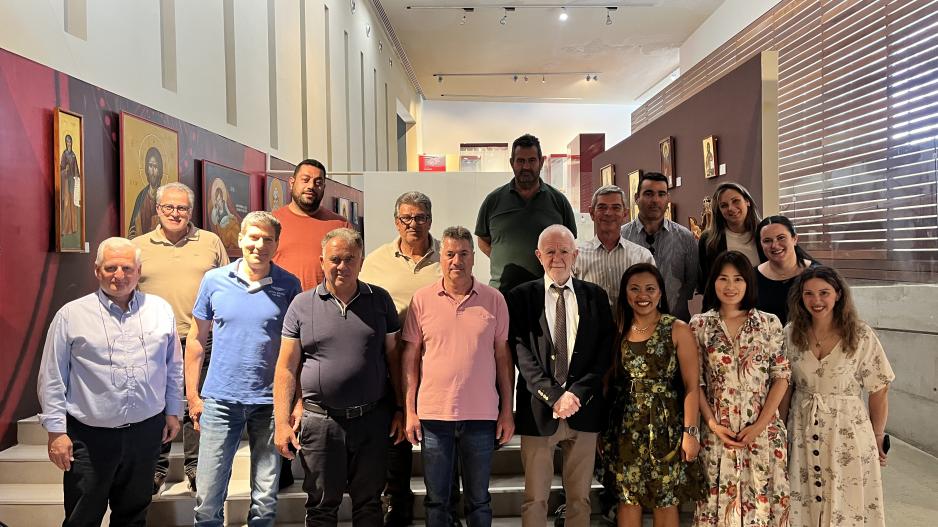
On 25 May 2026, AKTI and the Athienou Municipality brought together farmers, livestock breeders, local authorities and scientific stakeholders through a participatory workshop, aiming for the first time to systematically record the real challenges faced by the area in the management of manure, agricultural prunings and organic waste, while jointly shaping the next steps for the development of the participatory circular organic waste management system implemented by AKTI in the Municipality of Athienou through the NURISH project.
AKTI leads the development of the Athienou Resilience Hub with the objective of creating a complete co-composting system for agricultural and municipal pruning residues and animal manure in the area, transforming them into high-quality, low-cost compost to help address desertification and declining soil fertility.
AKTI’s approach is based on the Circular Symbiotic Green Waste Management Scheme, a model that connects waste producers, farmers and local authorities in rural and particularly remote areas through a system of collaboration and mutual benefit. This circular system, originally developed by the research and consultancy company Isotech Ltd and now implemented by AKTI, adapted to the needs of the Municipality of Athienou, introduces a social and technological innovation: farmers participate as “co-owners” of the system by providing their organic residues and receiving ready compost in return, reducing their costs while actively contributing to lowering the environmental footprint of their activities.
During the workshop, strong interest was expressed in the development of an organised composting system in the area, with farmers, livestock breeders and local stakeholders recognising that the circular utilisation of agricultural and livestock organic waste can become an essential tool for restoring soil fertility, promoting the sustainable management of organic resources and strengthening the resilience of local production against climate change.
At the same time, significant challenges were identified regarding compost quality, manure management, the high cost of collecting and processing organic residues, as well as the need for a clear regulatory framework, financial incentives and practical training for producers.
In the next stages of the project, AKTI and the collaborating stakeholders will proceed with the mapping of the area’s available organic waste streams, the identification of the legal and technical requirements for the operation of the system, as well as the design of a practical model for the collection and utilisation of agricultural and organic waste in the Municipality of Athienou.
NURISH supports the EU’s long-term vision for stronger, more connected, resilient and prosperous rural areas by 2040, contributing to territorial cohesion, innovation, the creation of green jobs and skills development in the agricultural sector.