Great Sea Interconnector: Funding Still Uncertain, ADMIE Chief Warns
Two Years After Taking Over, ADMIE Urges Regulators in Greece and Cyprus to Unlock Revenues or Risk Halting Critical Interconnection.
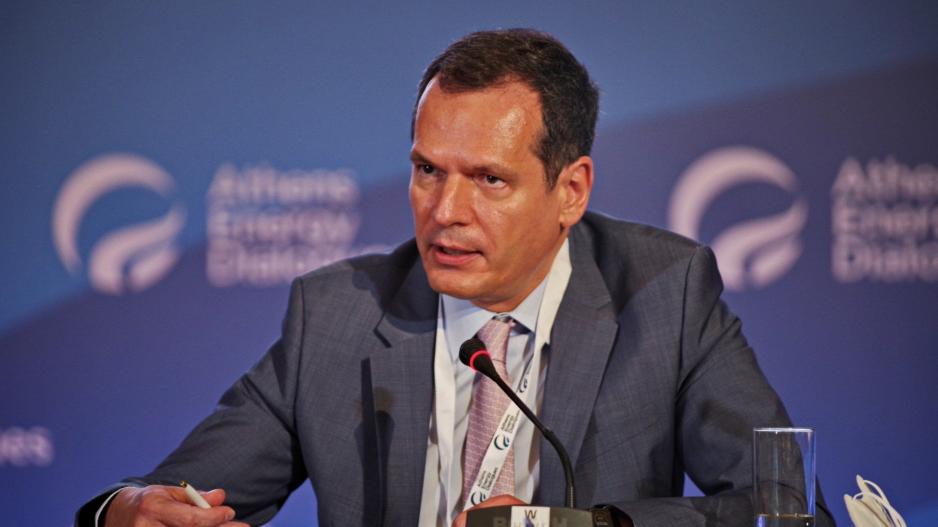
Speaking on the podcast "Stin Priza", ADMIE President and CEO Manos Manousakis issued a stark warning: unless immediate regulatory action is taken, the ambitious Crete–Cyprus–Israel (GSI) electricity interconnection may be forced to a standstill.
The project aims to link Crete to Cyprus and Israel via a high-voltage subsea cable, creating a new energy bridge between the EU and the Eastern Mediterranean. ADMIE (the Independent Power Transmission Operator of Greece) took full ownership and responsibility for the project in late 2023, after the previous developer failed to secure adequate financing.
“We stepped in to prevent the collapse of a project of strategic importance,” Manousakis said, explaining that since ADMIE’s takeover, over 160 kilometers of cable construction have been completed and 60% of seabed surveys between Crete and Cyprus are done. Yet, despite technical progress, the financial future of the project remains in limbo.
At the heart of the issue lies the absence of a clear regulatory decision securing the project's revenue model. “We’ve already invested €250 million in construction and another €50 million in acquiring the previous developer,” Manousakis revealed. “But we cannot continue using our own capital. Further development requires loans—either from commercial banks or the European Investment Bank. And that means we need revenue guarantees from Greece’s RAE and Cyprus’s CERA.”
Without these guarantees, he stressed, ADMIE cannot continue financing the project, nor can it attract strategic investors. “There is strong interest from international institutional players,” he noted, “but when they realize there’s no regulatory revenue assurance, they walk away. Nobody will invest in a project that lacks financial viability.”
Manousakis called on regulators in both countries to act swiftly, pointing out that two years of negotiations—some involving the European Commission—have yet to yield a resolution. “Unless a decision is made soon to secure the project’s revenues, we will have no choice but to suspend financing. That’s the hard reality.”
He also raised another pending issue: the continued seabed surveys between Karpathos and Cyprus remain stalled due to licensing delays in international waters. “We’ve received assurances from the Greek government and the EU that these will be resolved, but time is of the essence. We now need institutional support on the financial side as well,” he added.