AKEL’s 4th Economic Forum Focuses on Strategy for the Future
Housing, climate, energy and inequality dominate discussions at the party’s 4th Economic Forum.
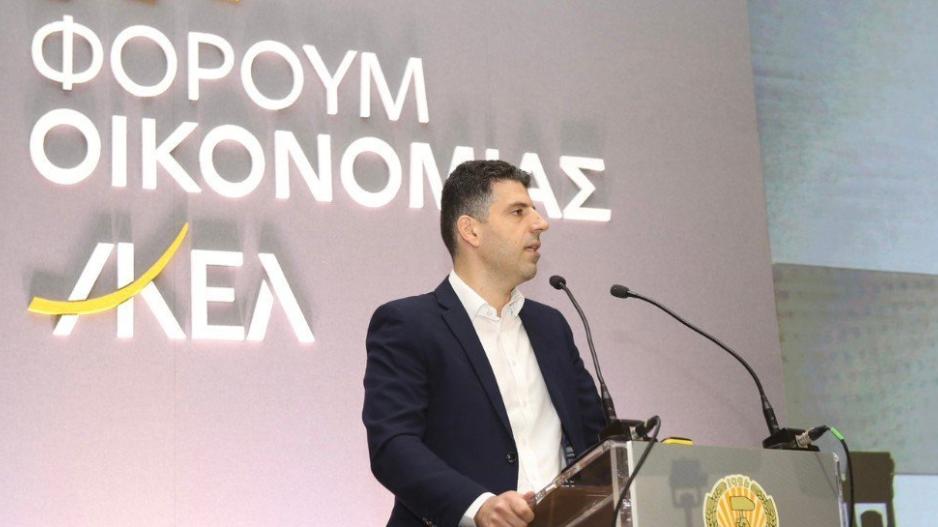
The 4th Economic Forum of AKEL aims to discuss strategy for the future, with emphasis on housing, energy, the climate crisis, the social and cooperative economy, and artificial intelligence—all examined through the lens of sustainable, socially oriented development, said Haris Polycarpou, head of AKEL’s economic policy sector.
As Brief writes, speaking at the Forum, held this morning at the Hilton Hotel in Nicosia under the theme “Strategy for the Future: Housing, Climate, Energy,” Mr Polycarpou recalled that the left-wing party had addressed major societal issues in previous forums and submitted proposals on these topics.
He said AKEL acts based on the real needs of the economy and the country, and not according to personal interests or the interests “of a minority of the economic elite”.
He added that the 4th Economic Forum would examine “what has been achieved so far, as well as the weaknesses of the country’s development model and economic policy”.
“What we discuss today affects not only the present but shapes the lives and future of our children,” he noted.
Mr Polycarpou reviewed the objectives set during the three previous Economic Forums. “In the first Forum,” he said, “we stressed the urgent need for the country’s development model to move away from the rush for golden passports and shift in another direction—at a time when golden passports were treated as the development gospel of the Anastasiades–DISY government, and any discussion of alternative paths was described almost as national disloyalty.”
“In the second Forum, we underlined the need for measures to address rising inflation, which had swept across Cyprus and European economies, creating intense pressure on businesses and households.”
“At last year’s Forum, we referred to the pressing need for a new tax system—fairer, simpler and more effective.”
Looking back at developments since then, he argued that “anyone can recognise that AKEL and its officials not only understand the economy, not only act proactively rather than reactively, but that the party’s positions and proposals remain timely, realistic and effective for the country’s economic direction and for improving living standards”.
“Fiscal surpluses and positive growth indicators are not enough,” he stressed, “if social deficits and income inequalities deepen. Announcements and ambitious commitments are not enough if major infrastructure projects collapse one after another and essential reforms are pushed aside.”
“Good intentions and appeals to the ‘new’ are not enough if policies in practice reproduce the old—reproducing corruption and entanglement that continue to hold the country back.”
“Economic growth is not enough if it comes at the cost of environmental degradation and depletion of natural resources. Social benefits are not enough if social policy and welfare infrastructure leave people—especially the most vulnerable—feeling worse off with each passing day, undermining their dignity.”
“Growth is not enough if those who drive the economy—workers, small family businesses, the self-employed—see their efforts turned into excess profits and growing concentration of wealth in fewer hands.”
“In simple terms, what we do today is not enough if there is no vision and no plan for tomorrow—for the economy, for society, and for the reunification of the country. This is what AKEL’s Economic Forum aims to achieve this year: to become an open and free space for dialogue that evaluates the country’s current course and presents strategy and proposals for the future.”