Cyprus Must Plan Beyond Growth
Policy Aimed at Preserving Economy's Positive Trend Needed, Fiscal Council Says
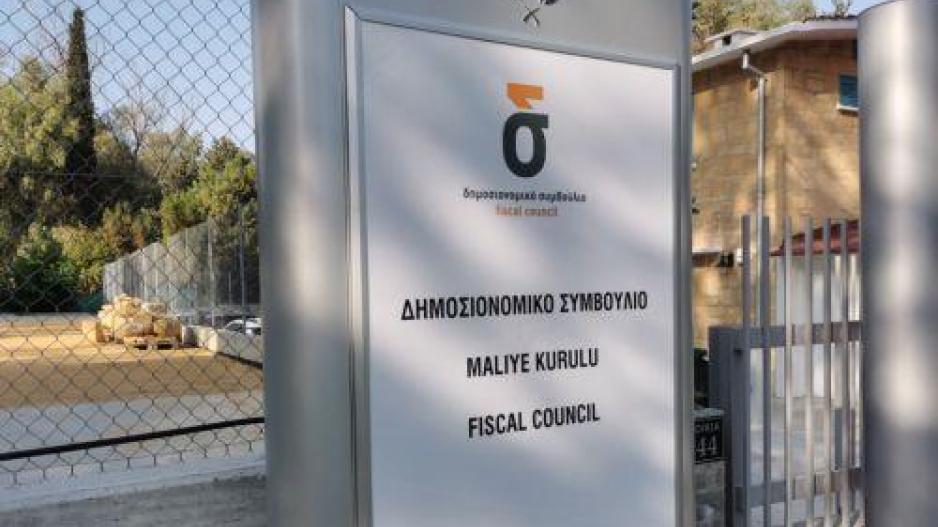
The Fiscal Council warns that Cyprus’ strong economic performance will not be enough without long-term policy planning. Michalis Persianis says future risks linked to public spending, FDI, housing, energy, and global financial pressures must be addressed while the economy remains resilient.
The good performance of the economy to date must be accompanied by a deliberate policy aimed at preserving its positive features, outgoing President of the Cyprus Fiscal Council, Michalis Persianis said, in his address accompanying the Council’s 2025 Annual Activities Report.
Persianis noted that while the economy continues to maintain the momentum of the past two years, with solid figures, strong resilience, and robust growth, medium-term risks are emerging that could potentially reach crisis levels in the coming years.
Specifically, he said that growth has moderated compared to previous years, but the economy still “has steam left in the engine” despite pressures that are mainly external in nature. Employment remains at full levels, and inflation, despite expected upward pressures in 2026, remains contained within forecasts. According to Persianis, public finances continue on what appears to be a successful trajectory: rising revenues, declining debt, continued budget surpluses, and comfortable liquidity levels.
In last year’s Annual Report, the CFC had already highlighted emerging medium-term risks, with costly needs beginning to surface and potentially reaching crisis proportions in the years ahead. It had also expressed concern regarding the long-term sustainability of a structure that finances recurring, permanent expenditures through non-recurring revenues. Such expenditures relate to climate issues, defence, energy, natural disasters, housing, and transportation.
As he pointed out, another highly significant factor is the careful management of Foreign Direct Investment (FDI), including ensuring that its benefits, whether wage-related, technological, or otherwise, are widely distributed and retained within Cyprus, particularly if factors emerge that could attract such investments to other destinations.
According to the Fiscal Council President, financing these needs, together with the eventual exhaustion of development-related expenditures, will pose a major planning challenge. “The planning and implementation of medium- and long-term strategies has been a persistent weakness of the Republic of Cyprus,” Persianis emphasised.
He added that despite certain developments, such as the political decision to improve the management of the Social Insurance Fund, the broader picture remains unchanged. “Cyprus is doing well, but the risks lie in the years ahead,” he noted.
Furthermore, he stated that the external environment is increasingly contributing to these risks. Imbalances in the global economy and international markets are growing, and early signs have already begun to appear in Cyprus. Among them is the rise of shadow banking and financial institutions operating outside regulatory oversight. “Bank lending to such entities has now exceeded 10% of the total, creating a channel through which risk is transferred from high-profit, high-risk businesses to traditional financial institutions,” he said.
Government debt markets are also experiencing pressures, although these are not yet strongly felt in Cyprus due to the successful debt reduction and management policies of recent years. According to Persianis, financial markets increasingly reflect less of the overall health of economies, having become detached from the real economy and serving less effectively as intermediaries to direct savings toward the most productive investments. Public finances are also facing gradually increasing pressures in international markets. “These imbalances will eventually need to be corrected, and Cyprus cannot remain unaffected,” he said.
Therefore, he argued, Cyprus’ strong resilience and inherent strengths must be reinforced. “The good performance achieved so far is not enough unless it is accompanied by a conscious policy of preserving the positive elements of the economy, such as the rapid increases in Foreign Direct Investment (FDI) seen in recent years,” he added.
However, Persianis pointed out that the growth of FDI without a clear strategy or supporting policies, while undoubtedly a blessing for the country, has also brought significant risks, widening inequality, social pressures, and deterioration in areas such as energy, housing, and transportation. None of these outcomes were or are inevitable if a specific policy for managing and distributing the benefits of FDI is adopted, he noted.
A similar picture exists in many other aspects of the economy, he added. “What we lack is better organisation and a less short-term, even myopic, approach to analysis and policymaking,” he said, highlighting the importance of developing clear strategies with explicit goals for energy, demographics, FDI, and broader development policy.
According to Persianis, this can still be done relatively easily while there remains a window of opportunity, one that, he warned, will not remain open indefinitely.