Cyprus Faces Nationwide Strike Over ATA Dispute as Talks Collapse
13 unions plan a three-hour walkout as employers and government push for talks.
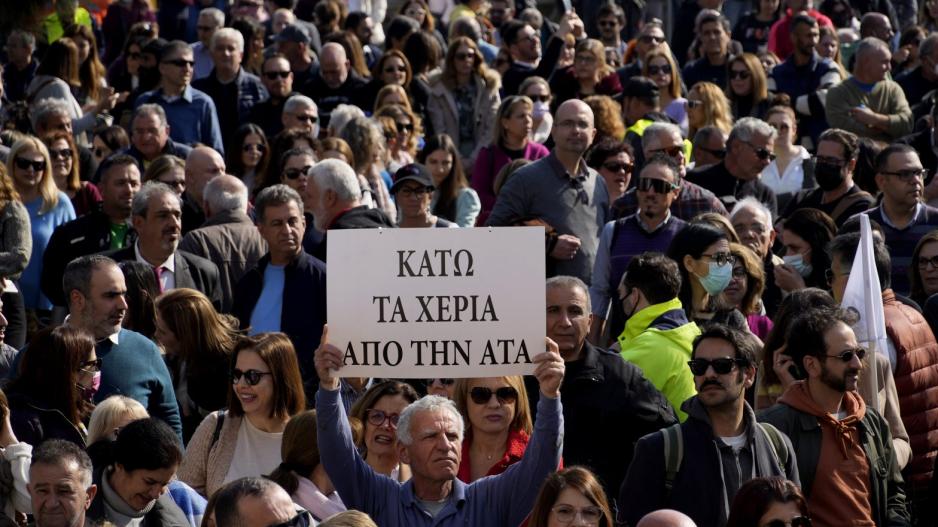
Cyprus is heading for a major labor showdown after trade unions announced a nationwide strike on 11 September, escalating tensions with employers and the government over the future of the Automatic Cost of Living Allowance (ATA).
The dispute has been simmering for months, with negotiations between unions, employer groups, and the Ministry of Labour failing to yield a compromise. ATA, a mechanism that adjusts wages in line with inflation, was partially restored in recent years after being frozen during the financial crisis. Unions now demand its full reinstatement at 100%, while employers argue for a more flexible system tied to economic conditions.
At a joint meeting held at the headquarters of PEO, Cyprus’s largest trade union federation, 13 unions (excluding the bank employees’ union ETYK) unanimously voted to stage a three-hour work stoppage from 11 a.m. to 2 p.m. on 11 September. The walkout will span both public and private sectors, including construction, hospitality, health, education, transport, ports, and retail.
Union leaders framed the strike as a “battle for survival” of ATA. PEO General Secretary Sotiroula Charalambous warned that employers are trying to dismantle the mechanism by imposing new criteria, which would effectively nullify its purpose of protecting workers’ purchasing power. SEK chief Andreas Matsas echoed this, calling on workers to mobilize en masse and stressing that the dispute affects the entire labor market, not only union members.
Unions insist they gave the Ministry of Labour ample time to mediate. Talks, originally meant to conclude by June, repeatedly stalled. “The social dialogue has been exhausted,” union leaders said, adding that further measures will follow if no breakthrough is achieved.
Employer organizations OEB (Employers and Industrialists Federation) and CCCI (Chamber of Commerce and Industry) condemned the strike decision as irresponsible and damaging to Cyprus’s economy. Both groups stressed that the dialogue process is still officially ongoing and that, under the Industrial Relations Code, only the Labour Minister can declare an impasse.
OEB warned that strikes would complicate efforts to reach a permanent agreement on ATA, while CCCI said the move was “blackmail” that risks undermining productivity, competitiveness, and investor confidence. Both called on unions to return to the negotiating table.
OEB President George Pantelides also urged unions to “exhaust every possible effort” to reach a practical compromise, insisting that the system must be modernized to reflect economic realities.

Labour Minister Yiannis Panayiotou has repeatedly appealed for calm, stressing that his ministry is committed to mediation. In written statements and last-minute letters to union and employer leaders, he urged both sides to avoid disruptive measures and continue talks toward a “comprehensive and permanent agreement” on ATA.
The Presidency is said to support the minister’s mediating role and believes strikes could have been avoided since no official deadlock has been declared. Still, Panayiotou faces mounting criticism from unions for failing to deliver concrete proposals despite earlier promises to wrap up negotiations by June.
The gulf between the two sides remains stark. Unions demand the full restoration of ATA across all sectors through collective agreements and its extension to minimum-wage earners. Employers, on the other hand, favor a restructured system, possibly with partial or conditional payouts, arguing that full restoration threatens economic competitiveness.
The head of the civil servants’ union PASYDY, Stratis Matthaiou, accused employers of showing “no willingness to discuss anything beyond redistribution,” claiming they are seeking to dismantle the system altogether. He defended the strike as the product of “mature and serious consideration.”
The 11 September strike will be accompanied by demonstrations in all major towns, with a central rally outside the Ministry of Finance in Nicosia. Essential services, such as hospitals and air traffic control, will operate with skeleton staff.
While the Labour Minister remains optimistic about a possible compromise, union leaders warn that unless ATA is fully reinstated in line with its original philosophy, industrial action will escalate. Employers, meanwhile, caution that continued confrontation could jeopardize Cyprus’s economic stability.
The coming days will show whether mediation efforts can bridge the divide—or whether Cyprus is on the brink of a prolonged labor conflict.