Cyprus Splits Larnaca Mega-Project After Privatization Collapse For State Control
- The critical milestone of June 30th and what is "locked" in the new timeline
- The roadmap will include the strategy for smaller tenders
The countdown for Larnaca has already begun following a decisive meeting at the Presidential Palace, chaired by the President of the Republic of Cyprus, Nikos Christodoulides, and attended by the Minister of Transport, Alexis Vafeades, the Municipality, the District Self-Government Organization (EOA), and the Larnaca Chamber of Commerce and Industry (EVEL).
Following the definitive collapse of the contract with Kition Ocean Holdings, the government has severed ties with the failed past and set a strict, immediate timeline, according to which the Cyprus Ports Authority (CPA) is tasked with presenting a comprehensive, costed, and implementable roadmap by June 30th.
This date constitutes a major financial and operational milestone for the city. The roadmap is considered a strict, step-by-step strategic action plan that will determine how the development moves forward.
Cyprus Ports Authority sources told Brief that the document to be delivered at the end of June will include five main pillars, according to which the plan will:
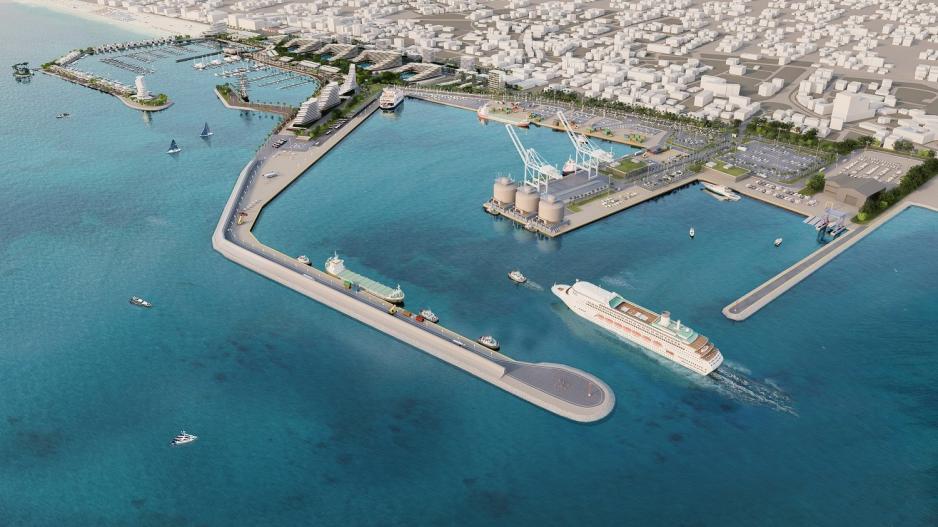
First, define the exact timeline for how the project is definitively split into two. The Marina will be isolated and promoted as an autonomous tourism and leisure development, while the port will proceed separately for compatible commercial cargo, satisfying a long-standing demand of local stakeholders.
Second, accurately record the allocation of funds. The CPA will invest its own capital for the immediate initial needs, while the level of state participation and the resources to be sought from the market will be determined, ensuring that the project does not run out of liquidity.
Instead of an "umbrella" investor controlling everything, the roadmap will include a strategy for smaller, "fragmented" tenders. It will define when tenders will be launched for construction contractors, for the managers of the Marina's commercial zones, and for specialized service providers.
Furthermore, the list will include the timeline for purchasing new, modern technological equipment for the port. The goal is to eliminate environmental impact to protect citizens' health, making this the CPA's first operational priority.
Additionally, the plan for the physical and aesthetic connection of the Marina with the urban fabric of Larnaca will be mapped out. In cooperation with the Municipality and the EOA, land uses will be determined for the creation of pedestrian walkways, green spaces, and dining areas, essentially extending the Phinikoudes seafront.
This shift marks a major economic experiment for Cyprus. Following the failure of the full privatization model in Larnaca, the state is returning to public control via a semi-governmental organization, aiming to prove that flexibility, realism, and smaller, manageable projects can bring the stability and growth that the city has been deprived of in recent years.