The Dollar Under Pressure: The Beginning of the End or Just Another Crisis?
Record Losses and Growing Doubts Over Us Credibility Are Reigniting the Debate About the Future of the World’s Reserve Currency.
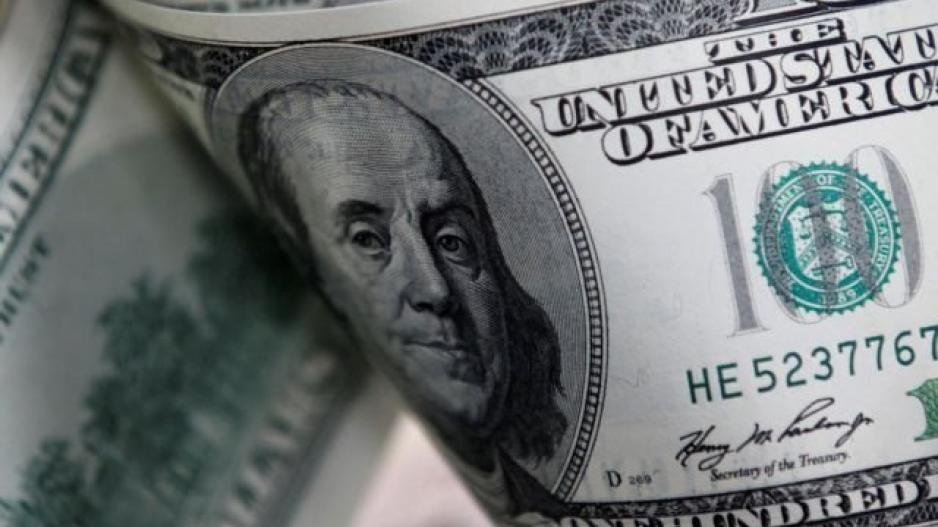
Discussions around the future of the dollar as the global reserve currency are intensifying. The dollar closed 2025 with losses, amid a “Sell America” investment strategy, as the US currency came under pressure from the political and fiscal agenda of US President Donald Trump. Its downward trajectory was further reinforced by interest rate cuts from the Federal Reserve.
During the first half of 2025, the dollar recorded its worst performance in more than 50 years, as the announcement of reciprocal tariffs by Trump shook confidence in US assets.
The dollar index, which tracks its performance against a basket of major currencies, fell by nearly 10% throughout 2025.
The dollar saw a temporary rebound following the outbreak of the war in Iran on February 28, strengthening against major currencies and moving in tandem with oil prices, before weakening again as hopes for peace pushed oil prices lower.
European Central Bank President Christine Lagarde seized the moment and, in an article in the Financial Times, argued that it may be time for a “global euro,” reopening debate within Europe.
However, the euro is not the only contender challenging the dominance of the US currency.
Deutsche Bank fueled the conversation after one of its strategists suggested that the dollar’s dominance could be undermined if countries begin pricing crude oil in alternative currencies.
The war in Iran could be remembered as a key catalyst for “undermining the dominance of the petrodollar and the beginning of the petroyuan,” according to Mallika Sachdeva in a note published on March 24.
Franklin Templeton responded on April 14, calling the analysis “overly simplistic,” arguing that the relationship between security and oil pricing, particularly with Saudi Arabia, had been misinterpreted.
“Oil is not priced in US dollars simply because the United States has long acted as the world’s policeman,” wrote Sonal Desai.
“Oil exporters have a strong incentive to be paid in US dollars because of what dollars represent: access to the deepest and most liquid capital markets, supported by an institutional and legal framework that protects property rights and enforces contracts.”
The views of Deutsche Bank and Franklin Templeton represent the two ends of the spectrum in the de-dollarization debate.
Deutsche aligns with those who believe the currency is in structural decline, while Franklin reflects the camp that sees no viable alternative.
The war in Iran has sparked renewed enthusiasm around the prospects of the Chinese yuan competing more effectively with the US dollar.
Although it still significantly lags behind the dollar in global trade, demand for the yuan has risen after Iran took control of the Strait of Hormuz and began accepting payments in the Chinese currency.
The conflict has revived discussions around a “petroyuan” — an idea supported by Xi Jinping during his Middle East visit in 2022, albeit with limited success.
A scholar affiliated with the Chinese government noted that the volume of crude oil traded in yuan has increased, while the CIPS payment system has recorded a surge in transactions.
The share of global reserves held in dollars has declined over the decades, from over 70% in 1999 to just above 50% today. Other currencies, such as the yuan and the euro, have increased their share, but the dollar continues to dominate.
Despite its weaknesses, analysts struggle to envision a world where the dollar does not play a central role in global trade.
“There is no alternative,” said Elias Haddad of Brown Brothers Harriman in an interview with CNBC. “No other currencies even come close.”
China holds around 3% of global central bank reserves and is gradually increasing its influence as part of its currency internationalization strategy.
However, it is unlikely to reach 50% anytime soon, especially given its relatively closed capital markets. The same applies to the eurozone.
Desai explains that building a credible alternative takes decades, as it requires developed financial markets, strong rule of law, and macroeconomic stability.
At the same time, pressure on the US security umbrella and declining trust in US policymaking are weighing further on the dollar’s reputation.
Concerns over US fiscal credibility and the perceived undermining of the Federal Reserve by Trump are additional factors that could prolong the downward trend.
This could ultimately lead to a scenario where the dollar’s status as a reserve currency is gradually weakened — becoming less dominant, but not fully replaced.
Source: ot.gr