Lagarde’s Digital Euro Ambitions Clash With King Dollar
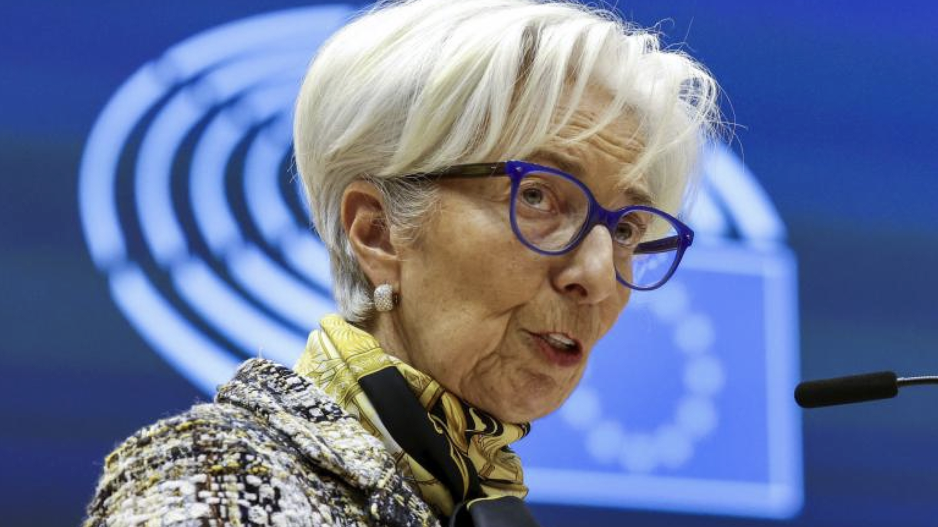
European Central Bank President Christine Lagarde’s digital euro initiative is part of a broader geopolitical push for independence and autonomy, aiming to make the EU less reliant on third parties and reduce its exposure to major economies like the US and China.
At the same time, it aligns with officials' ambitions to bolster the global role of the euro amid the unpredictable policies of Donald Trump, which have previously "bruised" the dollar.
However, while the digital euro project is now treated as an urgent priority by European policymakers, it is not expected to launch until 2029. By then, the White House will have already signed the Genius Act into law, establishing a concrete framework for digital currencies. The US President has even celebrated the move, boasting that it would "secure the dollar's position as the global reserve currency for generations to come."
Europe's delays are working in favor of dollar hegemony, as Washington has actively backed stablecoins, and the dollar remains the undisputed king of this market.
European banks are also beginning to realize the threat posed by America taking an undeniable lead in the race to control the future of money. Some voices argue that the digital euro is not the only solution, pushing instead for their own euro-denominated stablecoins and claiming they can deploy them much faster than the ECB.
"We are at that stage now, and stablecoins are ready to launch," Jan-Oliver Sell, CEO of Qivalis—a consortium involving major banks like ING and UniCredit that plans to issue a coin later this year—told Bloomberg.
Europe is already vulnerable on multiple fronts, relying heavily on American firms for its payment infrastructure, which is another source of deep concern.
"If we lose control of our money, we lose control of our economic destiny," warns Piero Cipollone, an ECB Executive Board member who heads the institution's digital currency project. "We are surrendering a core attribute of our sovereignty."
Bloomberg spoke with bankers, politicians, and officials—some of whom requested anonymity—to trace Europe's uphill battle to launch the digital euro.
The path forward remains fraught with difficulties due to European Union bureaucracy, regulatory disagreements, and clashing national interests. A European Parliament committee vote, which was anticipated to take place this month, has been pushed back until at least June.
Commercial banks are actively lobbying against the digital euro, fearing a contraction of their deposit bases. Instead, many are pushing harder for private stablecoins, with Société Générale becoming the first to launch its own.
While such private initiatives technically compete with a central bank-backed digital euro, a different perspective suggests they are all part of a multi-layered "payments stack." This ecosystem ranges from central bank currencies to digital tokens and stablecoins, all working toward the ultimate goal of independence.
Anxieties over dollar dominance are intensifying due to Trump's confrontational approach to international relations. Europe’s leaders have already learned firsthand how vulnerable their position is regarding critical resources.
The euro is the world's second-largest reserve currency, though it trails significantly behind the dollar. During a meeting of eurozone finance ministers late last year, an intense debate broke out over whether stablecoins would reinforce dollar hegemony and what Europe’s response should be.
Acting preemptively, the ECB, which strongly favors a central bank digital currency (CBDC), has pushed to ban multi-issued stablecoins. These tokens are issued across multiple jurisdictions, which the ECB argues creates severe supervision and contagion risks. At the meeting, several countries opposed such a ban, arguing that Europe was fighting a battle it had already lost.
The US push for stablecoins was formalized through the Genius Act passed last year—a piece of legislation regulating dollar-pegged tokens aimed at creating a stable framework for this new form of money.
Stablecoins essentially offer a 24/7, low-cost, instant dollar-based banking service to anyone, anywhere in the world. As they expand beyond cryptocurrency markets and enter real-world payments, Trump views them as a prime tool to extend the reach of the US currency. Of the $322 billion worth of stablecoins currently in circulation, roughly 99% are pegged to the dollar.
This trend has also generated massive demand for US Treasury bonds. Data from El Salvador-based Tether, issuer of the world's largest stablecoin (USDT), shows it holds approximately $117 billion in US government debt.
Last month, French Finance Minister Roland Lescure stated that the stablecoin market has become "overly dollarized," calling for measures to strengthen sovereignty "and the role of the euro in the global economy."
In February, Members of the European Parliament backed the ECB's plans, stating they are "essential for strengthening the EU’s monetary sovereignty." Spain has since pushed for a speedier implementation ahead of the 2029 deadline, arguing that the rapid advancement of US stablecoins makes the matter far more urgent.
Europe is already heavily dependent on American companies for the infrastructure supporting everyday payments. This spans from card transactions processed by Visa and Mastercard to mobile wallets provided by Apple and Google. Currently, nearly two-thirds of card transactions in the eurozone are handled by non-European companies. As cash usage continues to decline, the growth of stablecoins could create a dangerous new layer of dependency.
"You have to think of stablecoins as the payment rails of the future world," explains Marieke Flament, co-founder of Currency of Power, which advises governments and financial firms on digital money. "If you aren't building the rails on which the euro will move in the future, then the euro might not exist."
China, Russia, and Iran are also advancing their own versions of digital fiat or leveraging existing cryptocurrencies to bypass traditional banking infrastructures and controls, further underscoring the broader geopolitical competition at play. Russia experienced firsthand the sting of being blocked from global payment networks when its access was restricted following its 2022 invasion of Ukraine, dealing a direct blow to its economy.
Meanwhile, Christine Lagarde continues to apply pressure. Last week, she reiterated that the digital euro "will strengthen Europe's strategic autonomy."
Mindful of the ticking clock, the ECB has also launched a wholesale digital currency initiative, aiming to modernize interbank settlements and support the use of tokenized money among major financial institutions.
Even so, the digital euro has a massive gap to close against the US.
"We need to realize that digital money is not about crypto-libertarians trying to bypass financial regulation or outsmart banks," emphasizes Andrew Whitworth, founder of financial technology and crypto consultancy Global Policy. "In reality, it is about the sovereignty of your economy. It is a geopolitical issue."