Pension Pause, Minister Postpones Bill to Seek Union Consensus

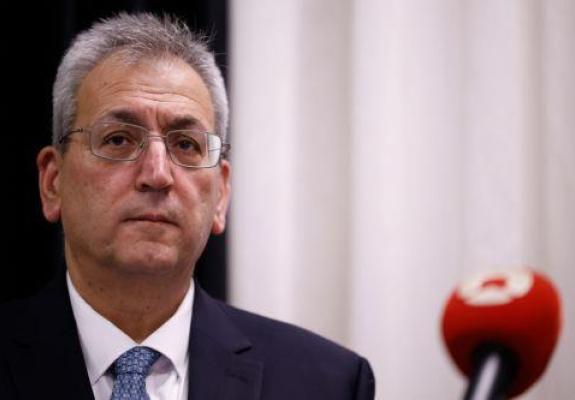
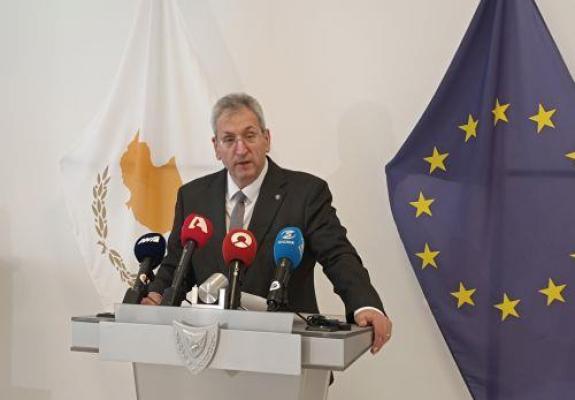
Labor Minister Marinos Mousiouttas has delayed submitting the highly anticipated pension reform bill, pushing the timeline to September to bridge deep divides over Provident Funds.
Social partners were informed late last night - The Minister of Labor wants to give time for convergences to emerge.
-
A new timetable regarding the pension reform is expected to be set today.
-
Unions warn: No green light without the Provident Funds.
-
The questionnaire given by the Technical Committee to the social partners deemed inappropriate.
Marinos Mousiouttas will ultimately not submit the draft bill regarding the reform of the pension system to the Labor Advisory Body (ESS) today, despite previous intentions.
The Minister of Labor (YPERG) confirmed his decision to Brief, implying that a new timetable will inevitably have to be set.
As he noted, the government's intention is for the draft bill to be approved by the Council of Ministers in early September and subsequently be submitted to the House of Representatives.
Mr. Mousiouttas expressed the view that this new development will grant more time to all social partners, government, employers, and trade unions, to create the necessary convergences and make it possible to implement the pension reform at the beginning of the new year.
As Brief reported earlier today, it was uncertain whether the Minister of Labor would submit the draft bill to the ESS today due to reactions from the other two social partners (employers and unions), specifically from the trade union movement, which demands the inclusion of Provident Funds in Phase A of the reform.
The exclusion of the second pillar from the first phase of the pension reform is the major issue inevitably triggering reactions from the trade union movement.
On the other hand, the Minister of Labor is under pressure from the government's commitment to implement Phase A of the pension reform by January 1. Concurrently, he must manage the intense pressure felt from the other two social partners, employer and trade union organizations, regarding the controversial issue of Provident Funds.
OEB (Employers and Industrialists Federation) and KEBE (Cyprus Chamber of Commerce and Industry) do not want to hear about the potential inclusion or promotion of the Provident Funds institution in the private sector during Phase A, at least at this point in time.
The employer side believes that such a "radical change" would significantly increase labor costs for many businesses, which they claim are barely surviving.
OEB and KEBE would prefer a gradual and cautious implementation of Provident Funds in businesses through free collective bargaining.
For the trade union side, the second pillar, Provident Funds, is an absolute prerequisite. As they state, "it will greatly help upgrade the living standards of retirees, increase savings, and assist businesses through long-term investments."
SEK, PEO, and DEOK hold entirely identical positions both in substance and principle regarding the pension reform.
"The reform must be comprehensive and include all pillars interconnected with the pension system, so that the entire structure can be built properly and sustainably," Andreas Matsas, General Secretary of SEK, noted to Brief.
He stressed emphatically that SEK and the rest of the trade union movement are not going to give the green light to the draft bill unless the second pension pillar, the Provident Funds, is included.
"The pension reform must be comprehensive and sufficient to support the real needs of retirees," the General Secretary of SEK observed.
Sotiroula Charalambous, General Secretary of PEO, recalled that the government had committed for quite some time through public statements, either by the President himself or the Minister of Labor, to proceed with an integrated pension reform.
"We don't see this happening," she said. "Instead, it seems intended to proceed only with the first pension pillar, leaving out the Provident Funds, which would be a serious mistake," she noted.
She expressed wonder at the government's haste regarding such a serious matter affecting people's pensions.
The General Secretary of PEO stated that the trade union movement has no knowledge regarding the increase in low pensions.
"If what is being leaked is true, I think most pensions will remain at the poverty line," she said, adding:
"Even if the best-case scenario is implemented, raising the minimum pension to €674 under certain conditions, I have the impression that there will still be pensions of €500 and €600."
"Under this scenario," she said, "the retiree will have an income below the poverty line."
Stelios Christodoulou, President of DEOK, expressed the view that it would be a mistake to leave Provident Funds out of Phase A of the reform.
"It seems that as a trade union movement, we will find ourselves facing an incomplete reform, the lack of which may not meet the expectations of the people, especially the need for adequate pensions," the President of DEOK added.
It is noted that for SEK, linking the minimum pension to the minimum wage is inappropriate.
Substantial improvement in salary earnings is a fundamental prerequisite for improving pension benefits, whereas today's minimum wage is below 60% of the median wage, as prescribed by the EU itself.
In any case, dissatisfaction was caused among both social partners, employers and unions, by the questionnaire from the Technical Committee, which called on them to answer with a simple "yes" or "no" as to whether they would like the institution of Provident Funds to be included in Phase A of the reform.
"It was an inappropriate questionnaire, the answers to which were self-evident from both the employers and the unions," officials from both sides remarked.