Pensions, Mousiouttas Saved the Process by Withholding the Bill
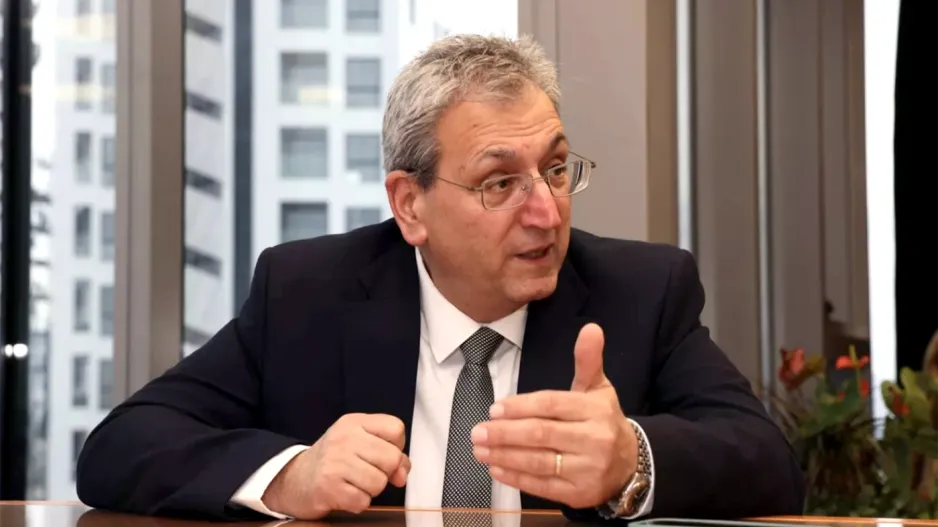
The Minister of Labor accepted the trade unions' request to allow time for convergences to be reached.
-
Social dialogue will intensify over the summer so that the bill can be submitted to Parliament within September
-
Annita in favor of a holistic pension reform
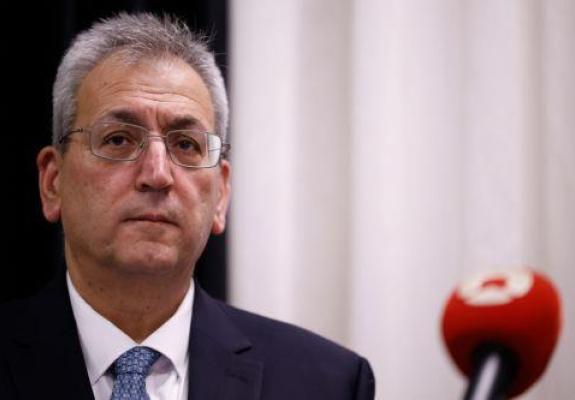
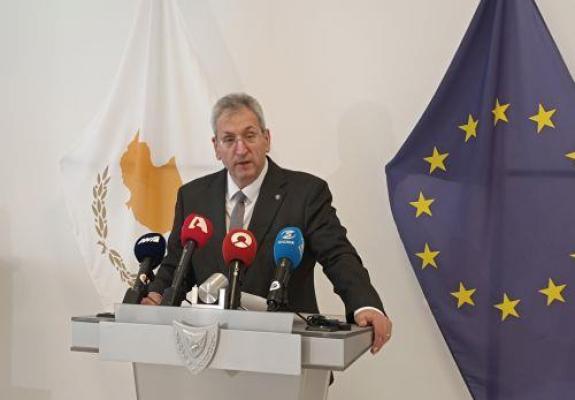
The decision of Marinos Mousiouttas, Minister of Labor, not to submit the bill for the reform of the pension system yesterday seems to have saved the process, and the prospects for its implementation in January 2027 appear rather feasible.
The bill would concern only the first pension pillar, i.e., the Social Insurance Fund, and not the second pillar, which is the Provident Funds.
The decision not to submit the controversial bill left the trade unions satisfied, whose leaderships stated that, with this development, time will be given to all social partners to examine and discuss the thorny issues of the reform, aiming to achieve more convergences.
Mr. Mousiouttas, in statements immediately after the end of yesterday's meeting of the Labor Advisory Body (ESS), mentioned that the two social partners, employers and trade unions, had been informed by him since yesterday evening that he would not submit the bill, adopting, as he said, the appeal of the trade union movement, which wanted more time for consultations within the ESS.
"We listened to the arguments of the labor side, had second thoughts, changed course, and started discussing the procedural aspects and how we move forward," Mr. Mousiouttas stated.
He emphasized that the goal is to formulate legislation that provides more benefits to employees and retirees, "always, however, within the framework of the Fund's income and expenses."
He noted that the objective, which is also adopted by the social partners, is to submit the bill to the House of Representatives within September.
He explained that consultations between the Ministry of Labor and social partners will intensify throughout the summer within the framework of the ESS.
According to information from Brief, it was mentioned during the meeting that the Ministry of Labor will provide the chapters making up the bill in parts, so that an extensive and more substantial discussion can take place.
Regarding the major issue of the second pension pillar, which is the Provident Funds, Mr. Mousiouttas reiterated the position that the second pillar will not be included in Phase A' of the reform.
"It is well known that on this issue there are conflicting views between employers and trade unions," the Minister of Labor pointed out.
Anything decided for the second pillar, he said, can be put into effect after three to four years.
Annita Went to Sek for the Pension Issue
A little later, Annita Demetriou, Speaker of the House and President of DISY, went to SEK, where she had a meeting with the Secretariat of the Movement.
The main subject was the reform of the pension system.
In statements after the conclusion of the meeting, the Speaker of the House unreservedly favored a holistic reform of the pension system.
In a remark by Brief on whether she means the inclusion of the second pillar, i.e., the Provident Funds, in Phase A' of the reform as well, Ms. Demetriou answered affirmatively.
"The second pillar is necessary to achieve both reciprocity and the adequacy of pensions," she clarified.
She characterized the pension issue as a capital matter and said that the goal of increasing low and middle pensions "is shared with SEK."
Andreas Matsas, General Secretary of SEK, noted that the smooth promotion of the pension reform should be beneficial for employees and retirees, as well as for employers.
He made it clear that there is no issue of a competitive approach, either from the government or from the social partners.
"An effort is being outlined," said the GS of SEK, "which has as its ultimate horizon the implementation of a goal that has been set from the beginning. That is, the adequacy of pensions, which can only be achieved through a comprehensive settlement, a comprehensive design."
Responding to another question from Brief, Mr. Matsas said that incentives to the employer side for the implementation of the institution should not be ruled out.
"It is something that can work complementarily and adjustably to support the benefit of all contracting parties," he added.
According to Mr. Matsas, they also discussed with the Speaker of the House the possibility of designing an independent authority for managing the reserve and investment policy of the TKA.
They also discussed the possibility of extending collective agreements in the private sector, through the strengthening of workers' wage rights as well.
On the meeting table, reference was also made to the actuarial reduction of 12%, with a common finding, as he said, "to provide a way out and satisfactory management for lifting this leveling regulation."