Prevention Over Cure: EU Agriculture Ministers Pivot Toward Risk Management and Strategic Autonomy
Minister Panayiotou Outlines a “Prevention-First” Strategy as the Essential Path for Long-Term Sustainability and Crisis Management in European Farming.
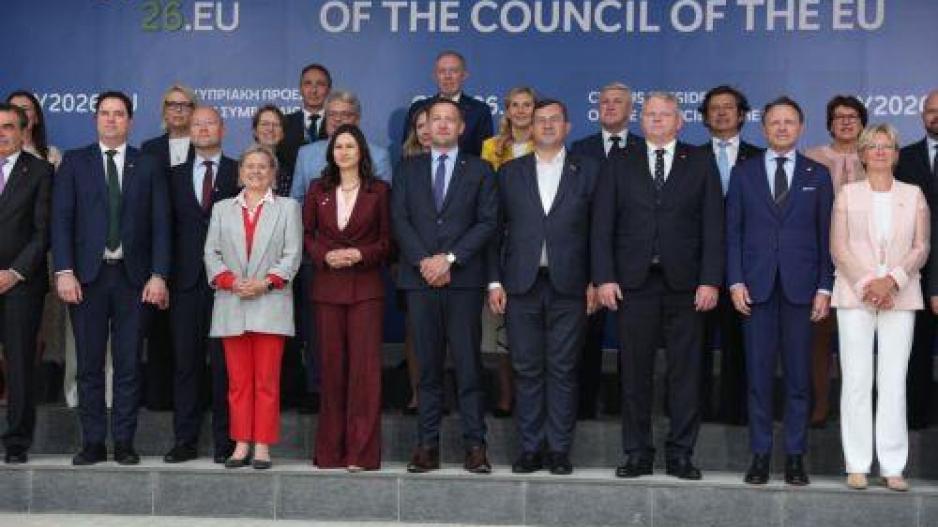
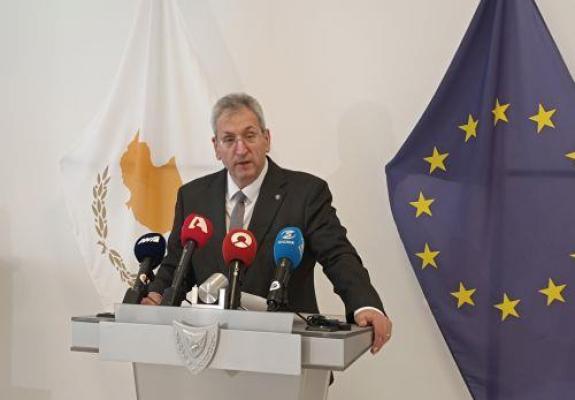
If we want agriculture that is truly resilient, competitive, and sustainable, investing in prevention is not an option, it is the only way forward, said the Minister of Agriculture, Environment, and Rural Development, Maria Panayiotou, during the press conference that followed the Informal Meeting of EU Ministers of Agriculture and Fisheries on Monday in Nicosia.
According to the Minister, the Cyprus Presidency, with the central message “An Autonomous Union. Open to the World,” chose to make risk management the central topic of discussion at the Informal Council of Agriculture Ministers, aiming to contribute to the political dialogue on further strengthening the resilience of European agri-food systems and the Union’s strategic autonomy in food and feed.
As she noted, prior to their discussion, the Ministers had the opportunity to hear from the World Bank the findings of its study titled "Solutions for Better Agri-Risk Management in the European Union," where, as she said, it was found that strengthening prevention, preparedness, and effective risk management are key pillars that must be addressed in order to further strengthen the agri-food sector.
She added that the Ministers agreed that strengthening the resilience of European agriculture is a key priority for the coming years and that a more coherent, more holistic approach to risk management, both within the framework of the Common Agricultural Policy and beyond it, while the Ministers’ common position is that prevention is a key pillar of effective risk management.
“In the face of the threats to the primary sector, we must direct sufficient and targeted resources toward prevention and early intervention tools. If we want agriculture that is truly resilient, competitive, and sustainable, investing in prevention is not an option, it is the only way forward,” she noted in this regard.
According to Panayiotou, it was widely acknowledged during the discussion that addressing growing risks cannot be the sole responsibility of the Common Agricultural Policy, rather, a more horizontal European approach is required, one that leverages synergies with other European Union funding and policy tools.
She added that particular interest was expressed in further expanding potential solutions, such as, for example, the creation of a European reinsurance mechanism for natural disasters in the agricultural sector and the promotion of the use of innovative prevention tools and early warning systems.
“As a Mediterranean Member State that has been experiencing the effects of a prolonged drought in recent years, Cyprus attaches particular importance to the need to strengthen the resilience of European agriculture against the impacts of the climate crisis. This challenge concerns the entire European Union and requires common European responses,” she emphasized.
“The results of today’s meeting do not constitute a final decision, but essentially represent the policy guidelines of the European Union’s Ministers of Agriculture for further strengthening European crisis response mechanisms in the agricultural sector, because we want farmers to feel that we stand by them. These guidelines set a clear political course for the future and will serve as a compass for discussions on the content of the Common Agricultural Policy after 2027, as well as for the broader development of the Union’s relevant policies in the area of resilience and risk management in agriculture,” she noted.
“Europe cannot predict every crisis, but today it is proving that it can be better prepared for each. The risk management tools exist, they must become more targeted and more flexible so that they can respond promptly and effectively to farmers’ real needs, address the causes, and limit the impacts before they escalate, ensuring the stability of the European agri-food chain,” she further stressed.
“The Cyprus Presidency will continue to work closely with the Member States, the European Commission, and the European Parliament to promote solutions that strengthen the competitiveness, sustainability, and resilience of European agriculture for the benefit of farmers and citizens of the European Union,” she concluded.
For his part, the European Commissioner for Agriculture and Food Development, Christophe Hansen said that today Ministers discussed vulnerabilities, such as climatic risks, but also market volatilities, geopolitical risks, and animal diseases that are becoming ever more frequent and create an instability.
“At the Commission, we share the same conclusion with the Cyprus Presidency. We need to increase the uptake of risk management tools, and we need an integrated strategic response at both EU and member state level. Crisis measures like our current agriculture reserve, for example, should complement and not just replace risk management strategies, because money, as you know, is limited, and this is very important to better be prepared and more resilient”, he continued.
“We know that agriculture is by definition a very volatile activity, and this is why we have as well the public support. But the Common Agriculture Policy is a policy that goes beyond safeguarding farmers' income, and it can support investments and agro-environmental climate measures to make farms more resilient. There can be funds to set up new irrigation infrastructures, help with precision farming, research on crops that would be more resistant to climate change, and so on, and in the next CAP, we will expect a specific risk management strategy from each and every member state”, he stressed.
The Commissioner added that on Monday afternoon, Ministers were expected to focus as well on the strengths of the sector, and hear more about Cypriot winemaking, while highlighting that recently a wine package was adopted at EU level to bring concrete simplification to the winemakers.
“We, of course, know that the challenges are big, climate change, but as well changing consumer behaviour, geopolitical tensions, and tariffs, so we need to adapt to that”, he concluded.
Αsked what strategies and tools could be used to address animal diseases, Panayiotou said that today’s discussion revealed that many EU countries have highlighted the issue.
“Like the climate crisis, animal diseases affect, I would say, most countries in the European Union in different ways and with different diseases, but the result is the same: they endanger the livestock sector, and the concern is that they do not endanger food security. The tools we are asking for are precisely to prevent us from reaching that point. Farmers and livestock breeders need to feel that we are by their side from the very beginning until the day they resume operations, because resuming operations must be attractive, that is what is at stake. And it is everyone’s common position that in order to properly address crises such as those caused by animal diseases, we need to emphasize crisis management tools and, above all, the aspect of prevention,” he stressed in this regard.
Regarding the issue of foot-and-mouth disease in Cyprus, she added that the European Commission stands by and supports Cyprus in tackling the disease, as it does in other European Union countries, adding that she will meet on Tuesday with her Greek counterpart, Margaritis Schinas, to discuss the matter.
“From the very moment the outbreak began, the Commission, through vaccines and through the guidance of veterinarians and experts, has stood by us and supported every step we take. The same applies for the Agriculture Committee with the additional financial tools at its disposal. The issue, I repeat, is not the management we are currently undertaking, which all countries are required to carry out in accordance with the regulation. The question, the challenge, is what we can do before we reach this crisis—and every crisis we face—so that farmers can feel secure. That is what matters to us, and that is what we addressed today,” she noted.
On the same issue, Commissioner Hansen said that unfortunately, the spread and the diversity of animal diseases across Europe is currently very high, despite applying the strongest standards and the best controls. “I think that we need to lift biosecurity in general to a higher level, because we have seen as well to what it has contributed in certain member states”, he noted.
He added we need to strengthen research in vaccination and that certain diseases need to be reclassified, while apart from the agriculture reserve there are other funds available for the eradication of diseases
“I feel very much with the Cypriot farmers currently. We have very strict veterinary protocols, and we have a very close cooperation as well with the Cypriot authorities, so that the protocols are followed as closely as possible”, he concluded.