Sustainable Innovation in the Region
East Med Consortium Joins New European Bauhaus Alliance (NEBA) South Hub to Drive Sustainable Innovation in the Built Environment
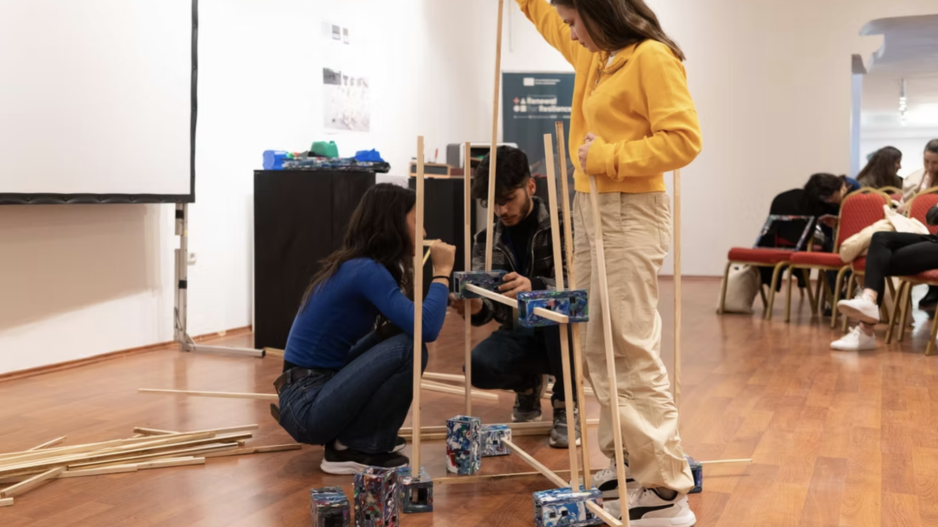
A new consortium led by SocialTech Lab (Cyprus), together with the Society and Urban Form (SURF) Lab (Cyprus) at the University of Cyprus, KARMA Mixed Reality Lab (Türkiye) at Koç University, and Aks Creative Hub (Türkiye), has been selected to join the New European Bauhaus Academy (NEBA) South Hub, a major European initiative focused on transforming the built environment through sustainability, inclusion, and beauty.
The consortium joins the NEBA South Hub, established by founding partners IAAC (Spain), Cesefor (Spain), and Regione Liguria (Italy), as part of the NEBA Alliance, a Europe-wide effort co-funded by the European Union and supported by the Circular Bio-based Europe Joint Undertaking (CBE JU).
The NEBA South Hub aims to upskill youth and professionals in the construction and built environment sectors through high-quality, accessible learning. By focusing on lifelong learning, circularity, and innovation, the hub supports the transition to a carbon-neutral, inclusive, and aesthetically rich built environment, in line with the New European Bauhaus (NEB) values.

“Joining the NEBA Alliance marks an exciting step forward for our consortium of partners as we work to support and amplify innovation in the built environment across South Europe and the East Med, rooted in the shared values of sustainability” says Steven W. Stavrou, Co-Founder, Director of Strategy & Impact of SocialTech Lab.
As part of its NEBA South Hub activities, the East Med partners will:
-
Develop two lifelong learning programs focused on human-centered design, circularity, hybrid cities, and prototyping in the built environment.
-
Publish two open-access courses on the NEBA Academy platform.
-
Engage youth and creatives across South Europe and East Med through a series of learning events and mentorship initiatives.
The project builds on years of experience across the four partner organizations in architecture, design thinking, technology, commercialisation and community-driven innovation. The initiative also aims to address the systemic challenges in the Eastern Mediterranean, including unemployment, exclusion, and climate vulnerability, by creating pathways to education, economic empowerment, and inclusive design.
The consortium’s activities are set to launch in the coming months, with updates on the in-person training and public access to learning materials available through the official NEBA Academy platform.
“‘The project is supported by the Circular Bio-based Europe Joint Undertaking and its members. Funded by the European Union. Views and opinions expressed are however those of the author(s) only and do not necessarily reflect those of the European Union or CBE JU. Neither the European Union nor the CBE JU can be held responsible for them.’”