Showdown Over ATA: Employers and Unions Brace for Crucial Meeting with Labour Minister
Labour Minister George Panayiotou prepares to mediate between unions and employer groups amid deadlock over ATA restoration.
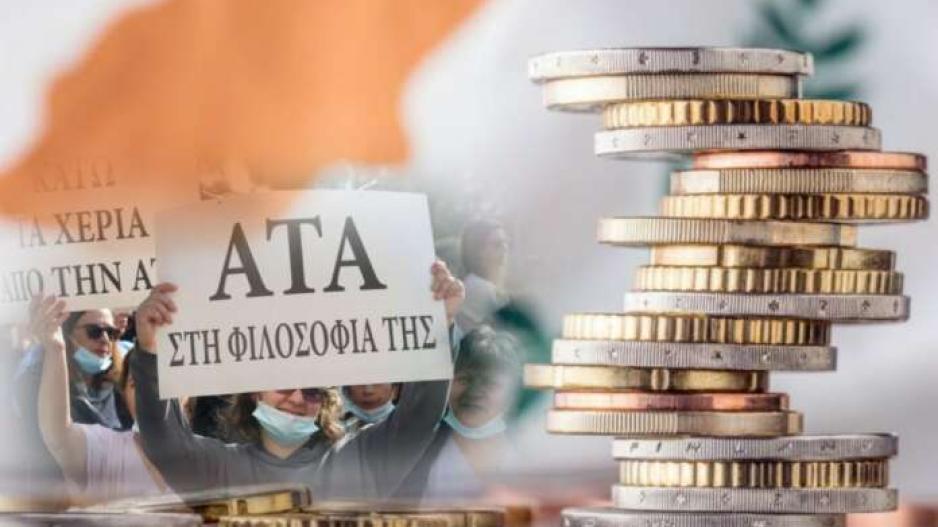
Employer and union organizations are closely watching for the joint meeting expected to be convened by Labour Minister George Panayiotou, focusing on the contentious issue of the Cost of Living Allowance (ATA).
As Brief reports, while yesterday’s separate meetings between the Labour Minister and the heads of the Employers and Industrialists Federation (OEB) and the Cyprus Chamber of Commerce and Industry (CCCI) were described as “constructive” by insiders, no substantial developments emerged.
Much like last Tuesday's meeting with the unions, Minister Panayiotou once again chose to listen rather than take definitive action. Employer representatives reiterated their established positions, albeit with some nuanced perspectives.
A senior employer official commented pointedly, “The ball is now in the Labour Minister’s court,” suggesting that it's now up to him to either table a proposal or declare a deadlock—particularly if the forthcoming joint meeting fails to yield any viable path forward.
The core positions of CCCI and OEB remain unchanged. Similarly, the unions stand firm on their demand for the full restoration of ATA at 100% based on its original philosophy. As union representatives made clear to the Minister: "Our position is not negotiable."
In contrast, employer groups continue to call for a fundamental revision of how ATA is calculated and allocated. Whether they refer to this as a change in the system's "architecture" or its "formula," the substance of the argument is the same: they want ATA tied to productivity and competitiveness.
Employers argue that ATA in its current form distorts market dynamics and harms business competitiveness. Both CCCI and OEB stress the need for a new, fairer framework—one that supports entrepreneurship and economic efficiency.
The Labour Minister is already aware that both CCCI and OEB are relying on a promise made by the President of the Republic in March 2023, conveyed by Panayiotou himself in his former role as mediator. That agreement allowed for an increase in ATA payments from 50% to 66.7%, on the condition that a comprehensive and permanent solution would be implemented.

Michael Antoniou, Director General of OEB, recently emphasized that any new permanent agreement must replace the existing framework, which he claims causes market distortions.
Former OEB President Antonis Antoniou also referenced an agreement from April 2023 during the federation’s annual general assembly, claiming it was reached based on prior coordination with the President.
On the union side, the four major trade unions—SEK, PEO, PASYDY, and DEOK—are holding onto the President’s public statements following his election. During a visit to SEK, the President had reaffirmed his commitment to gradually restoring ATA.
Adding a third layer to his position, the President stated during an interview with ANT1 that ATA must be targeted to support lower-income public sector employees. He noted that the same allowance shouldn't apply equally to both the Director General of a ministry and a lower-level civil servant.
While this view introduces a means-tested approach to ATA in the public sector, it does not affect employer organizations, since the state—being the country's largest employer—is not part of CCCI or OEB.