EU and US Strike Major Trade Deal Amid Global Uncertainty
Von der Leyen Says Agreement With Trump Brings Stability and Predictability
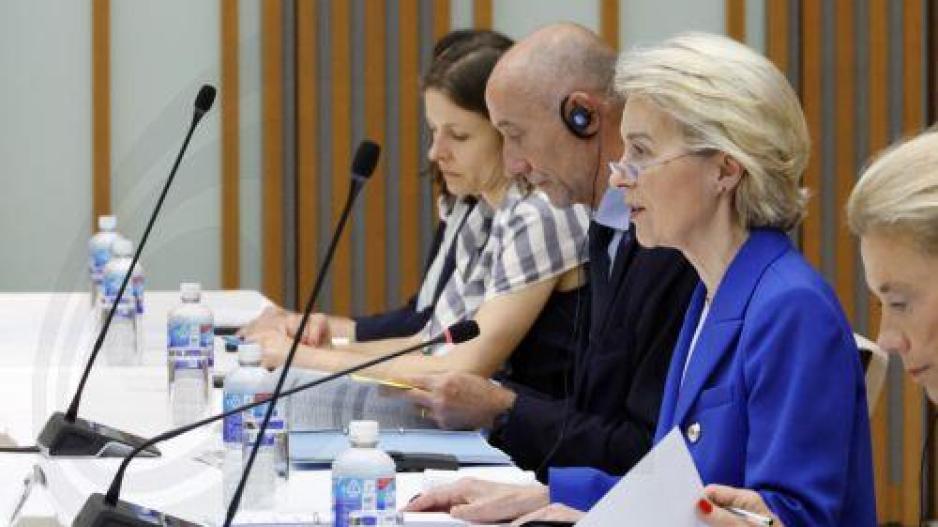
In a high-stakes diplomatic breakthrough, the European Union and the United States announced a sweeping trade agreement on Sunday, July 27, 2025, following a meeting between European Commission President Ursula von der Leyen and US President Donald Trump at Turnberry, Scotland. The deal introduces a 15% tariff rate on most EU goods and secures billions in EU commitments to buy US energy and military equipment, potentially averting a transatlantic trade war.
“This agreement brings stability in uncertain times,” von der Leyen said. “It offers clarity and predictability for citizens and businesses on both sides of the Atlantic.” She described the pact as a framework between the world’s two largest economies, which together account for nearly 44% of global GDP and conduct $1.7 trillion in annual trade.
The centerpiece of the deal is a unified 15% tariff on the majority of EU exports to the US, including automobiles, semiconductors, and pharmaceuticals. In return, the EU will reduce its own tariffs on US vehicles to 2.5% and exempt several strategic goods, such as aircraft, certain chemicals, and agricultural products—from any tariffs.
The EU also committed to purchasing $750 billion worth of US energy products, such as liquefied natural gas, oil, and nuclear fuels, over the next three years, and will invest an additional $600 billion into the US economy. According to Trump, European nations have also pledged to buy “hundreds of billions of dollars” in American military equipment.
Von der Leyen emphasized that the 15% tariff would serve as a clear ceiling. “This includes everything. It provides the clarity our businesses and citizens need. That is absolutely critical,” she noted.
The deal is seen as a major political win for Trump, who had promised landmark trade deals during his second term. But analysts suggest that the EU has conceded more in the short term. A Capital Economics analysis forecasts a 0.5% reduction in EU GDP due to the agreement.
For American consumers, the tariff hike may translate into higher prices on European goods. Meanwhile, US automakers are expected to benefit from easier access to European markets, while German carmakers face continued strain despite a drop in tariffs from 27.5% to 15%.
The pharmaceutical sector in Europe expressed concern over confusion surrounding the new tariff rate, with hopes for exemptions dashed. EU-based drug manufacturers, particularly in Ireland and Denmark, may now face new costs in a vital export market.
Conversely, stock markets in Europe and Asia responded positively to the deal, buoyed by the newfound certainty.
Reaction among European leaders has been split. German Chancellor Friedrich Merz cautiously welcomed the deal, calling it a necessary compromise to prevent deeper economic damage. However, French Prime Minister Francois Bayrou criticized the agreement as “a dark day” for Europe, saying it signaled a retreat under US pressure.
Dutch Trade Minister Hanneke Boerma echoed these concerns, calling the agreement “not ideal” and urging continued negotiations. EU ambassadors will meet this week to discuss the deal’s details and path toward ratification.
Von der Leyen was clear that the deal remains a framework requiring further technical discussions. Key issues, such as tariffs on alcoholic beverages and a quota system for EU steel, remain unresolved. The Commission aims to finalize these details over the coming weeks.
Despite lingering disputes, the agreement marks a significant moment in transatlantic relations. Coming just weeks after the NATO summit, von der Leyen hailed the deal as “the second building block confirming our transatlantic cooperation.”
If approved by all 27 EU member states, the deal could redefine one of the world’s most important economic relationships, forging a new era of cooperation amid growing geopolitical tensions.