Controversy Grows Over Reopening of Makariou Avenue to Traffic in Nicosia
MPs, Experts, and Stakeholders Clash Over Urban Mobility Policy Ahead of Parliamentary Committee Meeting
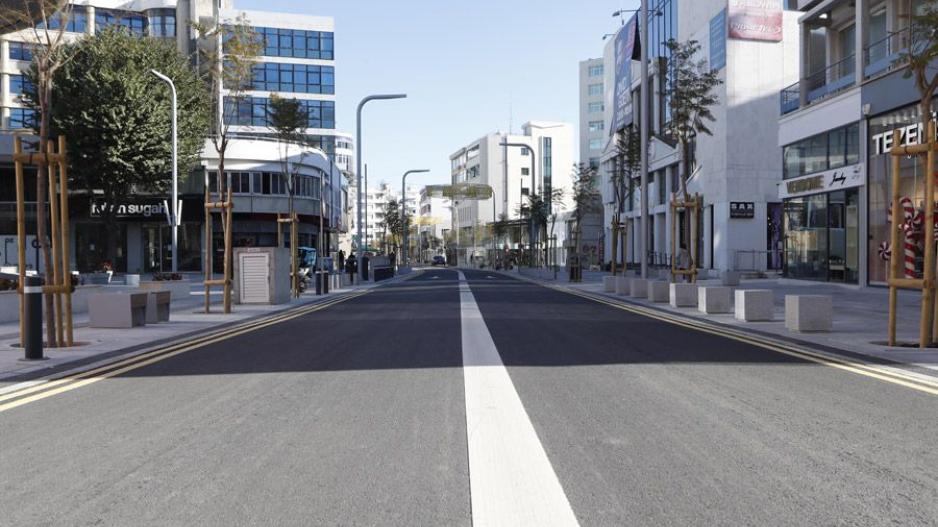
The decision to allow all vehicles to circulate along Makariou Avenue in central Nicosia from 07:00 to 21:00 on weekdays has triggered widespread criticism and reignited debate over sustainable mobility in Cyprus’s capital. The issue is being brought before the Parliamentary Transport Committee today, Thursday, with 34 stakeholders invited to attend, including Nicosia Mayor Charalambos Prontzos, Chief of Police Themistos Arnaoutis, and representatives from the Ministry of Transport, ETEK (Scientific and Technical Chamber of Cyprus), the European Commission in Cyprus, local business owners, and others.
The parliamentary discussion was initiated by Green Party MP Charalambos Theopemptou, who argues that the decision violates the municipality’s commitments to sustainable mobility, green transport, and environmentally conscious urban planning. In comments to OffsiteNews, Theopemptou emphasized that Cyprus had received over €20 million in EU funding for Makariou’s redevelopment under the framework of sustainable mobility—funds that he claims were not adequately utilized to meet those objectives.
According to Theopemptou, the decision to reopen Makariou Avenue to traffic was made without the necessary consultations with relevant authorities. The original urban development project was financed by the EU Cohesion Fund to promote micro-mobility and reduce emissions in the city center. He also warned that the return of private vehicles to the avenue would disrupt public transportation, causing delays and reducing the quality of service for commuters.
Responding to arguments that the reopening would ease traffic congestion, Theopemptou stressed that the EU funding was not limited to the city center but was meant to support mobility projects across all of Nicosia—a goal that was not met due to a lack of comprehensive planning and implementation.
ETEK has also voiced its opposition to the decision, calling for a holistic approach to urban development in Nicosia. In a public statement, the chamber said the City Council’s decision highlights the broader need for all urban interventions to be based on evidence, transparency, and inclusive consultation.
ETEK argued that major urban design choices, particularly in key corridors such as Makariou Avenue, must undergo a multi-layered evaluation. This should include:
-
Analysis of planning and traffic data aligned with approved Development Plans and sustainability principles;
-
Consideration of alternative approaches and justification for the selected option;
-
Recommendations from competent authorities such as the Planning Board, the Department of Town Planning and Housing, Public Works, and Police;
-
Alignment with the broader urban strategy, including the upcoming redevelopment of the old GSP site and public transport upgrades.
Sources from the Municipality of Nicosia acknowledged that the decision was approved by the Municipal Council and affirmed that the mayor respects and implements council decisions. According to the same sources, the municipality is awaiting feedback from the Traffic Authority and EU funders and will clearly explain its rationale for the move.
“The goal is to make clear the reasons behind the decision,” a source told OffsiteNews.
The decision was approved on 15 May following a proposal by the Democratic Rally (DISY) municipal group, with support from DIKO and ELAM. It stipulates that Makariou Avenue will open to two-way vehicle traffic in its northern section from 7:00 a.m. to 9:00 p.m. on weekdays, remaining closed on weekends.