The Truman Doctrine: The Cold War Playbook That Still Shapes Political Rhetoric Today
How Did the Truman Doctrine Use the Rhetoric of Global Crisis to Convince Congress to Transform u.s. Foreign Policy Into a Permanent Anti-Communist Strategy?

The Truman Doctrine was not merely a foreign policy decision. It was a masterclass in political persuasion that permanently changed the trajectory of U.S. foreign policy towards containment.
Postwar Isolationism
When World War II ended in 1945, Americans understandably wanted to prioritise domestic recovery. Families wanted lower taxes, more employment opportunities and more consumer goods. Congress reflected this mood, as legislators pushed for lower military spending, fewer overseas commitments, and a focus on domestic affairs. At this time, most members of Congress had a clear preference for isolationism when it came to foreign policy. There was no official policy requiring the United States to stop communism beyond its own borders, and few in Washington were willing to create one. Overall, the general sentiment was that domestic affairs needed to take precedence over foreign policy.
Then came March 12, 1947 and everything changed.
The Crisis and the Political Problem
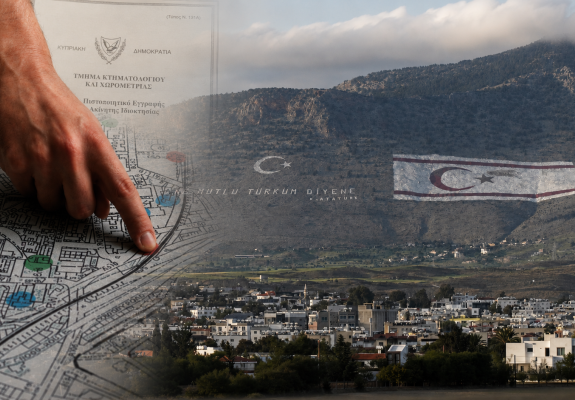
The immediate trigger was not a Soviet attack but a letter from London. Britain, dangerously weakened by the war, could no longer afford to support Greece and Turkey. In Greece, communist insurgents were fighting the government in a civil war, while in Turkey Soviet pressure over access to the Mediterranean was intensifying. To American policymakers, this looked like the beginning of Soviet expansion into Europe. As Churchill put it in his famous 1946 speech: “an iron curtain has descended across the Continent.”
But recognising communism as a threat and convincing Congress to provide $400 million in aid to Greece and Turkey at a time where domestic issues took precedence, were entirely different challenges for President Truman. Republicans controlled Congress after the 1946 midterms, meaning Truman (a Democrat) needed bipartisan support. He could not present Greece and Turkey merely as foreign aid. He needed a more intricate strategy.
It was Senator Arthur Vandenberg, a former isolationist, who reportedly told the president the following: “Mr. President, if you want to get that program through Congress, you will have to scare the hell out of the American people.”
The Speech That Built a Foreign Policy
Rather than framing the situation as a regional problem (which, in military terms, it largely was), Truman framed it as a global struggle. The spread of communism in Greece was presented as a force that would have a direct impact on the regular U.S. citizen. In his address to Congress, Truman declared the world divided between two ways of life: one built on freedom and democracy, the other on terror and oppression.
It was a simple binary that was deliberately constructed, so that Truman would make it nearly impossible for Congress to vote against him without appearing to side with dictatorship. The administration reinforced this with an early version of the Domino Theory: if Greece fell, others would follow. The fear of being blamed for “losing” a country to communism became a paralysing force that effectively prevented Members of Congress from voting against Truman’s containment policy.
The Role of Congress
Historians often treat Congress as a passive actor when it comes to Cold War decision-making. This is a serious distortion, because without congressional support, the Truman Doctrine would have been a speech and nothing more.
It was Congress that approved the initial $400 million in aid. Congress that passed the National Security Act of 1947, creating the CIA, the National Security Council, and the Department of Defence. Congress that funded the Marshall Plan in 1948. And Congress that ratified NATO membership in 1949, binding the United States, for the first time in peacetime, to the permanent military defence of other nations. The isolationist tradition that had shaped American foreign policy up until that point was effectively buried, with full legislative consent from Congress.
At the same time, the question remains: Could Congress have acted any differently, given the rhetoric Truman had used?
The Legacy of the Doctrine
Was it worth it? On one hand, Western Europe was stabilised and rebuilt, Soviet expansion into the Mediterranean was prevented, and NATO held for decades. Truman's rhetorical urgency when talking about communism, from this view, was a necessary price for quick action in a moment he viewed as politically dangerous.
But the costs were also real, because by dividing the world into a rigid binary, the Doctrine made any disagreement to Truman’s foreign policy politically dangerous. The permanent state of emergency Truman created contributed directly to McCarthyism, bloated military budgets, and ultimately the catastrophic miscalculation of Vietnam, so the logic of containment, once accepted by Congress, proved extraordinarily difficult to control.
Future U.S. presidents drew directly from Truman's playbook. In Korea, Vietnam, and across Latin America, successive administrations invoked the same language of existential crisis and democratic obligation to frame regional conflicts as a global war between freedom and tyranny. If future presidents could paint the threat as urgent and civilisational, Congress would find it nearly impossible to refuse.
The lesson history offers here is an uncomfortable one: Rhetoric designed for a genuine emergency has a way of outlasting the emergency itself. Once a generation of politicians learns that fear is the most effective tool for moving a legislature, the incentive to reach for it as the easier choice never quite disappears. Hence, Truman's Cold War language did not die with the Cold War. It simply found new crises to inhabit.