Constantinos Charalambides on How Data Can Transform Cypriot Football
Founder and CEO of Science of Sports speaks on the launch of his new platform, bridging data with coaching, and the future of youth football development in Cyprus.

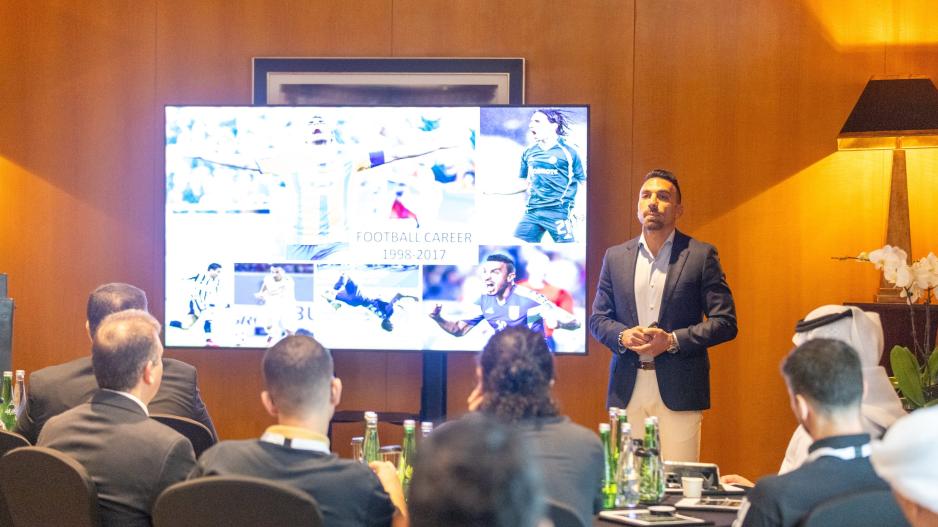
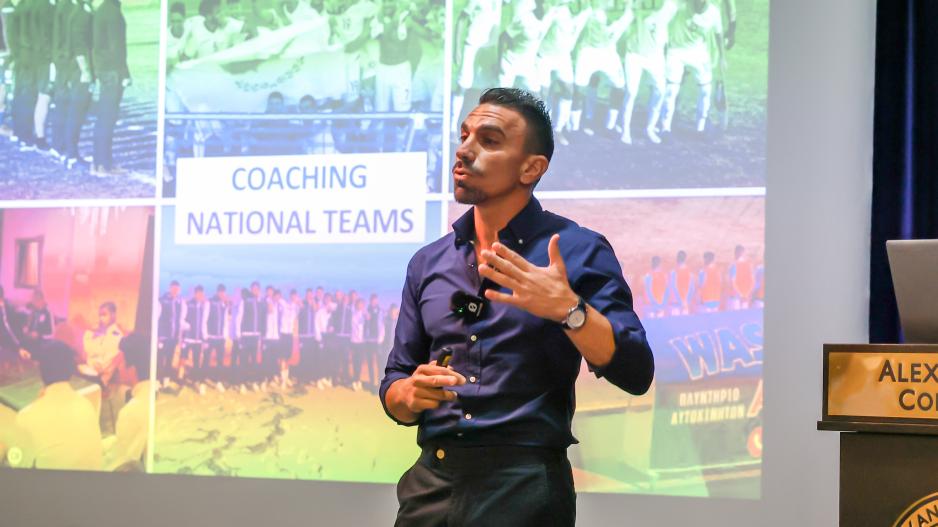
Few figures in Cypriot football embody both tradition and innovation like Constantinos Charalambides. With 96 national team appearances and 18 trophies, he has lived the game at the highest level. Now, as Founder and CEO of Science of Sports, Charalambides is leading a new mission: to reshape how young players, coaches, and clubs in Cyprus approach development. Backed by his experience as a coach of national teams and architect of the CFA’s strategic plan, he is unveiling a platform that puts data, video, and performance insights into the hands of every stakeholder.
Speaking to FastForward, he explains how the tool addresses long-standing gaps in Cypriot football, why tradition and analytics can—and must—work together, and his vision for raising the game to European standards.
The launch of our new platform comes at a very important moment for football in Cyprus. Over the past years, we have worked closely with academies and clubs, and we saw a clear gap: teams were collecting data, but they lacked an integrated and practical way to turn that information into decisions. This is what prompted us to evolve.
Now, with the start of the new season, we are introducing a platform that combines competition, team, and player analysis in one place. Coaches, directors, players, and even scouts can access the same match data, but each through a role-based experience designed for their needs. For example, a coach sees tactical breakdowns, a player can review his own stats and video clips, while a director follows the progress of the entire academy.
This reflects our vision to make football knowledge accessible and actionable. We want to give every stakeholder, whether on the field or in the boardroom, the tools to improve performance and improve the game in a smarter way.
The biggest challenge we noticed in football development, especially at academy level, is that information is everywhere but rarely connected. Coaches often rely on their instinct and experience, but without objective data, it is difficult to measure progress or identify small details that can change a match. At the same time, directors and clubs struggle to see the bigger picture—how their teams are developing year after year, or how their investment is translating into performance.
Another challenge is time. Coaches are overloaded with training, games, and administration, and they don’t always have the tools to quickly analyze matches or communicate insights with players. Players, on the other hand, want to see their own growth clearly but often only receive general feedback.
These gaps inspired us to create a platform that bridges coaching knowledge with technology. We wanted to give football people—from coaches to players—a practical tool that saves time, makes communication easier, and turns data into action. In this way, we hope to support the real mission of football development: helping players and teams grow every single week.
The new platform is designed to take away the guesswork from football decisions. Instead of spending hours reviewing notes or watching entire matches, coaches and directors can now access interactive dashboards that present the key facts in seconds. For example, they can instantly see possession trends, passing accuracy in critical zones, or the efficiency of pressing actions—metrics that are often overlooked at youth level. This helps coaches adjust their training focus immediately and address issues before they grow into habits.
The new platform takes the guesswork out of football—key facts in seconds instead of hours
For players, the platform connects video with their individual data. A striker can review every shot with its expected goal value, while a midfielder can see where his passes were effective or not. This builds confidence because feedback is objective, visual, and easy to understand.
In Cyprus, youth football has often lacked this type of structure. Most analysis tools were built for professional teams, leaving academies behind. By making advanced insights accessible and user-friendly, our platform gives local clubs the opportunity to train smarter, develop talent faster, and make decisions with the same confidence as bigger European academies.
It’s true that in Southern Europe—and Cyprus in particular—football has always been built on tradition, intuition, and personal relationships. Many coaches trust their “feeling” for the game, and this can sometimes make them hesitant to rely on numbers or technology. One of the main challenges we faced was the perception that data analysis is something only for big clubs or that it can replace the coach’s knowledge.
Data is not a replacement for coaches’ knowledge—it’s a support that confirms what they already see on the pitch
Our approach has been to show that data is not a replacement but a support. We invest time in education, demonstrating how analysis confirms or even strengthens what coaches already see on the pitch. By presenting information in a simple, visual, and role-specific way, we make it less about statistics and more about practical football insights.
Another challenge has been building trust with institutions. Change requires proof, so we started by collaborating closely with academies, showing measurable improvements over time. When clubs saw players progressing faster and coaches saving time, adoption followed naturally. In the end, the key was to respect tradition while introducing innovation step by step—always with the game, and not technology, at the center.
Through our work and the data we’ve collected, a few clear patterns in youth development in Cyprus have emerged. The first is inconsistency. Players often show technical quality, but their decision-making and tactical understanding develop unevenly because training is not always connected to objective feedback. This creates a gap between talent and game intelligence.
Another issue is physical conditioning. Many academies lack structured monitoring of workload and performance, which means players either overtrain or undertrain at key stages of growth. Without data, it is difficult to balance development with injury prevention.
The biggest gap we see in Cyprus is inconsistency—talent exists, but decision-making and game intelligence lag behind
We also see a gap in long-term tracking. Too often, evaluation is limited to individual matches or short periods. What’s missing is a system that allows clubs to follow a player’s journey across months and seasons—spotting strengths, weaknesses, and progress over time.
These gaps are exactly what our platform is designed to address. By providing continuous analysis and making it accessible to coaches, directors, and players, we can create a more consistent pathway for youth development in Cyprus, one that matches the standards of leading academies abroad.
Football development over the next decade will be shaped by two forces: technology and education. Data, video, and AI will increasingly support every decision, from talent identification to training methods. At the same time, clubs will put more focus on developing not just athletes, but complete individuals—balancing physical, tactical, and mental growth. The academies that succeed will be those that combine tradition with innovation, creating environments where knowledge flows freely between coaches, players, and directors.
I see Science of Sports playing a leading role in this transformation, starting in Cyprus and extending to the region. Our platform is designed to give every stakeholder—whether a U14 coach, a player, or a club director—the right tools to improve performance and take smarter decisions. In the future, I want Science of Sports to be a trusted partner for academies, federations, and clubs, helping them build clear development pathways supported by data and evidence.
Ultimately, our vision is not just to provide analysis, but to inspire a culture of continuous learning. If we can help raise the standards of youth football year by year, we will also help create the next generation of smarter, more confident players.