Cypriot Scientist Dr. Kyriaki Michaelidou Wins Prestigious UNESCO Prize
The Cyprus Institute of Neurology and Genetics celebrates a landmark international recognition for cancer genetics and biostatistics research.
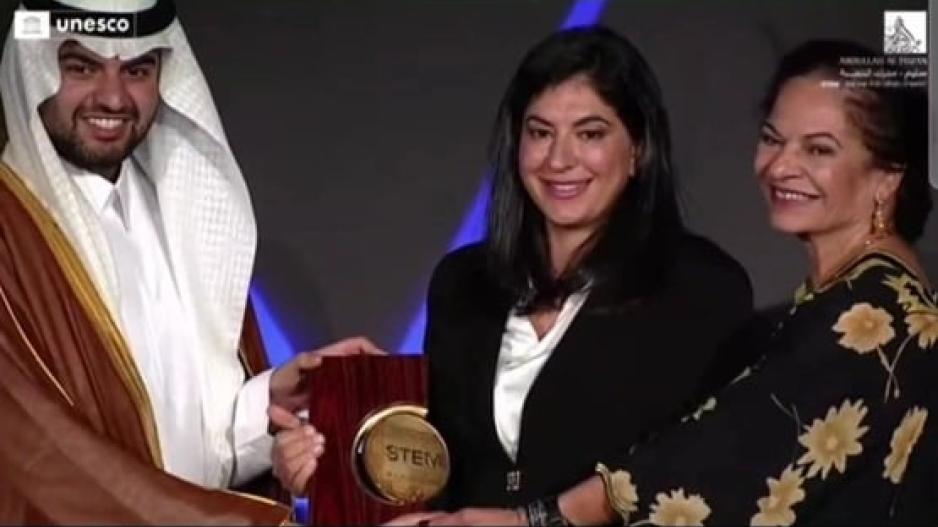
The Cyprus Institute of Neurology and Genetics (CING) proudly announces that Dr. Kyriaki Michaelidou, Head of the Biostatistics Unit at CING, has been awarded the UNESCO-Al Fozan International Prize for the Promotion of Young Scientists in Science, Technology, Engineering, and Mathematics (STEM).
The award ceremony took place on Friday, 19 September 2025, at UNESCO headquarters in Paris, where Dr. Michaelidou was one of only five scientists worldwide to be honored. She represented the Europe and North America region, standing out among an assembly of distinguished international researchers.
This prestigious international award honors young scientists across the globe who contribute significantly to the advancement of science, technology, engineering, and mathematics.
Dr. Michaelidou was recognized for her outstanding and internationally acclaimed research in breast cancer genetics and for the development and application of biostatistical methods that substantially advance scientific knowledge and medical research.
This achievement marks not only a personal milestone for Dr. Michaelidou but also a significant acknowledgment of the work carried out at the Cyprus Institute of Neurology and Genetics. The institute continues to promote research, education, and innovation on an international scale with consistency and excellence.
“It is a great honor for me to receive the UNESCO-Al Fozan International Prize for the Promotion of Young Scientists in STEM. This recognition highlights my efforts in science, but also the vital role of research and innovation for the common good. I would like to express my gratitude to my team, collaborators, mentors, and institutions who supported me on this journey. This award motivates me to continue my research path with dedication and to contribute with all my strength to advancing science and inspiring the next generations of scientists.”