Inside ArtCargo Festival 2025: Where Limassol Becomes the Stage
Artistic Director Dmitry Melkin and producers Evgenia Mamedova and Nadezhda Tikhonchuk share how this year’s edition bridges global and local art scenes
ArtCargo Festival returns with a bold vision: to turn the city of Limassol into a living canvas of performance, dialogue, and transformation. Artistic Director Dmitry Melkin and producers Evgenia Mamedova and Nadezhda Tikhonchuk share how this year’s edition bridges global and local art scenes, celebrates inclusivity, and redefines what it means to experience culture in public spaces.
What is the overarching theme or vision behind ArtCargo Festival 2025, and how do you hope it will resonate with both local and international audiences?
Dmitry: ArtCargo is about the contemporary audience experience - we act as advocates for the modern spectator. The festival bridges the international performing arts scene with the local one, creating a space for dialogue and shared curiosity. We stand for sustainable artistic practices and for public spaces that evolve socially, ecologically, and emotionally. Our vision is simple: art that speaks every language, equally distant and equally close to all.
What role does the city of Limassol itself play as a stage, and how do you decide which spaces will host site-specific performances?
Dmitry: Limassol is our living partner — a city of layers, rhythms, and contrasts. Each community reactivates its public spaces differently, so every piece in the program becomes site-adaptive. Some performances change context intentionally: Dancing Celebration by Vicky Kala — сhoreographer and dance artist from Nicosia — was once performed in a secluded courtyard and now unfolds on the city’s main promenade. Others, like Murmuyo’s intervention on Anexartisias Street, momentarily stop traffic — a playful, civic way to rethink pedestrian culture and the politics of walking.
What’s the most unexpected or challenging location you’ve worked with, and how did it change the performance?
Dmitry: We like to believe it’s the performances that change the city. Many of them are participatory, reshaping the rhythm of urban life. One of the most demanding upcoming works is Mission Roosevelt, a performance exploring accessibility and inclusion in the heart of Limassol. It’s where art merges with urban form — unpredictable, vivid, human.
How do you choose the mix of art forms, from street theatre and dance to media art, and what narrative or dialogue do you aim to create with this diversity?
Dmitry: ArtCargo is built on the belief that art is universal — complex in form, but simple in its ability to connect. The diversity of disciplines creates a polyphonic narrative of unity. We curate performances that invite people to slow down, to meet, to share a moment of curiosity. Each encounter becomes a small rehearsal of how we might coexist more openly.
How do you engage with local communities and businesses in Limassol when planning the festival, and what have been some of the most successful collaborations so far?
Evgenia & Nadezhda: A festival of this scale can only be made collectively. ArtCargo exists thanks to a community of partners who believe that culture is not decoration — it’s infrastructure, that has to be built together.
With the support of Limassol Municipality, we were trusted to do what no one had done before: to “play” with the city itself - pause the traffic, transform facades, and illuminate the waterline of Molos with media art. That kind of freedom is only possible when authorities treat artistic ideas with respect and curiosity.
It would also be impossible without bbf:, whose architectural vision literally shapes the city we live in. Supporting ArtCargo is their way of shaping its cultural landscape, too. Exness joined as a key partner, bringing the same spirit that fuels their initiatives like PSI Foundation, Kolla, and Cyberness - projects that already boost Limassol’s social life
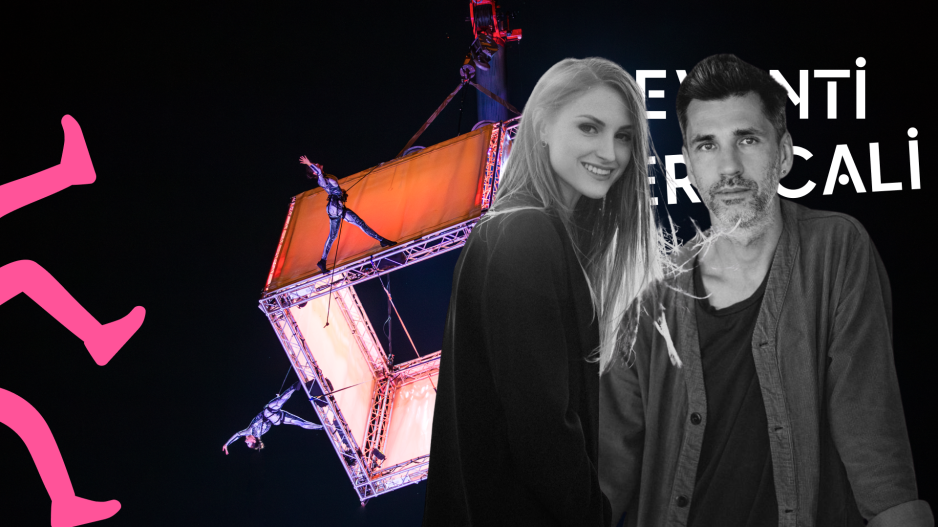
Our friends at Malindi are hosting one of the festival shows, while KEAN opens its space for a spectacular vertical dance performance, free for the entire city. City Friends Club helps us stay sustainable,Cyprus Red Cross provides wheelchairs for our Mission Roosevelt project on inclusion, and so much more connections and acts of mutual support take place daily behind the scenes.
All of this requires a great deal of cultural diplomacy - but it is totally worth it. Starting November 1st, you’ll see why.
Looking ahead beyond 2025, how do you envision ArtCargo evolving in terms of scale, reach, or artistic direction?
Dmitry: We see ArtCargo as a growing ecosystem rather than a single event. Our next step is to build bridges with Creative Europe programs, local businesses, and civic initiatives, shaping a movement that lasts beyond two festival weeks. The 2026 program is almost completed already — and the world of festival wonders is far from exhausted.