Designing for a New Era of Work: Inside Martingale Plaza
How Panos Panayiotou + Associates Shaped the Country’s Largest Open-Plan Office as a Platform for Flexibility, Wellness, and Smart Infrastructure
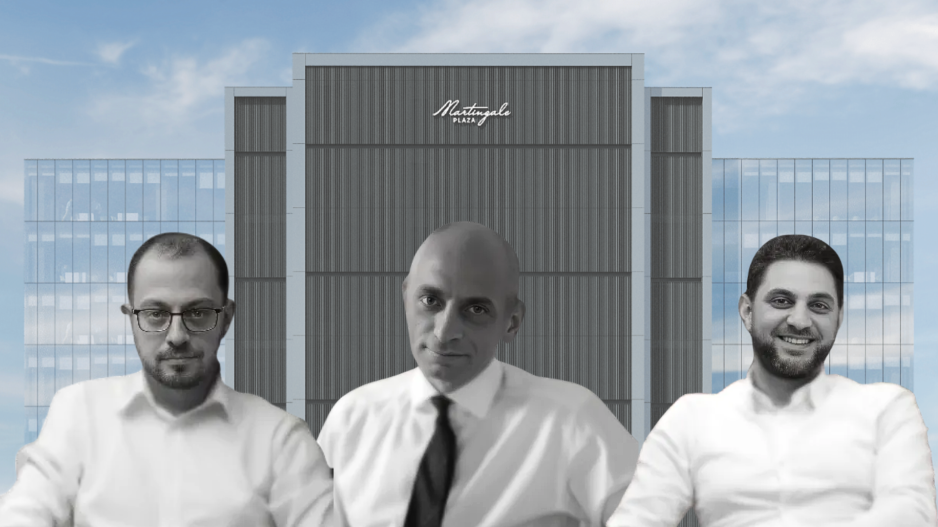
Located in Limassol’s evolving Linopetra district, Martingale Plaza is a new office development by Panos Panayiotou + Associates (PPA) that seeks to respond to changing workplace demands. Designed around principles of flexibility, autonomy, and long-term usability, the project introduces the largest open-plan office floorplate in Cyprus and incorporates a range of shared amenities aimed at supporting productivity and employee well-being.
In this in-depth conversation with PPA Directors Panos Panayiotou, Christos Zantis, and Paris Cotsapas, we explore the vision behind the project, the design philosophy that shaped its form, and the strategic decisions—down to the meaning of its name—that reflect a deep understanding of both architecture and business strategy. They also reflect on broader questions about commercial architecture in Cyprus—specifically, how to design for today’s needs while ensuring adaptability for the future.
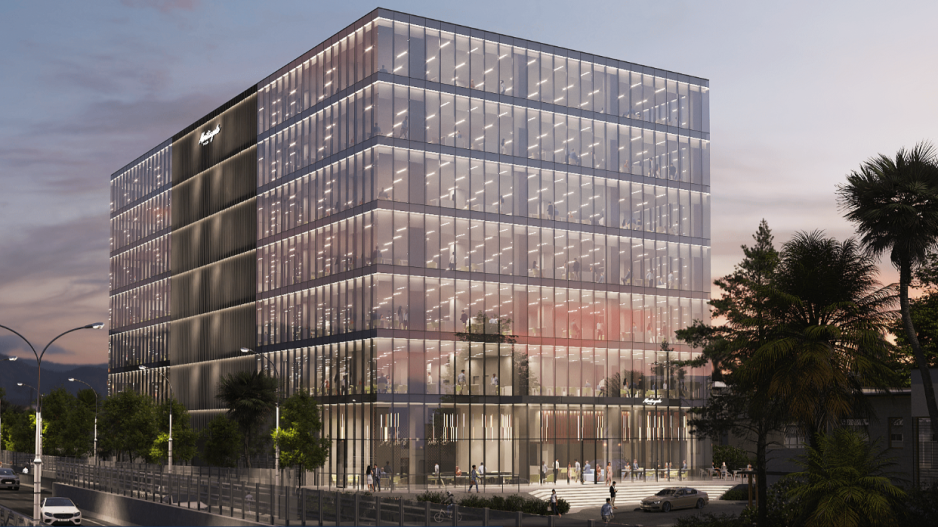
The initial vision for Martingale Plaza was to create a next-generation workplace that aligns with how people truly work today—fluidly, collaboratively, and with a strong emphasis on well-being, autonomy, and adaptability. From the beginning, the goal was to break away from the rigidity of conventional office buildings, which often rely on fixed layouts and superficial amenities. Instead, the design prioritized infrastructure to support hybrid teams, modular workspaces, and long-term tenant independence. This vision translated into 1,800m² per floor with minimal structural interference, independent MEP zones per tenant, and shared amenities carefully positioned to balance collaboration with focused work. As the project evolved, practical constraints helped shape a more refined approach, leading to the integration of features like a landscaped courtyard, high-performance façade, and embedded wellness infrastructure—each conceived as a tool for productivity and tenant retention. The name “Martingale” draws from probability theory and game design, where it describes a system for balancing risk and expectation. It captures the strategic thinking behind the project and the belief that architecture should provide clarity, optionality, and leverage—especially in uncertain times. Martingale Plaza is not just an office—it’s a dynamic platform designed to help businesses operate more intelligently and resiliently.
Designing Martingale Plaza’s 1,800m² open-plan floorplates was both the project’s standout opportunity and one of its greatest technical challenges. The ambition was to offer tenants a degree of spatial flexibility that’s rarely available in the local market—layouts that could support anything from fully open workspaces to subdivided, multi-tenant configurations, all without compromising on structural logic or daylight quality. Achieving that flexibility demanded precision. The design minimized vertical intrusions by strategically positioning the cores and adopting an 8.4m column grid. A post-tensioned slab system without beams allowed for flat soffits and uninterrupted spans, maximizing usable space and visual clarity.
Ultimately, size alone doesn’t make a space future ready. It’s the precision of the structural and infrastructure strategies that turns scale into a true advantage
One of the biggest challenges—ensuring daylight penetration across such a deep floorplate—was addressed through high-performance glazing, generous ceiling heights, and a lighting strategy tailored to support deep-zone workstations. The scale also required a rethinking of building systems. Each floor includes independent plantrooms, VRF ventilation, heat pumps, and dedicated server infrastructure. This ensures that tenants can control their own climate zones, energy use, and IT operations without depending on shared systems—making the floorplates not just expansive, but operationally independent. Ultimately, size alone doesn’t make a space future ready. It’s the precision of the structural and infrastructure strategies that turns scale into a true advantage.
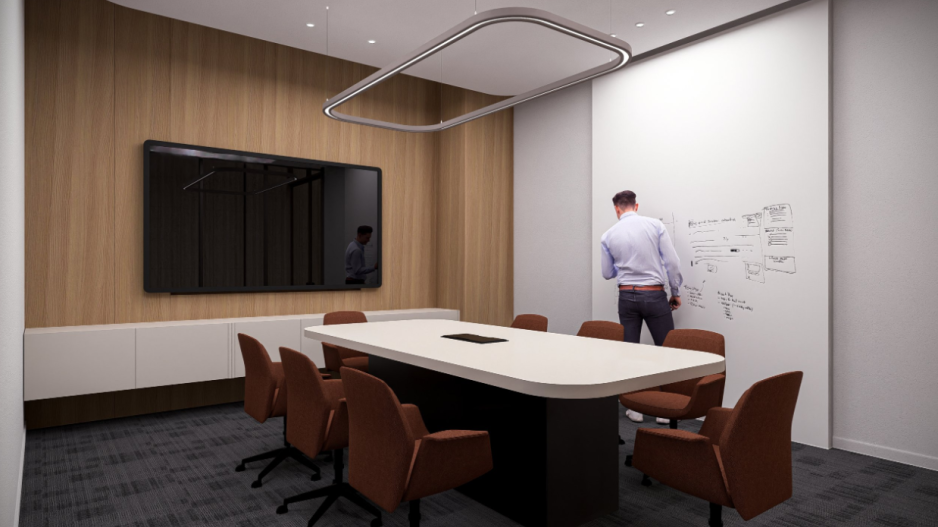
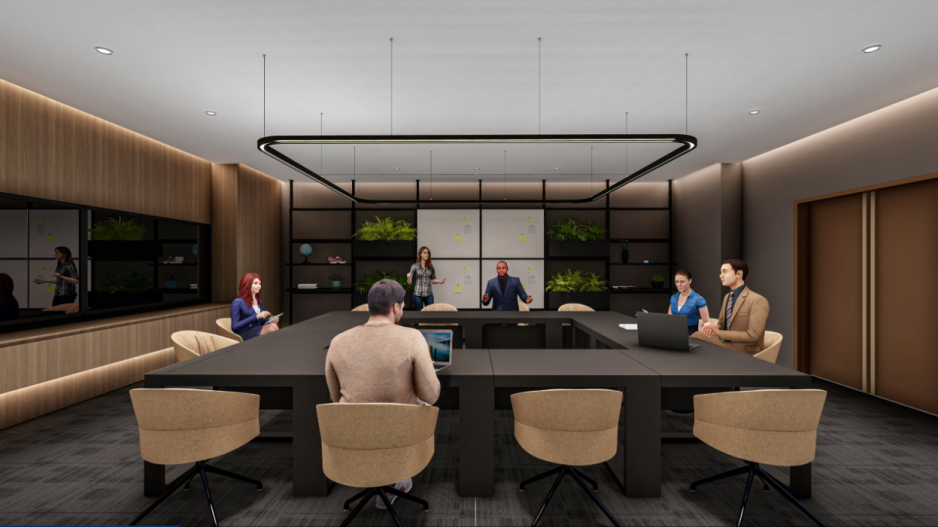
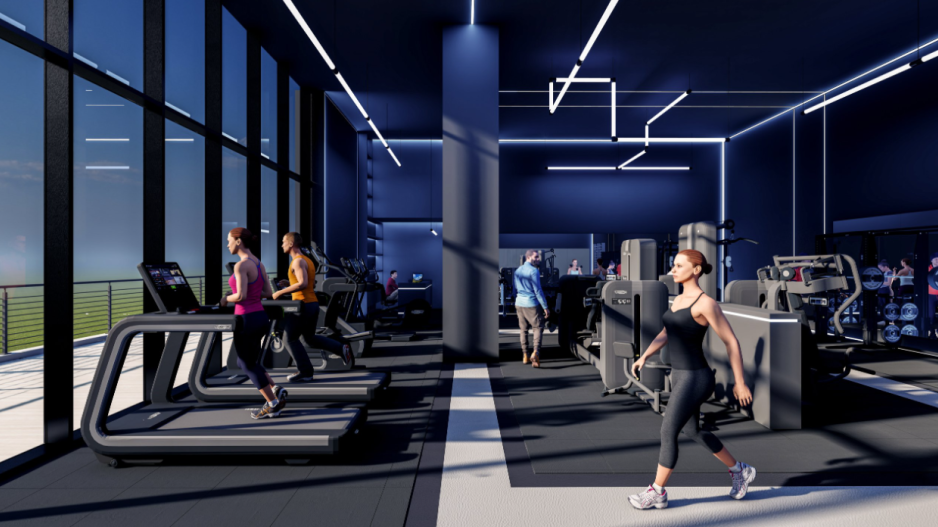
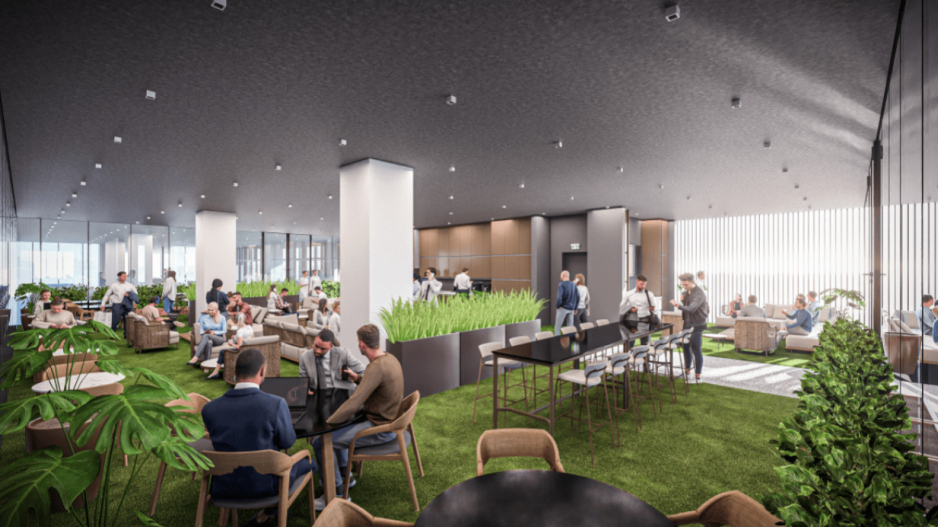
At Martingale Plaza, wellness and productivity were treated as interdependent design challenges rather than separate objectives. We didn’t view amenities as lifestyle perks but as essential infrastructure that supports recovery, focus, and collaboration throughout the workday. The question wasn’t what would look good—it was what people actually need to work and feel well. Every inclusion was purposeful. The gym, for instance, features a performance-oriented layout and lighting scheme, designed for daily use and functional training—not as a decorative or resort-style space. The cafeteria acts as the social anchor of the ground floor, with varied seating and a central planted spine that offers both visual relief and informal zoning. Podcast studios and conference rooms address the realities of hybrid communication, offering acoustically tuned environments for meetings, content creation, and focused calls. Rather than scattering these programs across the building, we placed them along a central axis on the ground floor. This clustering ensures easy access while preserving the quiet and flow of the upper office levels. The result is a seamless integration of focus, interaction, and decompression. Ultimately, we believe productivity doesn’t come from working harder, but from working in environments that are intuitively structured to support how people actually function.
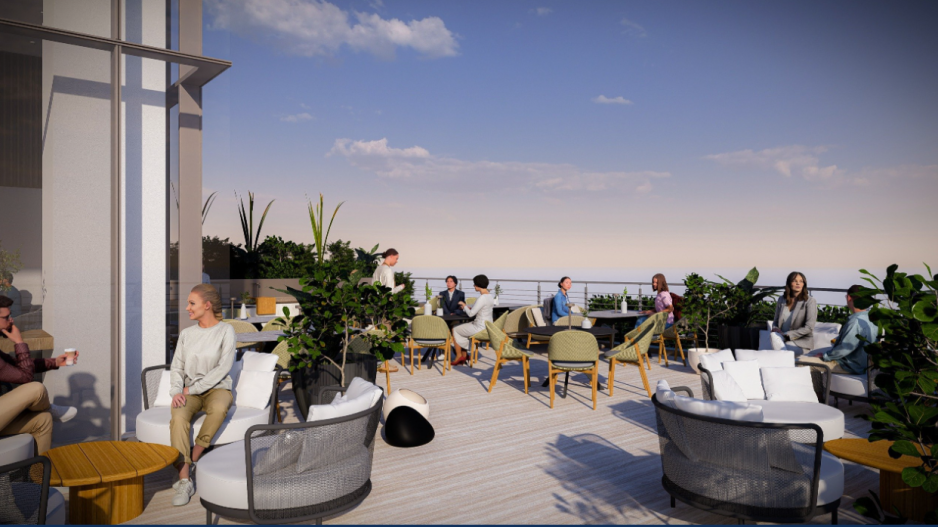
As Martingale Plaza features functional covered courtyards on every floor level, they form a central spatial and symbolic element of Martingale Plaza—it’s where the building breathes. At 300m², it forms a calm, planted environment that connects the two wings of the office floors. More than just a breakout space, it functions as an open-yet-sheltered zone for informal meetings, quiet work, or decompression during the day. Strategically embedded into the building’s plan, it serves as a circulation node and social condenser—integral to the spatial rhythm, not an afterthought. Functionally, the courtyard extends the workplace outdoors without the limitations of balconies or rooftops. It brings daylight and visual relief deep into the floorplate, enhancing the interior environmental quality. It also plays a passive role in climate regulation, buffering between internal zones and allowing for cross-ventilation, particularly during transitional seasons. Beyond its practical role, the courtyard carries symbolic weight. In a development that emphasizes autonomy, flexibility, and high performance, this space introduces a counterbalance—a reminder that pause and progress go hand in hand. It supports a workplace culture where unscheduled moments and informal exchanges are part of the creative process. Its visibility and equal accessibility to all tenants reinforce one of the project’s core principles: balance by design.
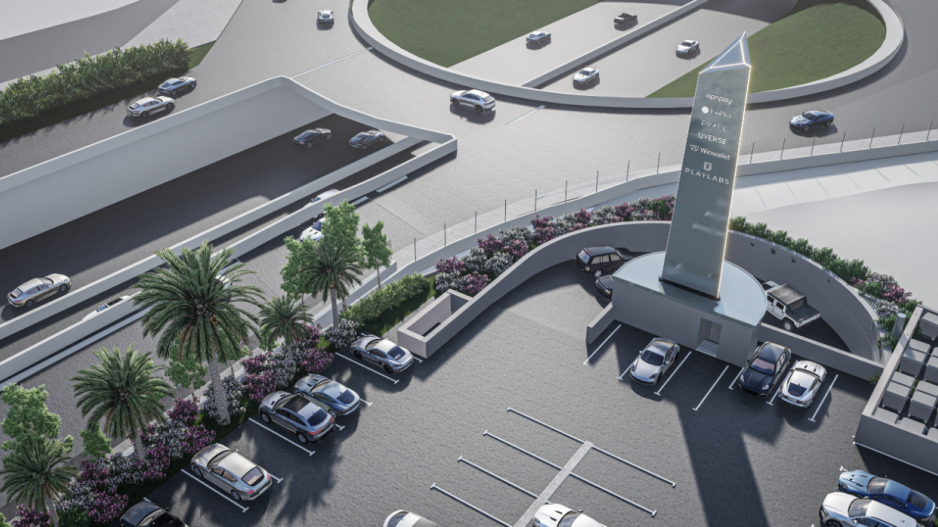
At Martingale Plaza, sustainability is a core performance standard, seamlessly integrated into the building’s design. High-performance glazing on façades balances daylight access with solar control, reducing glare and heat gain without compromising views. Strategic orientation and massing—solid cores facing harsh exposures and shaded glazed elevations—minimise cooling needs. Each floor features independent MEP plantrooms, VRF ventilation systems, and high-efficiency heat pumps, enabling real-time energy management. Floor-specific server infrastructure ensures targeted cooling, avoiding energy waste. Material and lighting choices prioritise efficiency, with durable finishes and low-energy LEDs complemented by a daylight-first approach. The management promotes eco-friendly practices through waste management protocols, recycling initiatives, and tenant education. Underground parking for 365 vehicles reduces surface heat gain and manages urban runoff. Enhancing biodiversity, 120 new trees, mainly Cyprus endemics, create a verdant oasis, blending with Martingale Plaza’s architecture. This green space enriches both environmental impact and visual appeal. Martingale Plaza’s sustainability isn’t for show; it’s embedded in the architecture, delivering consistent, high-performance results.
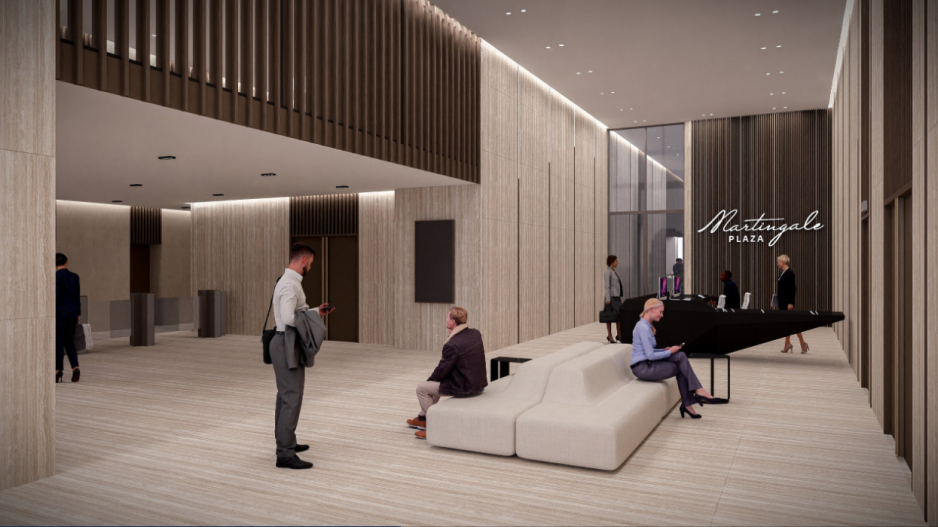
Linopetra occupies a unique position in Limassol’s urban evolution—no longer a peripheral business zone, it now serves as a convergence point between the established city core, growing residential neighbourhoods, and major highway arteries. With a new Mall, and a number of additional office centres the area is on its way to become a booming commercial hub with easy access and great city-wide connections. This transitional identity directly shaped our approach to Martingale Plaza. We designed the building to operate on two scales. At the city scale, it acts as a gateway marker—visible and confident from the Agios Athanasios roundabout and highway edge. Its massing is deliberate: a clear volumetric silhouette anchored by a vertical core that asserts identity without overwhelming the surroundings. At the pedestrian level, we rejected the typical fenced-off, inactive frontage seen in many local office buildings. Instead, the ground floor is porous and welcoming, with a double-height lobby, glazed cafeteria, and open circulation paths that function as visual and spatial extensions of the urban realm—even in a car-dominated context with minimal sidewalk culture.
The building reflects a broader urban ambition: to create places that respond to context today while remaining adaptable for tomorrow
We also considered Linopetra’s ongoing transformation. As the area densifies, Martingale offers a model for commercial architecture that balances visibility with restraint, infrastructure with atmosphere. It doesn’t just fill a site—it elevates it. The building reflects a broader urban ambition: to create places that respond to context today while remaining adaptable for tomorrow.
If we had to choose one space, it would be the double-height lobby—not because it’s the most prominent, but because it quietly embodies Martingale Plaza’s core principles. From the moment of arrival, it sets a tone of calm, clarity, and intention. Its proportions are confident yet unassuming, and the material palette—wood, stone, matte finishes—is deliberately restrained, creating a spatial rhythm that encourages flow without distraction. What makes the lobby meaningful is not just how it looks, but how it works. It acts as a hinge between different modes of experience—formal and informal, private and shared. From this central point, one can transition smoothly into the cafeteria, access amenities, or enter vertical circulation. It’s more than a threshold; it’s an orientation device that captures our broader architectural strategy: coherence, legibility, and spatial calm.
Martingale was designed to be adaptable, but its identity will ultimately be shaped by how people use it—how they inhabit it, bend it, and, in doing so, give it life
As the project enters its next phase, we’re excited to see the building evolve from a static object into a living system. That means refining fit-outs, adjusting lighting and acoustics, and observing how shared spaces like the courtyard, boardroom, and gym influence daily dynamics. Martingale was designed to be adaptable, but its identity will ultimately be shaped by how people use it—how they inhabit it, bend it, and, in doing so, give it life.