Pavel Shynkarenko on Culture as Infrastructure
VIMA Art Fair and Cyprus Shaping a New Cultural Ecosystem
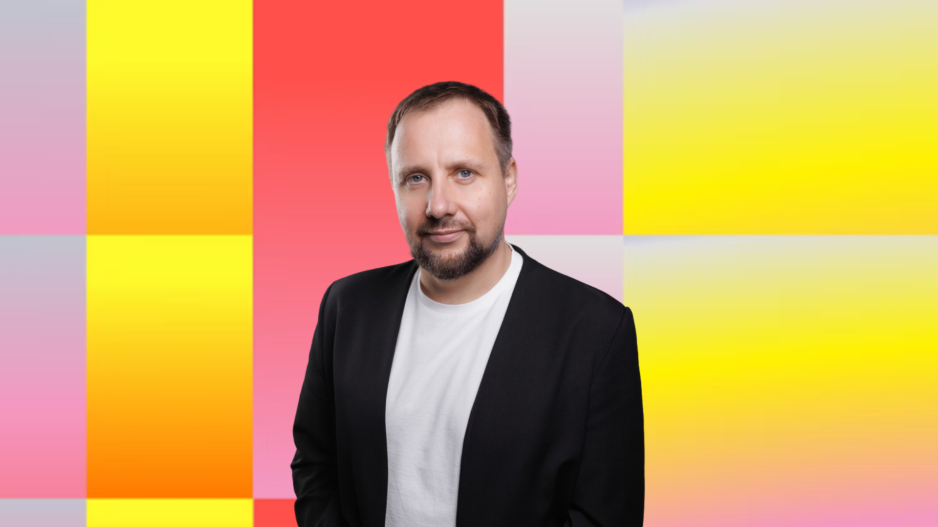
As Cyprus continues to position itself as a cultural and creative crossroads in the Eastern Mediterranean, new collaborations between business, technology, and the arts are beginning to shape a different kind of ecosystem, one where culture is not an afterthought, but a foundational layer. At the center of this shift are individuals and companies willing to invest not only financially, but intellectually and philosophically, in what the future of the island could look like.
In this FastForward interview, Pavel Shynkarenko, Founder and CEO of Mellow, shares the thinking behind Mellow’s strategic partnership with the VIMA Art Fair, and the launch of the Syno Art Foundation. Moving between technology, philanthropy, and contemporary art, he reflects on why culture should be treated as infrastructure, the role of Cyprus in global creative dialogue, and how emerging ecosystems are being shaped by a new generation of patrons, entrepreneurs, and ideas.
VIMA Art Fair is building a long-standing strategic partnership with Mellow.io. What convinced you that VIMA is the right platform to invest in, and how do you see Mellow.io contributing not just financially, but intellectually and culturally, to the evolution of the fair?
For us, this is not simply a sponsorship. Cyprus is our home. This is where Mellow is rooted, where our team lives and works, and where we feel a deep sense of responsibility to contribute beyond the boundaries of our industry.
Contemporary art infrastructure in Cyprus is still emerging, and that creates a real opportunity, so I think VIMA is bringing international dialogue to this region at exactly the right moment. We want to bring our belief that culture is infrastructure, just as essential to a thriving society as any business ecosystem.
Cyprus is positioning itself as a cultural crossroads in the Eastern Mediterranean. What potential do you see in this geography from a philanthropic and strategic perspective?
Cyprus has always been a meeting point — of civilizations, of trade routes, of ideas. What we are witnessing today is a modern expression of that ancient role. The island is becoming home to a remarkable concentration of talent, entrepreneurs, and creative professionals from across Europe, the Middle East, and beyond.
I see an opportunity to help build cultural institutions that reflect this new reality, spaces where different traditions and worldviews can encounter each other through art. From a strategic perspective, Cyprus is becoming a place where global conversations happen.
You are launching your new foundation, Syno, during this year's fair. Why did you choose VIMA Art Fair as the moment and place for its debut?
The launch of the Syno Art Foundation represents the next chapter in our commitment to Cyprus and VIMA felt like the natural place to begin that chapter publicly. Launching Syno here sends a clear signal about our intentions: we are building something lasting.
The foundation will focus on developing the contemporary art ecosystem in Cyprus — supporting artists, creating educational programs, and building the kind of infrastructure that allows culture to flourish over generations. VIMA will remain a key partner in that journey. The fair is where the conversation starts; the foundation is how we continue it. Everything is still taking shape, and we look forward to sharing more very soon.
In an era defined by acceleration and constant output, what role should art fairs play in creating spaces for pause and reorientation?
We live in a world that rewards speed above almost everything else. Art fairs, at their best, offer something genuinely countercultural: permission to slow down.
When you stand in front of a work of art, something shifts. You are forced into the present moment. You engage not just with your intellect, but with your intuition, your memory, your sense of beauty. That is a rare experience in modern life, and it is becoming more valuable precisely because it is harder to come by.
Art fairs like VIMA create the conditions for that kind of encounter. They bring together artists, gallerists, collectors, and curious minds and ask them to be present together. In that sense, they are doing something quite profound.
The project emphasizes imagination over rigidity and communal experience over linear narratives. Do you see parallels between this philosophy and how innovative companies operate today?
Absolutely. I think we are entering an era defined by the primacy of individual experience — and the most innovative companies are those that understand this deeply.
For a long time, business operated on the assumption that standardization was strength. The same product, the same process, the same message for everyone. But the world has moved on. What people want now is experiences that feel personal, that speak to who they are as individuals. That is true in technology, in design, in culture, and increasingly in how we think about work itself.
At Mellow, we built our platform around the belief that every independent professional has a unique set of needs, circumstances, and aspirations. The parallel with art is real: a great artwork does not tell you what to feel — it creates the conditions for you to discover something in yourself.
What role do collectors, tech entrepreneurs, and new-generation patrons play in shaping the next chapter of art ecosystems in emerging cultural hubs?
Collectors have always been the invisible architects of art history. The works we celebrate in museums today exist because someone, generations ago, had the vision and conviction to acquire them.
Today's collectors and patrons are making the same choices, but in a world that moves much faster and reaches much further. Tech entrepreneurs bring something distinctive to this role: a tolerance for uncertainty, a long-term orientation, and often a genuinely global perspective. They are comfortable backing ideas before they are validated, which is exactly the disposition that emerging cultural ecosystems need.
In places like Cyprus, where the institutions are still being built, private patronage is foundational. The choices being made now, by collectors and foundations and companies willing to invest in culture, will define what future generations inherit.