Inside Space BIC: The New Incubator Fueling Cyprus’s Space-Tech Startups
Dr. Eleni Loulli and Andreas Andreou discuss how Cyprus’s first Space Business Incubation Centre aims to turn research into real-world innovation and put the island on Europe’s space map.
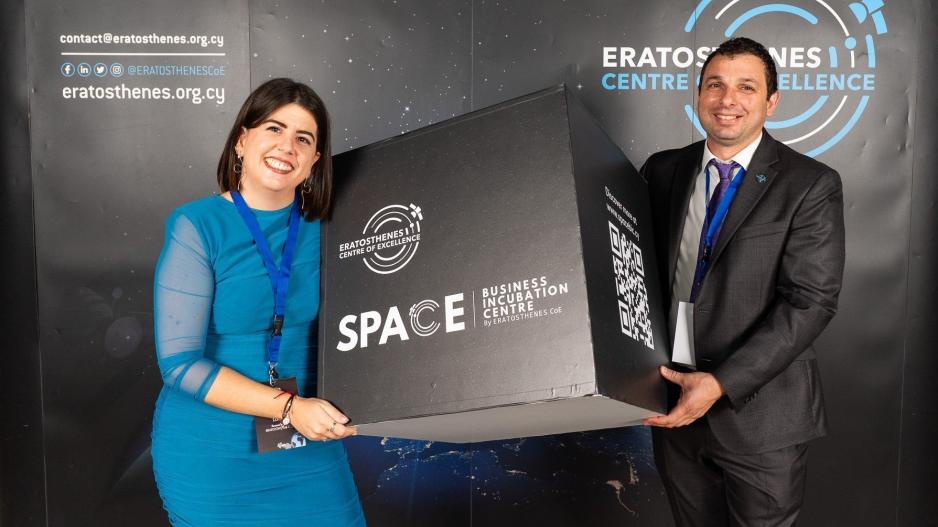
Cyprus’s ambition to enter the space economy took a major leap this year with the launch of Space BIC by the Eratosthenes Centre of Excellence—a first-of-its-kind incubator supporting startups that use satellite data and space technologies to tackle real-world challenges. The deadline for the first call for applications is approaching fast — 15 October 2025.
Leading the mission are Dr. Eleni Loulli, Coordinator of Space BIC, and Andreas Andreou, Business Development and Technology Commercialization Executive at the Centre. In conversation with FastForward, they discuss how Cyprus is quietly building the foundations of a space-tech ecosystem — one rooted in scientific expertise, entrepreneurial ambition, and international collaboration.
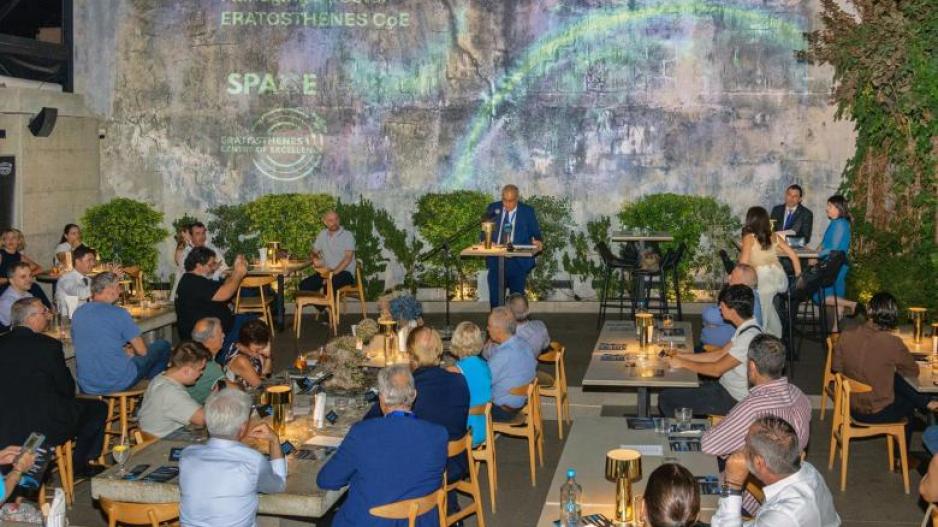
Eleni Loulli: The launch of Space BIC marks a defining moment for Cyprus, transforming its innovation landscape by linking space research directly to real-world market applications. For the first time, Cyprus is bridging academic excellence with commercial opportunity—turning research into growth, jobs, and national pride.
Space BIC positions Cyprus as an emerging force in the fast-growing global space economy. It directly supports the nation’s roadmap toward the ESA Associate Membership by 2026, aligning strategically with Cyprus’s EU Council Presidency. Through structured selection, expert mentorship, and international partnerships, Space BIC is building the domestic space ecosystem required to meet ESA’s criteria and elevate Cyprus’s role in Europe’s innovation network.
For the first time, Cyprus is bridging academic excellence with commercial opportunity—turning research into growth, jobs, and national pride
This initiative signals a bold transition: from being a user of space technologies to becoming a creator of space-driven innovation. More than an incubator, Space BIC is a launchpad for high-value startups, a hub for technological excellence, and a catalyst for sustainable economic development. It embodies Cyprus’s vision to position itself at the forefront of the European space economy—where research meets entrepreneurship, and innovation meets opportunity.
Andreas Andreou: The Space BIC program offers staged non-equity funding that is progressively released as startups achieve defined milestones and fulfill reporting requirements. This approach ensures disciplined resource use and aligns incentives with long-term sustainability. Applicants must submit a detailed business plan and a comprehensive incubation plan with their application, demonstrating strategic planning and readiness for scale.
The selection process is conducted independently by an Evaluation Committee, assessing applications based on factors such as team background and engagement, the technological feasibility and space relevance of the proposed service or product, intellectual property and production strategies, market potential and value proposition, business modelling and risk assessment, and the quality of activity proposals including clear milestones and management plans. This rigorous evaluation ensures that only startups with strong potential for sustainable and scalable success proceed.
Throughout incubation, mentoring and guidance are customized based on the submitted business and incubation plans. These plans are periodically reviewed and refined by the incubatees according to mentor insights and progress made. Support covers key areas including technical development, market access, financial planning, and risk management. This continuous and adaptive guidance reinforces sustainability objectives, enabling Space BIC to cultivate startups that grow into competitive and resilient companies with real economic and technological impact emerging from Cyprus.
A.A.: Cyprus’s space ecosystem is rapidly evolving, led by the Eratosthenes Centre of Excellence, a hub for space technology, Earth observation, and remote sensing. The Centre collaborates with over 600 global organizations and participates in more than 10 international networks. Partnerships with ESA, NASA, DLR, ESA BIC Bavaria, and others enhance Cyprus’s global space presence. Strong ties with business associations, local clusters, and bilateral collaborations further stimulate growth, focusing on markets in Europe, the Middle East, and North Africa while laying a robust foundation for global impact.
Space BIC fosters this growth through strategic partnerships involving space organizations, research institutions, industry experts, government bodies, and innovation enablers. These collaborations drive space entrepreneurship and technological advancement in the region.
Partnership opportunities for selected startups include access to funding and investment, financial advisory, technical expertise, business development support, "test & buy" product services, use of specialized facilities, mentoring, and leadership coaching, as well as co-hosted visibility events.
Working together with the ESA BIC network and through hackathon, Space BIC integrates Cyprus-based startups into the broader European space innovation ecosystem, accelerating the growth of a vibrant, collaborative space cluster. Continued support and funding from Cyprus’s Deputy Ministry of Research, Innovation and Digital Policy remain vital, with further initiatives welcomed to expand the ecosystem’s reach and impact.
E.L.: Environmental monitoring, agriculture, disaster risk response, security, and surveillance collectively offer the strongest immediate potential for Cyprus-based startups, supported by robust local expertise and significant regional market demand. Cyprus’s strategic location in the Eastern Mediterranean uniquely positions it to develop maritime intelligence applications—including route optimization, emissions monitoring, illegal fishing detection, and port logistics—while its agricultural landscape serves as a living lab for precision irrigation, crop health monitoring, and drought early warning systems tailored to Mediterranean climates.
The Eratosthenes CoE provides decades of deep expertise in Earth observation and geoinformation, offering startups a world-class technical foundation. This enables comprehensive monitoring solutions addressing wildfire detection, coastal erosion, environmental compliance, as well as advanced security and surveillance applications relevant to European and Middle Eastern markets.
Cyprus’s strategic location makes it a living lab for maritime intelligence, precision agriculture, and climate resilience technologies
Acknowledging Cyprus’s limited domestic market size, startups are encouraged to align with global space technology trends and target international opportunities to ensure sustainability and scalability. Beyond the expected, we aim to be inspired by breakthroughs in emerging fields that will write bold new chapters in Cyprus’s space history.
Additionally, smart mobility stands as a promising secondary field, leveraging the convergence of satellite navigation, Earth observation, big earth data analytics and AI/machine leaning to deliver innovative solutions for climate resilience and sustainable development, with Cyprus’s compact scale enabling rapid prototyping and validation.
A.A.: Yes, Cyprus can sustain a space-tech ecosystem, but this requires hard work, determination, and continuous support. Acknowledging Cyprus’s limited domestic market size, startups must align closely with global space technology trends and target international opportunities to ensure long-term sustainability and scalability. The goal is not to compete in scale, but in excellence, agility, and specialization—integrating Cyprus into the global value chain of the space economy.
Beyond the expected, Space BIC Cyprus aims to be inspired by breakthroughs in emerging fields such as satellite data analytics, in-orbit services, green propulsion, and AI-driven space applications—pioneering innovations that can write bold new chapters in Cyprus’s space story.
We want to be inspired by breakthroughs that will write bold new chapters in Cyprus’s space story
A key success factor lies in our diverse and internationally experienced mentor pool, bringing together leaders from academia, industry, and policy across Europe and beyond. This multicultural and multidisciplinary guidance ensures that incubated startups receive world-class support, strategic exposure, and the skills necessary to thrive in the global market.
Through structured incubation cycles, hands-on mentoring, and strong international linkages, Space BIC fosters resilience, scalability, and innovation—helping Cypriot and international entrepreneurs alike transform visionary ideas into sustainable commercial success within the European and global space ecosystem.
E.L.: We hope to see breakthroughs that highlight Cyprus’s ability to deliver innovation, excellence, and high-value expertise to the global space community. Our vision is for startups emerging from Space BIC to demonstrate not only strong technological capability but also the ambition and confidence to compete internationally.
With the strong support of the Eratosthenes CoE, funding from the Deputy Ministry of Research, Innovation and Digital Policy, and guidance from our diverse mentor network, participating startups will have access to world-class expertise and the opportunity to integrate advanced Earth observation knowledge into their solutions. This collaboration creates a solid foundation for creativity, innovation, and commercial success.
We understand that attracting investment can be a challenge for Cyprus’s startup ecosystem. Space BIC seeks to change that by building visibility, trust, and confidence in the potential of Cypriot and international entrepreneurs who choose to grow their ideas here.
Ultimately, we hope to see as many ambitious startups and entrepreneurs as possible applying to the Space BIC call, demonstrating that Cyprus offers a strong and vibrant foundation for building ventures that can succeed both locally and globally. Each application strengthens our mission to position Cyprus as a credible hub for space-driven innovation.
The deadline is approaching fast—15 October 2025, 23:59 Cyprus time. Apply now at www.spacebic.cy/apply!