Cyprus EU Presidency Concludes Final EPSCO Council Highlighting Strategic Milestones in Social Policy
Final Council Under Cyprus Presidency Concluded With Review of Initiatives in Social Policy-Employment
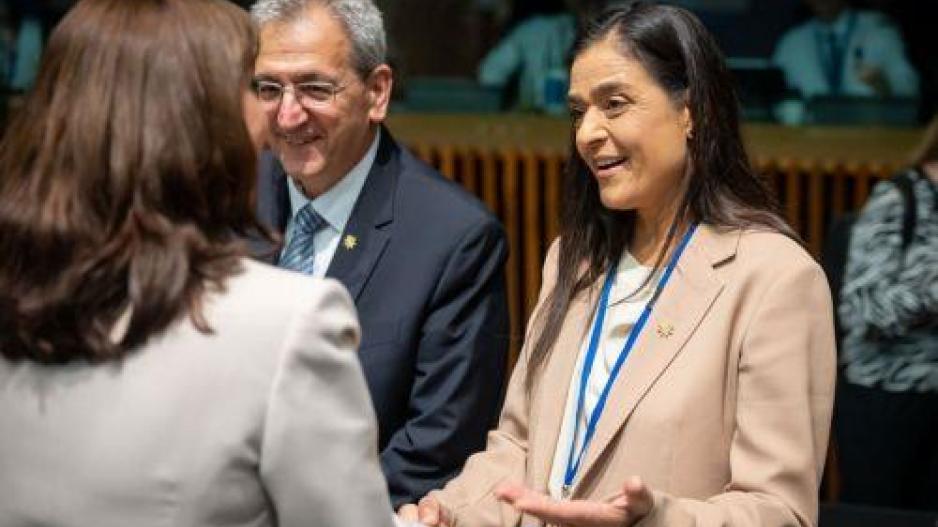
The Cyprus Presidency wrapped up its EPSCO Council work in Luxembourg, showcasing major breakthroughs in poverty reduction, child protection, and worker rights. Key achievements included a landmark agreement on cross-border social security coordination.
Reviewing Core Initiatives in Social Policy
The Cyprus Presidency concluded its work with Employment, Social Policy, Health and Consumer Affairs Council (EPSCO), held in Luxembourg Monday.
Deputy Minister of Social Welfare Klea Papaellina and Minister of Labour and Social Insurance Marinos Mousiouttas, speaking at a press conference, referred to the areas of social policy and employment, highlighting as key outcomes the promotion of initiatives to combat poverty, protect children and workers, strengthen social cohesion, and advance important European legislative files.
More specifically, Papaellina stressed that the Presidency placed at the centre of its work the strengthening of the social dimension of the European Union, with the aim of turning European policies into tangible benefits for citizens. She said that key priorities included combating poverty and social exclusion, promoting social inclusion, ensuring access to essential services and high-quality long-term care, with particular emphasis on children, young people, older persons and persons with disabilities.
She also noted that, during the Cyprus Presidency, initiatives were promoted in the areas of social inclusion, support for persons with disabilities, child well-being and equality, through high-level meetings and other initiatives. She said the results of the Cyprus Presidency reflect the objective of building a more inclusive European social model, adding that Cyprus is now handing over the baton to Ireland, expressing confidence that this work will continue.
Digital Protection and the Fight Against Poverty
Referring to today’s Council proceedings, she pointed out that Conclusions were approved on preventing and combating cyberviolence against girls, describing the protection of minors in the digital environment as a horizontal priority of the Cyprus Presidency. She added that the European Union must make full use of its existing legislative framework, including the Digital Services Act and the Artificial Intelligence Act, to address risks emerging online.
The Deputy Minister also referred to work on the implementation of the first European strategy to combat poverty. She stressed that, despite the progress achieved, poverty remains one of Europe’s most important social and economic challenges, affecting one in five Europeans and one in four children.
She noted that tackling poverty requires an integrated approach combining employment with access to social services, education, affordable housing and targeted support measures, as well as better outreach to beneficiaries and simpler access to available benefits.
EU Competitiveness and Worker Protections
For his part, Minister of Labour and Social Insurance Marinos Moushouttas said that, from the beginning of its term, the Cyprus Presidency focused on people and on the need for the European Union to provide citizens with the tools they need to respond to the challenges of the digital and green transitions, labour market developments and demographic challenges.
Referring to employment, the Minister stressed that policies were promoted for a more social, inclusive and competitive Europe, with emphasis on quality jobs, investment in skills and stronger protection for workers. He said that one of the most important achievements of the Cyprus Presidency was the agreement reached on the revision of the rules coordinating social security systems, after almost ten years of negotiations. The agreement, he said, strengthens cooperation between Member States, offers greater legal certainty and facilitates the lives of millions of citizens who live and work in different EU countries.
Adapting to Modern Labour Dynamics
Referring to today’s Council proceedings, he noted that ministers agreed on the need to adapt European rules to the new realities of the labour market, such as cross-border telework and the opportunities created by digitalisation. Moushouttas also said that ministers discussed the 2026 European Semester and the revision of employment and social policy guidelines, underlining that the competitiveness of the European economy must go hand in hand with social cohesion, through investment in people, skills and lifelong learning.
The Minister noted that today’s Council also examined the protection of workers from the effects of climate change, with particular reference to exposure to extreme temperatures, as well as job quality and the gender dimension of quality employment. He added that, during the Cyprus Presidency, negotiations were concluded on the revision of the Directive on the protection of workers from carcinogens, mutagens and substances toxic to reproduction, while progress was also recorded on the Traineeships file.
At the same time, he said that initiatives were promoted on fair employment, skills development in a changing labour market that takes account of developments in artificial intelligence, and fair labour mobility. The Minister said that the Cyprus Presidency is handing over the Council Presidency to Ireland having achieved significant progress in critical areas of European employment policy, expressing confidence that this work will continue.