Cyprus Issue: Christodoulides and Erhürman Build Positive Momentum
Following Tufan Erhürman’s election, both sides signal openness to restart negotiations under a federal model.
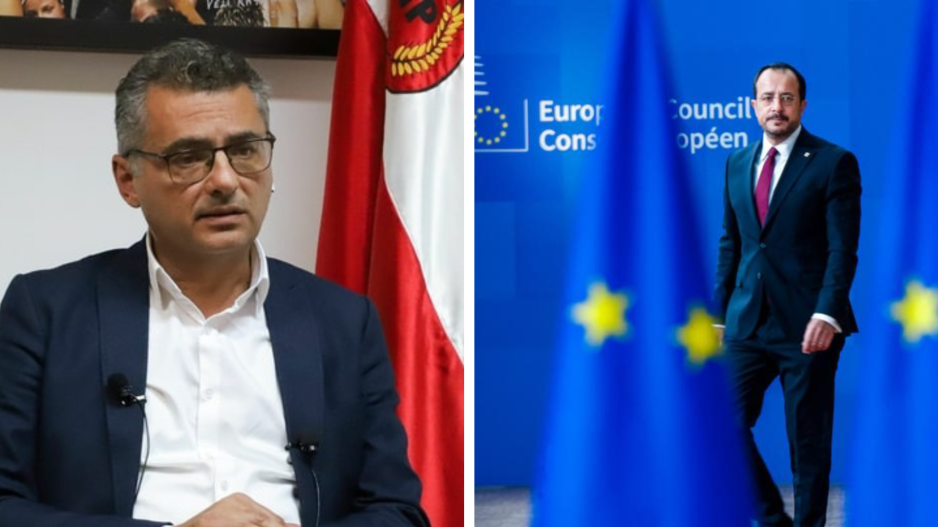
President Nikos Christodoulides has declared Cyprus’ readiness to immediately resume reunification talks, marking the most significant push for negotiations since the failed 2017 UN-led talks in Crans-Montana, Switzerland.
Speaking to Euronews on Wednesday evening (October 22), Christodoulides said he is prepared to “restart negotiations even next week,” just two months before Cyprus assumes the rotating presidency of the European Union. His statement follows the electoral victory of pro-European Social Democrat Tufan Erhürman as leader of the Turkish Cypriot community — a development widely seen as an opening for renewed dialogue on the island’s decades-old division.
“If Mr. Erhürman comes to the table and clearly supports a bizonal, bicommunal federation, then I believe the path is open for a solution to the Cyprus issue based on UN Security Council resolutions,” Christodoulides stressed.
The Cypriot president once again rejected Turkish President Recep Tayyip Erdoğan’s long-standing demand for a “two-state solution,” emphasizing that such a proposal contradicts international law and UN mandates. Instead, he reaffirmed the Republic’s commitment to a federal framework for reunification, the only model recognized by the international community.
New Turkish Cypriot leader Tufan Erhürman, who won a decisive victory earlier this month, has said his goal is to “dismantle prejudices” surrounding the Turkish Cypriot community and to foster better understanding between the island’s two populations.
In an interview with the Turkish daily Türkiye, Erhürman confirmed that his first official visit would be to Ankara, calling Turkey “the indisputable guarantor power” of the island. He stressed that all matters of foreign policy and negotiations will proceed “in consultation and coordination” with the Turkish government.
“Turkey is our guarantor and our sister nation,” Erhürman said, adding that the ties between the two sides “cannot be compared to the relations between two ordinary states.”
Despite his emphasis on close relations with Turkey, Erhürman’s campaign focused on reviving the federal solution model, aligning — at least rhetorically — with the UN framework and the long-standing position of the Greek Cypriot side. His election has rekindled cautious optimism that, after years of deadlock, the two communities might finally return to the negotiating table.
With Christodoulides signaling immediate readiness for talks and Erhürman advocating renewed engagement, both sides appear more aligned than at any point in recent years — though significant hurdles remain, particularly Ankara’s insistence on sovereign equality and security guarantees.
As Cyprus prepares to take on the EU presidency, the timing could strengthen Nicosia’s leverage within the European framework, potentially paving the way for a revived UN initiative.
Whether this renewed momentum will translate into real progress remains uncertain, but for the first time in nearly a decade, hope for a reunified Cyprus is flickering again.