Desalination Units From UAE Rush to Save Cyprus From Water Cuts — Operational by July 22?
The solution provided by the United Arab Emirates includes 13 mobile desalination units, each with a production capacity of up to 1,100 cubic meters of water.
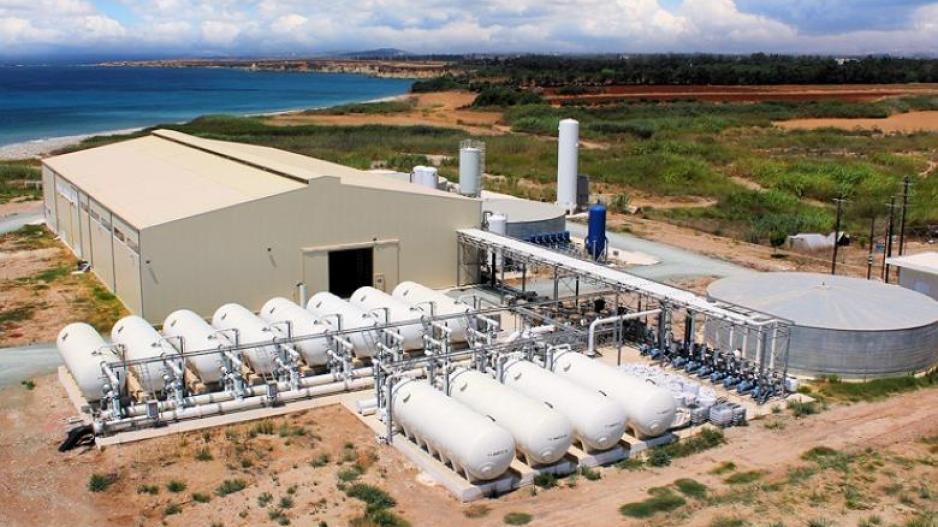
Intensive efforts are underway to install the mobile desalination units that arrived in Cyprus from the United Arab Emirates at the end of May. The goal is to have them operational by July 22 to avoid water cuts, given the low water reserves in the dams. Speaking to OffsiteNews, Deputy Director of the Water Development Department, Giorgos Kazantzis, admitted there are installation difficulties but emphasized that these are manageable and the primary target date of July 22 remains.
“The aim is to have the mobile desalination units operational by July 22 and start producing water,” Mr. Kazantzis stated, noting that significant efforts are being made to meet the scheduled date.
>>Three-Week Delay for Mobile Desalination Units in Limassol<<
However, he did not hesitate to mention that they face daily challenges, mainly because the project’s planning was done in a very short timeframe.
“We face many difficulties, but we are trying to resolve them quickly and methodically,” Mr. Kazantzis explained.
“We are trying to move very fast with units provided by the Emirates without having had the necessary planning time beforehand. As soon as the units arrived, planning was initiated, an agreement was reached with the contractor for their installation, a location was chosen, and after several consultations, we are now in the installation phase,” he added.
He explained that procedures are progressing at a very rapid pace, and for this reason, some needs that arose had not been foreseen.
He clarified that functional problems emerged along the way, as additional infrastructure work had to be carried out, there were wiring issues, and certain materials require longer delivery times. “We are essentially building a water production plant in just 2-3 months. It is logical to expect difficulties, but I assure you they are manageable. We identify them immediately and try to provide solutions on the spot. We remain optimistic,” he said.
When asked whether water cuts would occur, Mr. Kazantzis responded that although water reserves in the dams are very low, the existing desalination plants are fully operational, and the situation is encouraging.
“We are doing well. We have prepared water management scenarios since the beginning of the year. Problems may arise, for example, if one desalination unit stops operating, but we find solutions and move forward. We have not deviated from our scenarios,” he said.
He added that if everything proceeds as planned, there will be no water cuts in 2025. However, he stressed that public cooperation is needed. He highlighted the importance of avoiding water waste, noting that water consumption has already increased by 6% compared to last year.
Finally, he clarified that the goal is for the desalination units from the Emirates to become operational in July to support water supply, and if this happens, there will be no water cuts with certainty.
It is worth noting that the solution provided by the United Arab Emirates includes 13 mobile desalination units, each with a production capacity of up to 1,100 cubic meters of water.
The desalination units from the UAE will be installed with priority in Limassol and Paphos. Specifically, installations are planned for units with a total capacity of 13,650 cubic meters in Limassol and 1,350 cubic meters in Paphos.
The ultimate objective is to resolve Cyprus’s water supply challenges permanently within the next 2–3 years.