VideoGate Goes Global: What Investigators Are Probing and What Cyprus’ Parties Want Next
Government under pressure amid investigations.
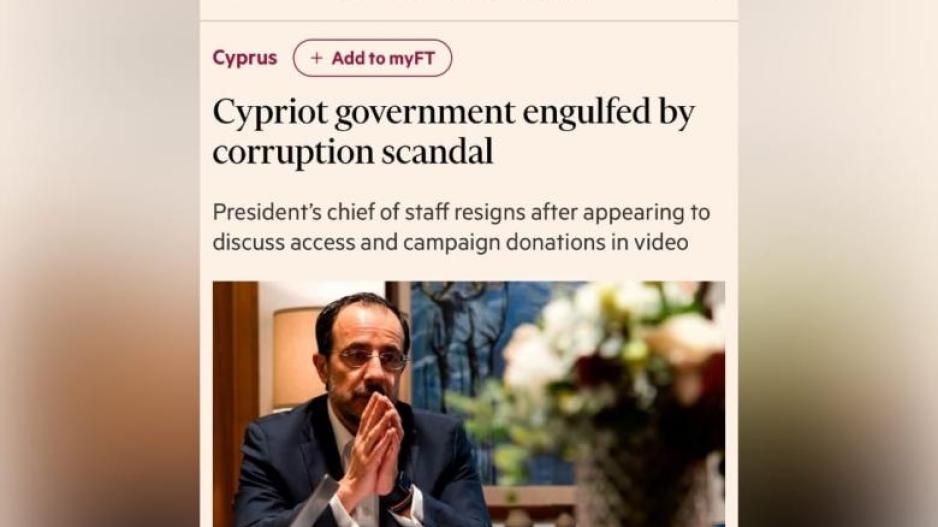
Cyprus is facing mounting political turbulence after the resignation of the Director of the President’s Office, Charalambos Charalambous, amid allegations of corruption triggered by the release of the controversial video. The scandal has drawn international attention, intensified domestic political confrontation, and prompted calls for sweeping transparency reforms, at a particularly sensitive moment as the country holds the rotating presidency of the Council of the European Union.
Adding to the political strain, First Lady Philippa Karsera announced her resignation from the board of the Social Support Fund, which has come under intense scrutiny following references to her name in the video. Several parties have now demanded the immediate publication of the fund’s finances over recent years.
The scandal has already inflicted significant political damage. As the Financial Times reported, the affair undermines President Christodoulides’ core campaign pledge to combat corruption and comes at a time when Cyprus’ international credibility is under close scrutiny.
Cyprus Police, acting under instructions from the Legal Service, are conducting parallel investigations into the content of the video and the possibility of a hybrid attack against the Republic of Cyprus. Statements have already been taken from Charalambous, former Energy Minister George Lakkotrypis, and businessman George Chrysokhos, all of whom appear in the video conversing with individuals presented as foreign investors.
According to government sources cited by the Financial Times, Cyprus has sought technical assistance from the United States, France, the United Kingdom and Israel to examine the authenticity and origins of the material.
President Christodoulides has publicly urged anyone in possession of evidence of illegal activity to submit it to the competent authorities, stressing that accountability must follow institutional procedures.
The fallout has reverberated across the political spectrum, with parties converging on the need for full investigations while sharply criticising the government’s handling of the affair.
Annita Demetriou, Speaker of the House and leader of DISY, acknowledged that the country’s credibility has been damaged, especially during Cyprus’ EU presidency. While recognising the resignations as necessary, she called for a comprehensive action plan, including political accountability, an independent investigation led by the Attorney General, and drastic reforms—or abolition—of the Social Support Fund linked to the First Lady.
The opposition AKEL has escalated pressure by sending formal letters to the Police, the Legal Service, MOKAS, and the Anti-Corruption Authority, demanding updates on investigative actions. Party General Secretary Stefanos Stefanou stressed that democracy is harmed not by exposing scandals but by covering them up, announcing that AKEL will submit legislation to abolish the Social Support Fund altogether.
Similar demands have been voiced by EDEK, which is calling for the appointment of independent criminal investigators and the immediate publication of all donations made to the fund, as well as its transfer to the Cyprus State Scholarship Foundation. DIPA and the Green Party – Citizens’ Cooperation have also insisted on full transparency, accountability, and institutional safeguards to prevent conflicts of interest.
The Volt party described Charalambous’ resignation as the first sign of political accountability within the Christodoulides administration, accusing the Presidency’s communication strategy of deepening institutional damage and warning of potential violations of lobbying and campaign finance laws.