Audit Office Steps In: Who’s to Blame for the New Archaeological Museum Delay?
Investigation into a 500-day extension request could reshape the project’s future and timeline.
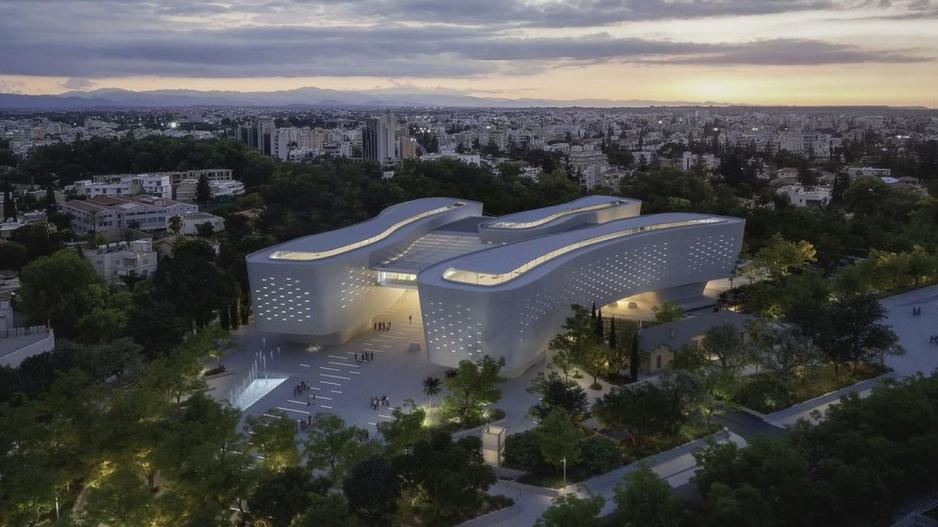
The fate of the New Archaeological Museum of Cyprus, a project of strategic national importance with a budget of €144 million, once again falls under the close scrutiny of the Audit Office (AO). The AO has launched an investigation following the contractor’s request for a 500-day extension to complete the project — a development that could prove decisive for its future.
As Brief reports, the central question the investigation seeks to answer is: “Who is responsible for the delays, and who will bear the cost of the requested 500-day extension and the financial compensation demanded by the contractor?”
According to sources, the project’s trajectory will depend on the Audit Office’s findings and may follow one of three paths:
First scenario: If the Audit Office concludes that the contractor’s claims (e.g., concrete supply strikes, design-related problems) are justified, a new agreement and revised schedule will be established. In that case, the state would grant the 500-day extension and approve compensation payments. Consequently, the museum’s opening would be pushed beyond 2028, taking into account the additional 18 months required for the relocation of the artefacts.
Second scenario: If the Audit Office rejects the contractor’s claims, the state will deny the extension or demand a significant reduction in the compensation request. This could lead to a legal dispute, and in an extreme scenario, even to the termination and re-tendering of the contract.
Third scenario: If the Audit Office identifies failings or delays within government departments, political and administrative accountability will be expected. In such a case, the state — and ultimately the taxpayer — will be responsible for the delay and the associated costs.
The 500-day extension request is closely linked to additional financial demands. As noted in Parliament, “substantial additional sums” are expected to be requested by the contractor. This means that unless the request is rejected, the cost of the €144 million project could rise significantly.
Although 34 out of the 42 contractual months have already elapsed, progress on site remains far behind schedule, with only €30 million worth of work completed. Members of Parliament expressed frustration, stating that “no one could provide a clear answer as to when the project will actually be completed.”
If the 500-day extension is approved, the delivery deadline will be further postponed. Once construction is complete, the Department of Antiquities will require an additional 18 months to transfer and install approximately 7,000 artefacts. Thus, the museum, initially scheduled to open in 2026, will not be operational before 2028.
The project’s financing has been secured through equal loans from the European Investment Bank and the Council of Europe Development Bank, with each covering 50% of the total budget.
The New Archaeological Museum is designed to become a leading cultural institution, revitalizing the urban landscape of central Nicosia while serving as a hub for culture, recreation, and community activity. The initiative aims to enhance residents’ quality of life and attract both local and international visitors.
The Ministry of Finance is responsible for implementing the project, while the Department of Antiquities, under the Deputy Ministry of Culture, is designated as the official beneficiary.