Cyprus Has a Housing Crisis. Are We Ready to Solve It?
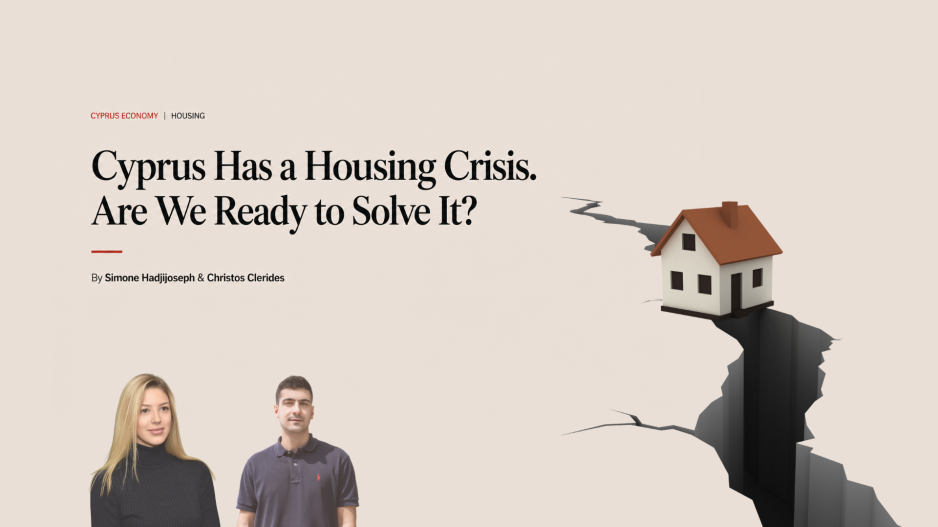
By Simone Hadjijoseph & Christos Clerides
Across Cyprus, and especially in Nicosia and Limassol, access to affordable housing has become one of the most pressing challenges facing young professionals, young families and middle-income households. Rents have risen significantly in recent years, property prices have increased, and more households are finding themselves spending an increasingly large share of their income simply to secure a place to live.
This is no longer a temporary market imbalance. It is a structural challenge that requires a long-term response.
How did we get here?
Following the banking crisis of 2013, construction activity slowed dramatically. Many projects were postponed or cancelled, reducing the number of new homes entering the market. By the time the economy recovered, demand had returned faster than supply.
At the same time, Cyprus became increasingly attractive to international buyers, investors and businesses. Tourism expanded, foreign investment increased and the economy benefited from renewed confidence.
None of this is inherently negative. Foreign investment has contributed to economic growth, job creation and development. The challenge is that the housing needs of local families have not always kept pace with the housing being delivered.
The good news: we are not starting from zero
Recent government initiatives, including density incentives, affordable housing schemes and measures aimed at increasing housing supply, represent positive steps in the right direction.
However, the scale of the challenge suggests that no single policy will be sufficient on its own. Addressing housing affordability requires a broader and more coordinated strategy involving government, local authorities, developers, financial institutions and the wider private sector.
There is also scope to strengthen existing policies. Developments that incorporate affordable housing could benefit from faster planning approvals and greater certainty throughout the permitting process. Likewise, larger residential projects could be encouraged to include affordable housing components while ensuring that projects remain commercially viable.
These are important steps. But meaningful progress will require a long-term housing strategy built around multiple complementary measures rather than a collection of isolated initiatives.
1. Build affordable housing that stays affordable
One of the biggest mistakes housing systems can make is treating affordable housing as a one-time intervention. A home is built, sold at a discounted price and, over time, often exits the affordable housing system altogether.
A more sustainable approach would be for public housing organisations to build, own and manage housing over the long term. Rather than selling the asset, rental income from existing properties could be reinvested into maintenance, future developments and new affordable housing projects through a revolving fund model. This mirrors approaches adopted in other European countries.
The objective should not simply be to create affordable homes today, but to ensure they remain affordable for future generations.
2. Use public land more strategically
Land is one of the largest components of housing costs in Cyprus.
The public sector and other major institutional landowners collectively control significant land holdings thatcould be utilised strategically through long-term lease structures to support affordable housing development.
Cyprus should also examine how planning policy can facilitate the responsible development of suitable underutilised land located near major employment centres. Increasing the supply of appropriately zoned land will be essential if housing delivery is to accelerate meaningfully over the coming years.
3. Take greater advantage of European funding
Affordable housing has become a growing priority across Europe.
As a result, significant financing mechanisms are becoming available through European institutions and programmes. Cyprus should position itself to make full use of these opportunities.
Access to long-term, low-cost financing could help increase the delivery of affordable housing without placing excessive pressure on public finances.
4. Formalise and regulate the HMO sector
Not every housing solution requires new construction.
Across the United Kingdom, Houses in Multiple Occupation (HMOs) represent a well-established form of shared housing that provides more affordable accommodation for students, young professionals and key workers. By allowing multiple unrelated individuals to share a property, housing costs are significantly reduced while making more efficient use of existing housing stock.
A similar market has already emerged in Cyprus, particularly in Nicosia and Limassol, driven by rising rents and changing living patterns. However, much of this activity operates without a clear regulatory framework.
Introducing licensing requirements, safety standards and minimum quality criteria could help professionalise the sector while protecting both tenants and property owners.
Shared housing models such as HMOs should not be viewed as a replacement for affordable housing. They should be viewed as one component of a broader housing strategy that can increase the availability of lower-cost accommodation without requiring significant public expenditure.
5. Encourage mixed-income communities
Affordable housing should not be isolated from the wider housing market.
Many international cities have adopted forms of inclusionary housing, whereby larger residential developments include a proportion of homes designated as affordable housing and offered at controlled sale prices or rental rates to eligible households.
This approach supports mixed-income communities, promotes social cohesion and enables affordable housing to be delivered alongside private-sector development.
Cyprus could further strengthen existing frameworks where larger developments receive planning incentives, density bonuses or accelerated approvals in exchange for providing a proportion of affordable housing units, whilst ensuring that such requirements remain commercially viable for developers. Appropriate safeguards could ensure that these homes remain affordable over the long term.
The objective is not to discourage development but to create a partnership between the public and private sectors that expands housing supply while maintaining social balance.
6. Modernise how we build
The housing challenge is not only about land and financing. It is also about construction capacity.
Cyprus faces labour shortages, while traditional construction methods can be time-consuming and expensive.
Modern approaches such as modular and prefabricated construction can help deliver housing more efficiently, reduce costs and improve certainty around project delivery.
These technologies are already being used successfully in many countries and should form part of the national conversation about increasing housing supply.
7. Reduce the cost of delivering affordable housing
If affordable housing is to be delivered at scale, the economics must work for everyone involved.
Targeted incentives could help reduce development costs and encourage greater private-sector participation. These could include reduced VAT rates where appropriate, accelerated permitting processes and improved access to financing for projects that meet affordability criteria.
The objective is not to provide blanket subsidies, but to align incentives so that affordable housing can be delivered at greater scale and in a financially sustainable manner..
8. Improve transparency in the rental market
Affordability is not solely a supply issue. It is also a question of trust and transparency.
In many mature rental markets, landlords have access to tenant referencing, affordability checks and structured rental information before entering into an agreement. Cyprus is only beginning to adopt similar practices.
Improving transparency through tenant verification systems, digital rental platforms and better market information can reduce risk and uncertainty for landlords while making it easier for responsible tenants to secure housing.
Technology alone will not solve the housing challenge, but it can contribute to a more efficient, transparent and trusted rental ecosystem.
The next few years matter
The decisions made over the next few years will shape Cyprus's social and economic landscape for the next decade.
The encouraging reality is that Cyprus already possesses many of the tools required to address the housing affordability challenge: institutional foundations, land resources, access to European financing and a policy discussion that is increasingly focused on affordability.
What is still needed is a coherent long-term strategy that brings these tools together under a common vision.
Housing affordability will not be solved by a single policy, a single subsidy or a single development. It will require a coordinated effort across planning, financing, land policy, construction, technology and regulation.
The question is no longer whether Cyprus faces a housing affordability challenge. The question is whether we are prepared to address it at the scale it requires.
About the Authors
Simone Hadjijoseph is an Asset Manager at S.E.M.A.N.A. HADJIOSIF KATASKEYAI LTD, a family-owned business, where she manages a diversified portfolio of land and commercial assets, focused on driving long-term portfolio value and growth. She previously held a Strategic Advisory role at CBRE London, advising global clients on real estate investment strategies and mixed-use developments.
Christos Clerides is the Founder & CEO of Proper Property, Cyprus’ first media and proptech company dedicated to the real estate sector. Prior to founding Proper Property, he worked in London, where he managed a residential HMO portfolio valued at over £35 million, was part of a proptech startup that secured £1.8 million in pre-seed funding, and later joined The Economist. His work focuses on housing markets, innovation within the rental sector, and property technology