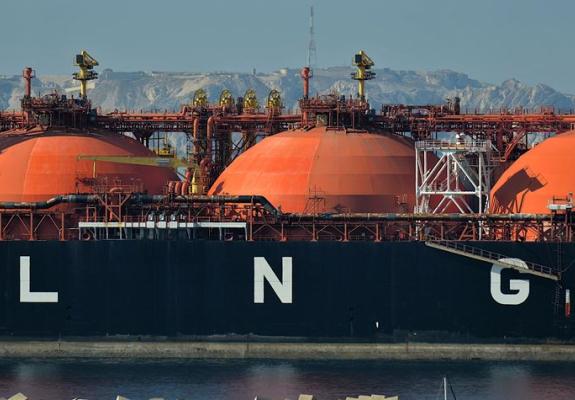
Water Scarcity in Cyprus: Is Desalination Enough?
Balancing Supply, Demand and Reuse for Long-Term Water Security
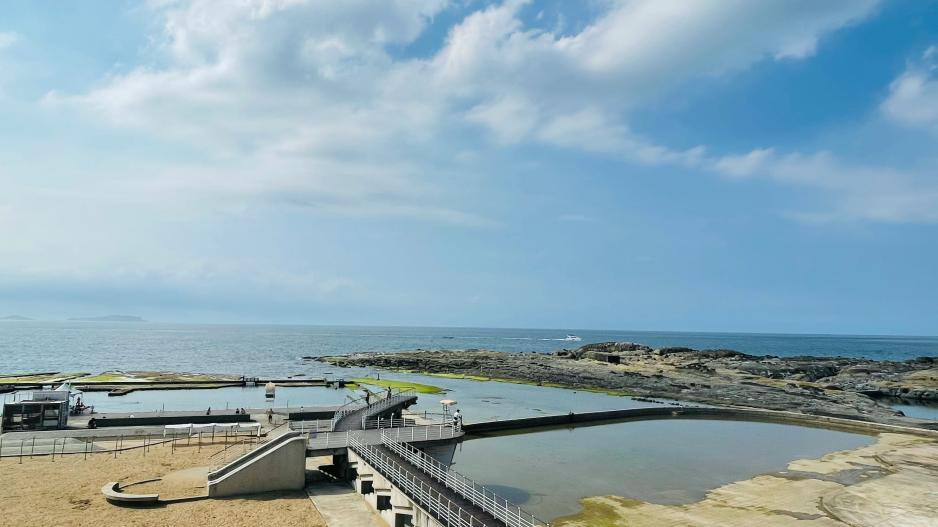
Officials indicated desalination already covered about 70% of urban drinking water needs, with emergency mobile capacity deployed in 2025 and more upgrades planned through the decade. Yet escalating demand, from population growth, tourism, and urban expansion, along with climate change–driven rainfall decline, raises a critical question: cad desalination, on its own, future-proof an island where water demand had tripled since 1990 and reservoirs sat at historic lows?
Cyprus currently operates (or is upgrading) several large desalination plants. According to the Water Development Department, the Dekelia, Larnaca, Limassol (Episkopi), and Vassilikos plants serve major urban and touristic districts, with a combined minimum annual capacity of ~ 32.8 million m³ for each of two clusters of plants.
In recent plans, the government pledged to expand and upgrade the existing fleet and to build two new permanent plants, in Moni and Dekelia, by 2030 via public-private partnerships. The upgrades are expected to boost output by up to 50%, while the new plants are projected for daily capacities of 60,000 m³ (Moni) and 80,000 m³ (Dekelia), with room for expansion.
However, desalination comes at a cost. Over a recent six-year span, Cyprus reportedly spent €460 million on procuring desalinated water, covering both operating and non-production costs. Older plants also show higher energy use; for the Dekelia and Larnaca units, the Water Development Department once reported a specific energy consumption of ~ 4.5 kWh/m³, though newer plants are presumed more efficient.
Further, environmental constraints arise. A study examining the impacts in Cyprus found that desalination operations in 2018 generated ~ 103 million m³ of brine effluent to produce ~ 69.6 million m³ of freshwater, posing risks to marine ecosystems (e.g. seagrass meadows) if discharge isn’t carefully managed. The same study flagged that emission burdens, land intake design, and discharge placement require engineering safeguards.
Hence, while desalination is indispensable, its viability hinges on energy efficiency, cost control, and environmental mitigation.
Even the best desalination volumes can be undermined by network inefficiencies. Cyprus reportedly loses ~ 30 million m³ annually due to non-revenue water (NRW), with some estimates placing losses at ~ 40% in certain districts. These losses diminish the net benefit of every additional cubic metre produced.
Demand is escalating sharply. Since 1990, water demand in Cyprus has more than tripled, propelled by population growth, housing expansion, and tourism booms. In fact, in 2023, the national water deficit (i.e. the shortfall between supply and demand) reached 66 million m³ — vastly exceeding the annual output of many plants. During the dry 2025 summer, one desalination plant was knocked offline by fire, prompting deployment of mobile units (e.g. from the UAE) to cover shortfalls of ~ 15,000 m³/day.
Moreover, the tourism sector is especially concentration-intensive. With over 4 million tourists arriving annually (pre-pandemic levels), resorts and hotels impose sharp seasonal demand surges exactly when natural sources are weakest. To buffer that, the government is subsidising hotel-level desalination as a stopgap measure.

Cyprus is relatively advanced in reuse. In the “Cyprus Case” publication by the Water Development Department, the reuse of treated effluent for irrigation or aquifer recharge has been a central pillar of water policy. Under EU directives, Cyprus is better positioned to scale safe agricultural reuse across its municipalities.
As of recent planning, authorities envisage full use of treated effluent in regions including Larnaca, Eastern/Nicosia, Western/Nicosia, Limassol, and Free Famagusta, developing conveyance, storage, and distribution networks so that wastewater (tertiarily treated) replaces fresh withdrawals where possible.
For agriculture, historically the largest fresh water user, this shift is especially important. Fit-for-purpose reuse (rather than potable quality) plus drip or deficit irrigation can stretch water budgets dramatically. The scientific literature on Cyprus underscores that reuse offers high “water yield per investment” compared to new desalination capacity, particularly under Mediterranean scarcity trends.
Moreover, the Water-Mining EU project (Horizon 2030) is collaborating with Cyprus to maximize the integration and efficiency of desalination + reuse systems. The project involves 39 partners and aims to optimize how desalinated and reused water are combined in island settings.
Desalination is energy-intensive, and energy costs directly influence water pricing and emissions. In Cyprus, one retrospective estimate places energy demand for desalination at ~ 3.5 kWh/m³ on average, representing ~ 5 % of national electricity consumption in peak years. Earlier data suggested 4.5 kWh/m³ for older plants like Dhekelia and Larnaca, implying room for efficiency gains.
To manage both cost and emissions, the Cyprus government is exploring renewable integration, energy recovery devices (e.g. pressure exchangers), and “smart operation” strategies (e.g. load shifting, modular runs).
On the ecological front, brine discharge and chemical residuals pose risks to coastal ecosystems. A study on environmental impacts in Cyprus recommends carefully sited outfalls, diffusers, dilution modeling, and monitoring to protect sensitive seagrass habitats and benthic communities.
Some of Cyprus’s newer desalination proposals (e.g. floating or modular plants) claim lower ecological footprints, faster deployment, and lower civil works impact. The WDD has reportedly received 53 proposals for floating plants from national and international firms, 13 of which are under detailed review.
Ensuring Cyprus’s water security in the decades ahead will depend not on a single technological fix but on an integrated approach that balances resilience, efficiency, and sustainability. Desalination has proven indispensable for meeting immediate needs, yet long-term stability will come from combining it with robust leak management, expanded wastewater reuse, smarter agricultural practices, and cleaner energy integration.