How Much Does the Israel–Iran War Cost Per Day?
Massive defense spending strains Israel’s public finances.
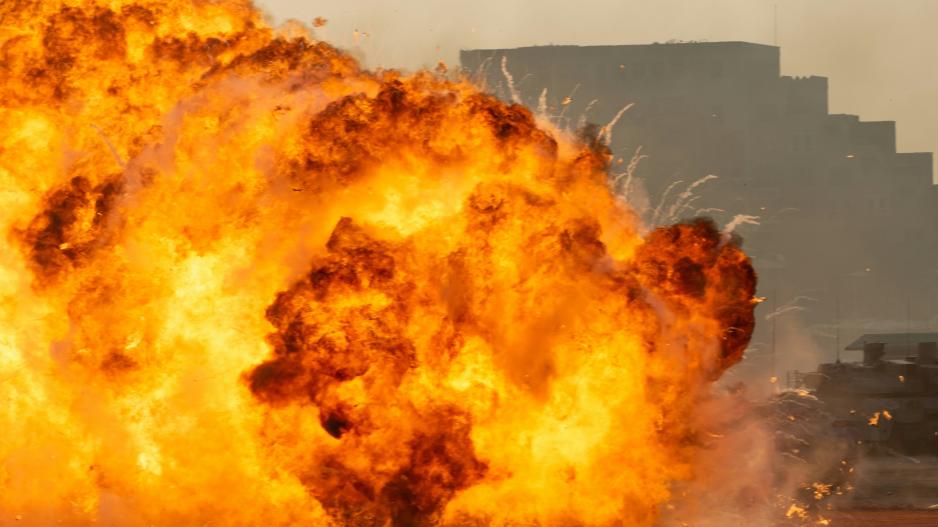
The financial cost of the Israel–Iran war remains one of the least discussed aspects of the conflict—yet it is critically important.
According to Brigadier General Reem Aminach, former chief financial officer of the Israeli Ministry of Defense, the average direct daily cost of the war exceeds $725 million. Speaking to Ynet, he clarified that this figure covers only direct military expenditures. The indirect costs, such as the broader economic impact and loss in GDP, cannot yet be quantified. Still, he estimates the total daily cost to Israel at nearly $1 billion.
This represents a massive financial burden on a national budget already heavily impacted by the ongoing war in Gaza. "In just the first two days of the conflict with Iran, military expenses reached $1.45 billion," Aminach explained—split evenly between offensive and defensive operations. This figure does not include damage to civilian property or the broader economic effects of the conflict.
A substantial share—around one-third of total war spending—goes to air defense, costing Israel an estimated $285 million per day. Each missile from the Arrow 2 and Arrow 3 systems costs $3 million, according to The Marker, an Israeli financial daily.
Given this pace of expenditure, The Wall Street Journal estimates that Israel could only sustain the war for 10 to 12 days without U.S. support before depleting its missile reserves.
Air Force operations also come at a high cost.
-
One hour of flight time for an F-35 costs $42,000
-
For an F-16, it’s $27,000
-
For an F-15, approximately $24,000
A standard daily mission to Iran—averaging three hours—costs:
-
$14.2 million for F-16s
-
$5.5 million for F-35s
-
$4.8 million for F-15s
Aminach estimates that daily jet operation costs total $24.5 million, not including the expenses related to weapons systems and equipment.
With simultaneous conflicts in Gaza, Lebanon, and now Iran, Israel’s defense spending last year soared to $46.5 billion, or 8.8% of its GDP (which exceeds $500 billion). This ratio is the second highest globally, following Ukraine, and even surpasses Russia’s (7.1%).
Market analysts warn that Israel has not implemented sufficient fiscal measures to shield its economy, currency (the shekel), and financial system from the long-term consequences of a fully mobilized war economy.
“The public finances risk collapse under the weight of Netanyahu's war-driven policies,” analysts caution. Meanwhile, far-right Finance Minister Bezalel Smotrich is criticized for focusing on expanding Jewish settlements in the West Bank rather than stabilizing Israel’s economic future.
According to The Economic Times, Israel’s public debt is expected to be severely affected, as the Finance Ministry has already set a maximum deficit limit of 4.9% of GDP for the current fiscal year—roughly $27.6 billion.