Foreign-Controlled Enterprises in Cyprus Spike by 33.4% in Just One Year
19.9% increase in employment, 28.6% jump in value added within a single year.

A new Eurostat report highlights the growing influence of foreign-controlled enterprises across the European Union—despite accounting for only 1% of all market producer enterprises in 2023. These companies, controlled by institutional units based either in other EU countries (60%) or outside the EU (40%), continue to exert a disproportionately large impact on employment and value added.
According to the report, foreign-controlled firms generate 24% of the EU’s total value added and employ 16% of the bloc’s workforce. Their presence, however, varies widely by member state, with smaller and more internationally exposed economies showing the highest levels of foreign ownership.
Luxembourg ranks first, with 28% of all enterprises classified as foreign-controlled, followed by Estonia at 11%. In all other EU member states, the share remains below 5%. At the lower end of the scale are Poland and Italy (0.3%).
Cyprus mirrors the broader EU pattern: only a small share of local enterprises falls under foreign control, and about 10% of jobs in the country are linked to such firms, according to Eurostat’s labour share indicator. This places Cyprus among the countries with relatively low employment penetration, alongside Greece and Italy.

Still, the newly published structural business statistics point to a notable year-on-year increase between 2022 and 2023:
Foreign-controlled enterprises in Cyprus (rest of the world, excluding EU-controlled):
– 651 enterprises in 2023, up from 488 in 2022
– 38,501 persons employed in 2023, up from 32,119 in 2022
– €4.5 billion in value added in 2023, up from €3.5 billion in 2022
This corresponds to a 33.4% rise in the number of foreign-controlled enterprises, a 19.9% increase in employment, and a 28.6% jump in value added within a single year.
The expansion reflects ongoing foreign investment trends in Cyprus, particularly in professional services, technology, real estate, and international business activities. Although the country’s proportion of foreign-controlled enterprises remains modest compared with EU hubs such as Ireland and Luxembourg, their economic weight continues to grow.
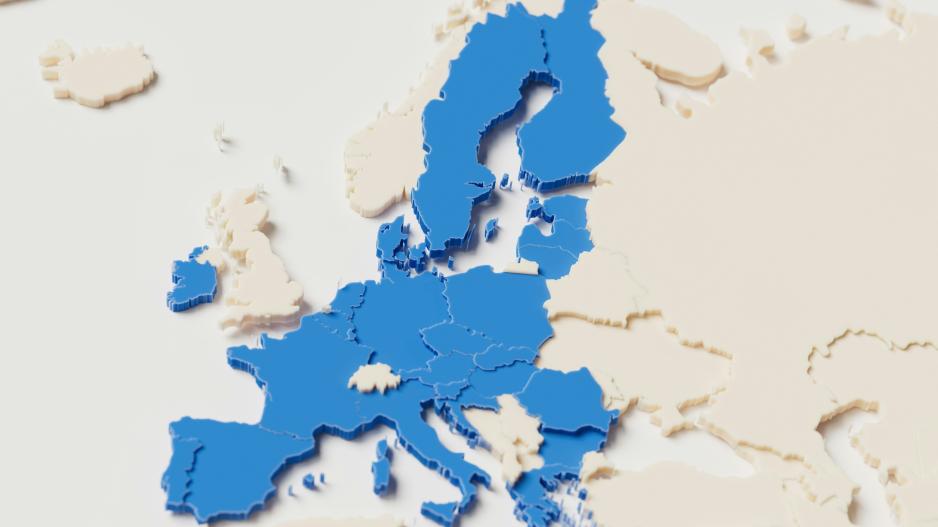
Across the EU, foreign-controlled enterprises contribute disproportionately to national economies. Eurostat identifies several standout cases:
– Ireland: 71% of national value added comes from foreign-controlled firms
– Luxembourg: 61%
– Slovakia: 50%
At the opposite end, the lowest contributions are recorded in:
– France: 15%
– Italy: 17%
– Greece & Germany: 18% each
In terms of employees and self-employed persons, foreign-controlled enterprises represented 45% of jobs in Luxembourg, and 28% in both Slovakia and Czechia. By contrast, they accounted for 10% of jobs or less in Greece (8%), Cyprus and Italy (10% each).