Great Sea Interconnector: Billion-Euro Energy Lifeline at Risk
Mounting costs, regulatory paralysis, and geopolitical tensions threaten the ambitious undersea electricity interconnection project.
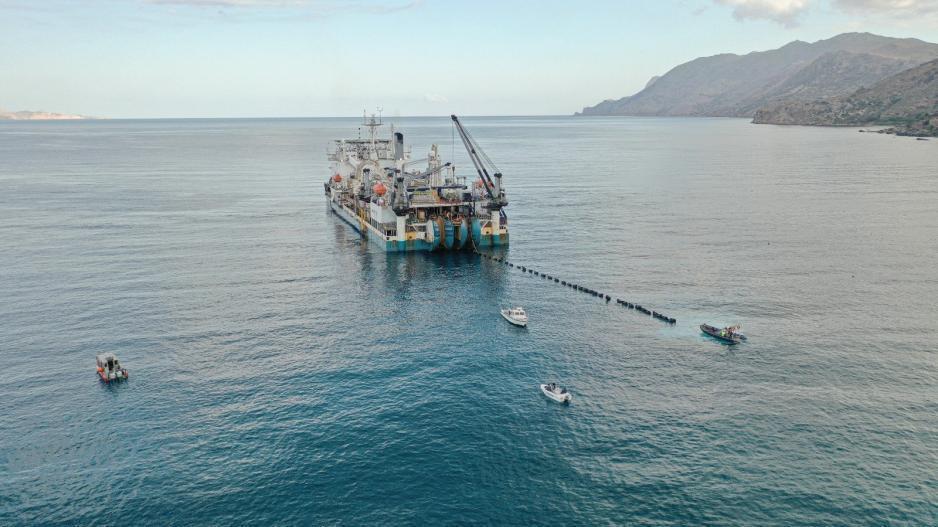
The once-celebrated Cyprus–Crete–Israel electricity interconnection—touted as a strategic solution to end Cyprus’s energy isolation—is now facing serious financial and operational peril. What began as a landmark project under the broader Greece–Cyprus–Israel (GSI) energy initiative may become a multi-billion-euro liability, with progress stalled and expenses spiraling out of control.
Since the project effectively ground to a halt in February, minimal progress has been made, while costs continue to escalate. Official figures from Greece’s Independent Power Transmission Operator (ADMIE) cite over €250 million in expenditures to date. However, the actual figures suggest that spending could already surpass €420 million. Key cost breakdowns include:
-
€41 million spent on seabed surveys
-
€48 million paid for the acquisition of project rights from Cypriot entrepreneur Nasos Ktorides
-
Up to €19 million potentially owed in compensation for ship delays, pending regulatory approval
Under a €1.4 billion contract, French firm Nexans is responsible for laying the 900-kilometer undersea cable. So far, only around 160 kilometers have been completed. ADMIE has reportedly made advance payments to Nexans to continue production through August, yet regulatory authorities claim they were not fully briefed on these financial movements.
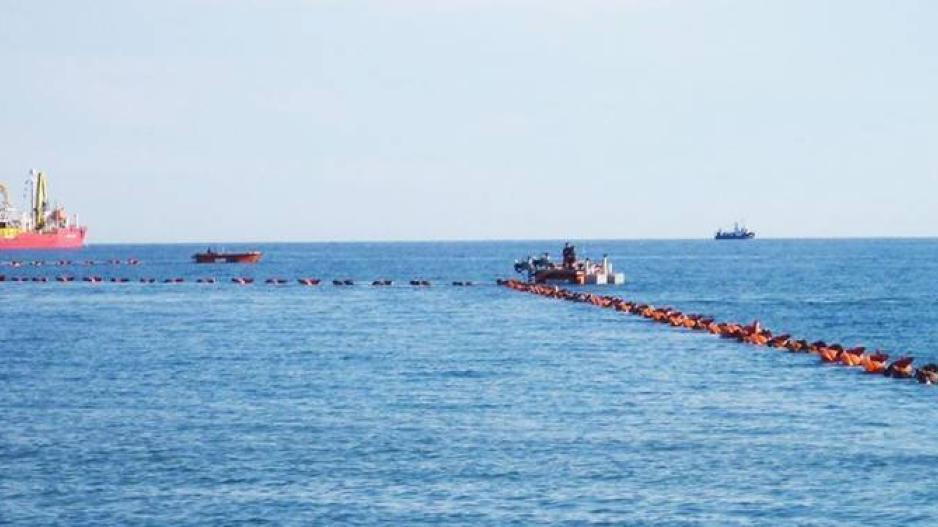
Complicating the situation further are unresolved regulatory and geopolitical hurdles. Last summer, Turkish naval forces disrupted marine survey operations in international waters, halting all progress. Since then, no further surveying or laying of cables has occurred, and officials in Athens remain cautious given the geopolitical sensitivity of the region.
Financially, Cyprus had planned to use revenue from EU emissions auctions to fund its share of the project. However, the Cypriot Energy Regulatory Authority (CERA) has not approved ADMIE’s request to begin recouping its capital costs via consumer electricity bills—a move that would directly impact consumers.
In contrast, Greece has implemented a contingency plan: if the project collapses, the state budget will cover 13% of losses to shield households from the financial blow.
Both CERA and Greece’s Regulatory Authority for Waste, Energy and Water (RAAEY) are under growing pressure to approve ADMIE’s regulated revenue streams. Without such approval, ADMIE cannot secure further loans or private investment—leaving the entire endeavor hanging in the balance.
So far, the European Union has contributed €164 million through the Connecting Europe Facility (CEF), but the remainder of the financing depends heavily on ADMIE’s equity and borrowed capital. The longer the regulatory deadlock continues, the greater the financial and political risk becomes.
As the project’s future hangs in the balance, Greek officials are reportedly seeking diplomatic support from Israel, France, and the United States. Yet so far, no tangible commitments have emerged. Internal voices within the Greek government are now questioning whether the country was adequately prepared to lead such a high-risk, capital-intensive initiative without firmer international backing.