Great Sea Interconnector: Greece–Cyprus Dispute Deepens
A €25 million regulatory deadlock in Cyprus threatens to halt construction on the €1.4 billion Great Sea Interconnector.
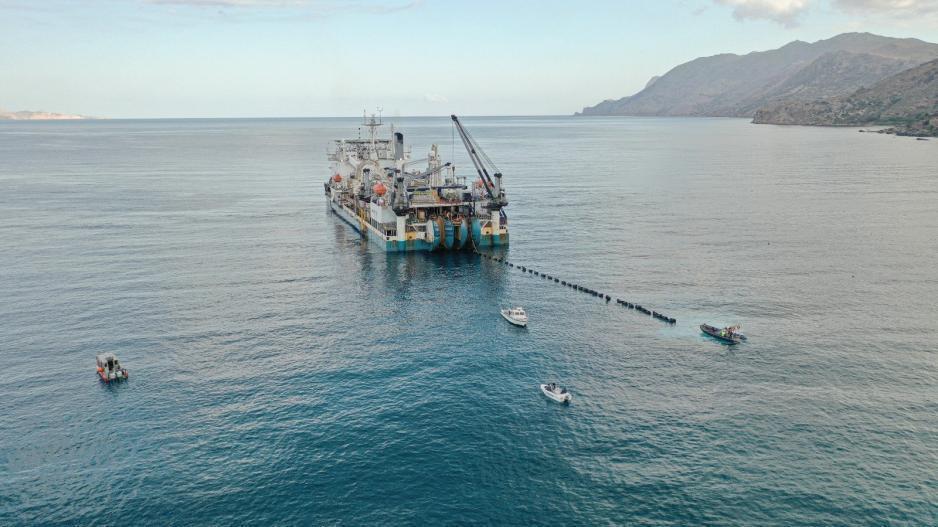
The future of the Greece–Cyprus electricity interconnection, known as the Great Sea Interconnector (GSI), is once again under serious threat. Despite a bilateral agreement signed in September 2024 between Athens and Nicosia to resolve funding issues, the project now faces a renewed deadlock—this time over regulatory approvals—with critical consequences expected as early as August.
At the core of the dispute is the Cyprus Energy Regulatory Authority (CERA) refusal to approve an initial €25 million payment for 2025 to ADMIE (IPTO), the Greek operator managing the project. ADMIE, which has already invested approximately €300 million, requires the funds to maintain payments to Nexans, the French contractor building the €1.4 billion undersea cable. Nexans has warned that if the payment isn't secured, it will halt construction in August—jeopardizing the timeline of this EU-funded strategic energy infrastructure.
The European Commission, which has committed a record €657 million to the GSI, has stepped in to mediate. Yet, two high-level virtual meetings held under its oversight have failed to yield any resolution. A third meeting is set for July 23.

Cyprus Holds Firm Over Certification and Cost Timing
RAEK maintains that, according to its regulatory framework and the terms of the 2024 bilateral agreement, the €25 million annual contributions should begin only after the project's completion—not during construction. The authority also insists that ADMIE must obtain full regulatory certification to operate within Cyprus, citing concerns about ADMIE's ownership structure, particularly its Chinese state-linked shareholders.
In contrast, Greece’s energy regulator, RAAEY, has already greenlit cost recovery from Greek electricity consumers. ADMIE argues that a predictable regulatory revenue stream is vital for securing bank loans and ensuring steady progress.
Cypriot Energy Minister George Papanastasiou had previously stated that RAEK’s approval was imminent and asserted that any impact on Cypriot consumers would be offset through government subsidies sourced from carbon emission revenues. However, RAEK President Polyvios Lemonnaris told parliament last week that no funds would be released without verified records of ADMIE’s expenditures and full regulatory compliance—even if consumer tariffs are introduced.
Bilateral Agreement Under Renewed Pressure
The September 2024 intergovernmental agreement had been celebrated as a turning point. It outlined Cyprus’s commitment to contribute €25 million annually over five years, using revenues from its emissions trading scheme. It also stipulated that Greece would bear proportional costs if the project collapsed due to geopolitical events.
However, both sides now appear to be retreating into defensive positions, raising doubts over the agreement’s durability. With the project already facing delays due to unresolved seabed research and other geopolitical hurdles, the financial standoff threatens to become a definitive breaking point.
ADMIE CEO Manos Manousakis, speaking at the InvestGR forum, confirmed that no progress has been made on the regulatory front and stressed the need for stable financing. ADMIE also warned that Cyprus’s plan to use state funds could be deemed illegal state aid under EU competition rules, advocating instead for consumer-based cost recovery.
EU Cautious Amid Mounting Tensions
Despite its significant financial involvement, the European Commission has maintained a low profile, opting not to wade into the political and regulatory tensions at play. This reserved approach, combined with Cyprus’s regulatory resistance, has further stalled progress on one of Europe’s most ambitious energy projects.
There are now growing calls for Athens and Nicosia to escalate the matter to the EU Energy Council, seeking unified European backing to defend strategic infrastructure projects from third-party political interference. Minister Papanastasiou has emphasized that countries obstructing EU-funded energy projects should face restrictions in accessing European funds.
With the August deadline from Nexans rapidly approaching, the GSI project hangs in precarious balance.