Why the Larnaca Municipality Is Demanding Compensation Over the Airport
New survey outlines environmental, economic and planning impacts from Larnaca Airport and urges adoption of structured offset policies.
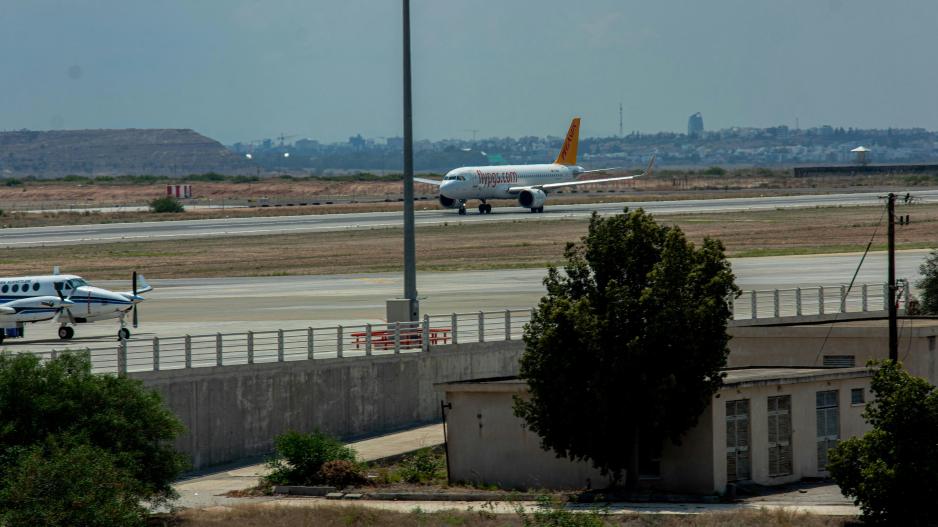
The Municipality of Larnaca is renewing its call for formal compensatory measures to redress the long-standing and mounting burdens linked to the operation and expansion of Larnaca International Airport. Backed by a detailed study conducted by Grant Thornton Cyprus—which FastForward has obtained and presents today—the Municipality is demanding the institutionalisation of a fair offset framework covering environmental, social, and developmental dimensions. The goal is to restore balance to one of Cyprus’s most affected urban areas, where local communities continue to shoulder the costs of a national infrastructure asset with no direct return.
The study, titled “Proposed Compensatory Measures Related to the Operation of Larnaca Airport”, was commissioned by the Municipality of Larnaca and completed in May 2025. It outlines the disproportionate costs borne by Larnaca and Dromolaxia-Meneou—two neighbouring municipalities that have, for decades, absorbed the direct impact of the airport’s air traffic, emissions, noise, and land-use restrictions, while seeing little to no return benefit from the revenues generated by the national infrastructure hub.
Larnaca International Airport, operated by Hermes Airports Ltd, serves as the Republic’s primary aviation gateway. While its national importance is undisputed, the Municipality argues that the local community has been unfairly treated, receiving no offset for the economic, environmental, and social consequences it faces daily.
The Grant Thornton study identifies a wide range of direct impacts:
-
Noise pollution exceeding 55–60 decibels, violating EU Directive 2002/49/EC
-
Air pollution from NO₂ and PM10 particles above legal thresholds under Directive 2008/50/EC
-
Urban development restrictions that significantly depress investment potential, with building coefficients as low as 1%–6% in zones near the airport (compared to 40%–60% in other coastal cities)
-
Public health risks, including elevated rates of cardiovascular and respiratory illness, particularly among children and the elderly
The executive summary states that Larnaca's tourist traffic stands at approximately 514,000 visitors per year, far behind Paphos’s 1.3 million. Meanwhile, the city's per capita GDP (€30,000) also trails behind Limassol’s (€37,000), in part due to long-standing restrictions on commercial and tourist development caused by the airport's footprint.

The Grant Thornton study proposes the establishment of a structured framework for compensatory measures, drawing inspiration from successful international models. These include:
-
Environmental and Social Funds
Such as the “Compensation Bank” in Bristol and the sustainability fund at Arlanda Airport (Stockholm), these are financed through passenger levies or airport revenues. Larnaca proposes the creation of a “Restoration and Social Offset Fund”, potentially funded by a nominal fee per passenger, to support mitigation efforts and local improvements. -
Direct Compensation to Residents
International examples include Heathrow’s £700 million soundproofing scheme and Schiphol’s extensive noise-impact payouts extending up to 20km. Similar sound insulation and health-impact compensation schemes are proposed for homes in affected zones around Larnaca. -
Strategic Infrastructure and Urban Development Projects
Inspired by Barcelona and Berlin, Larnaca is seeking investment in public transport links, revitalisation of the coastal zone, and creation of flexible planning zones to unlock the city’s development potential currently constrained by aviation-linked planning rules.
The study firmly anchors its recommendations in both Cypriot and European law. It also references Cyprus’s national legislative framework, including laws on waste management, air quality, and environmental licensing. The report underlines that the second phase of airport expansion should trigger a new EIA and social impact study, which would create further justification for mandatory offsetting measures.
In its formal appeal, the Municipality of Larnaca stresses that offset measures are not a luxury, but a matter of equity and legality. Despite generating national wealth, the city is constrained in its own growth and exposed to persistent environmental degradation. Officials argue that the issue is not simply about monetary compensation but about enabling the city to thrive in tandem with national infrastructure.
The Municipality is calling for:
-
Immediate establishment of a national compensation fund
-
Legislated frameworks for local participation in airport governance and planning
-
Implementation of zoning reforms to enable sustainable urban development
-
Institutional recognition of the disproportionate impact Larnaca has endured
With Grant Thornton’s report now complete, the Municipality of Larnaca is expected to intensify its advocacy toward the central government, leveraging European and national legal frameworks to support its case for compensatory justice.