President Christodoulides Inaugurates Landmark €31 Million CING Facility In Nicosia
State Investment in CING a "Conscious Choice" Which Will Continue, President Says
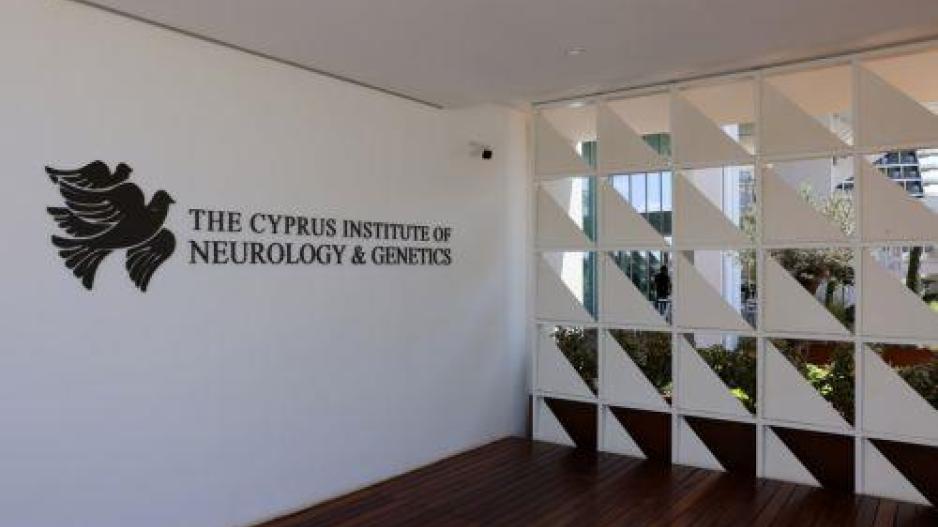
President Nikos Christodoulides inaugurated the Cyprus Institute of Neurology and Genetics' new €31 million facility in Nicosia, calling state investment in the cutting-edge hub a conscious policy choice to boost healthcare, innovation, and reverse brain drain.
A Symbol of Scientific Progress
State investment in the Cyprus Institute of Neurology and Genetics (CING) is ongoing, represents a deliberate policy choice, and will continue, President Nikos Christodoulides said on Thursday evening as he inaugurated the Institute’s new building, in Nicosia.
The President described the new building as “a symbol of progress, optimism, self-confidence and trust in the capabilities of Cyprus' scientific community, of which we are all proud”.
“It is an investment in the health of our citizens, in research that changes lives, and in knowledge that shapes our future”, he said. President Christodoulides noted that the new building marks “another highly significant chapter in the advancement of scientific research, innovation and the provision of specialised healthcare services in our country”.
Financial Investment and Strategic Cooperation
The new building, covering more than 11,000 square metres and constructed at a total cost of €31 million, he said, represents “one of the most significant investments made in recent years in the fields of research and healthcare in Cyprus”. The project was co-financed by the Republic of Cyprus and the European Investment Bank, demonstrating “the importance of cooperation between the State and European institutions in practice”, he said.
“State investment in the Cyprus Institute of Neurology and Genetics is continuous, it is a conscious choice, and it will certainly continue”, he added.
For decades, he said, the Institute has been one of the country's leading scientific organisations and a regional centre of excellence, giving all Cypriots every reason to be “proud”.
He added that, through its commitment to excellence, the Institute has successfully combined research, diagnosis, clinical care and education while providing services of the highest standard.
Expanding Capabilities and Reversing Brain Drain
The President also highlighted the Institute's significant contribution to Cypriot society. Each year, it serves approximately 6,500 patients and provides more than 80,000 clinical and laboratory services, he noted. These figures, he said, represent thousands of individuals and families who find hope, support, timely diagnosis and access to specialised healthcare through the Institute.
He noted that the new building will further strengthen this important mission.
Its modern infrastructure, state-of-the-art research laboratories, specialised units, and new education and collaborative spaces for scientists create the conditions for an even higher standard of services, the President said, noting that it also supports the Government's efforts to encourage highly skilled Cypriot scientists working abroad to return home and pursue careers at centres of excellence such as the Institute.
The expansion will also enable the creation of new research groups, attract distinguished scientists from Cyprus and abroad, and broaden activities in cutting-edge fields including neuroscience, genetics and genomics, biomedical research, personalised medicine and rare diseases, he noted.
The President further noted that the expansion creates new opportunities to attract international research funding, participate in major European research programmes, develop new technologies and strengthen innovation, enhancing Cyprus' competitiveness in the fields of knowledge and innovation.
Budgetary Priorities and Social Liberalism
Referring to his own presence and that of many Cabinet Ministers at the inauguration ceremony, President Christodoulides said that for this Government, healthcare, education and the welfare state “are among our highest priorities, as reflected in our political philosophy of Social Liberalism”.
He noted that the 2026 State Budget includes a 6.7% increase in expenditure on education, healthcare and social welfare, while funding for research and innovation has also increased. He expressed confidence that next year's budget would continue in the same direction.
Concluding his address, the President expressed his great satisfaction that the project had been completed exactly on schedule.
A Day of Pride for the Scientific Community and an "historic milestone"
Chairman of the Board of the Cyprus Institute of Neurology and Genetics, Professor Michalis Komodromos, described the occasion as “a day of pride”, not only for the Institute but also for science, research and society.
“Today we are inaugurating a new building. In reality, however, we are inaugurating new opportunities for research, for patients and for future generations of scientists in our country”, he said.
He explained that the new building will accommodate new research teams and modern facilities, significantly strengthening the Institute's scientific work on neurological disorders, genetic diseases and rare conditions.
“It will become the place where new ideas, new collaborations and, we hope, new discoveries will emerge,” he said.
Komodromos added that the Institute has been fortunate to earn something even more valuable than awards and scientific achievements: the trust and affection of the public, noting that, at the end of the day, research is not only about science, “it is about people”.
He also noted that many distinguished Cypriot scientists working abroad hope one day to return home, and that investments such as this create the conditions to make that aspiration a reality.
Launching a New Chapter in Innovation
Dr Leonidas Phylactou, CING Chief Executive Officer and Medical Director, described the day as “an historic milestone in the Institute's journey”.
“With the inauguration of our new building, we are launching the largest development project since the Institute's establishment and opening a new chapter in the history of an organisation that has served healthcare, research, education and society consistently for the past 36 years”, he said. The building, with a total floor area of 11,400 square metres, was designed not only to meet today's needs but also tomorrow's challenges, he said.
Phylactou noted that it houses modern research laboratories, advanced technological infrastructure and new research and educational facilities, creating an environment that will allow the Institute to further expand its scientific and academic impact.
He said that the €31 million financing package covered not only the construction of the building but also research and academic activities, as well as the acquisition of state-of-the-art scientific equipment.
He added that the new building already houses new research teams in cutting-edge scientific fields and creates the conditions for expanding applied research and strengthening the Institute's international collaborations.
Referring to the Institute's services, he noted that it supports patients and families affected by inherited and genetic disorders, diagnoses rare diseases, cancers and infectious diseases, plays a key role in prevention and early diagnosis through prenatal genetic screening and national screening programmes for genetic disorders, participates in international clinical trials and provides patients in Cyprus with access to new treatment options.
He also highlighted the Institute's role as a National Reference Centre, its international recognition, and its postgraduate and doctoral programmes in Molecular Medicine, Medical Genetics, Neuroscience and Biotechnology.
Among those attending the event were members of the Council of Ministers, senior government officials, Members of Parliament, representatives of political parties, members of the scientific community and ambassadors of foreign countries.