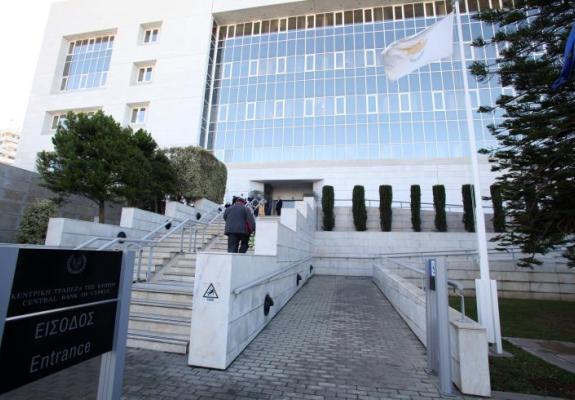
Central Bank: Signal of Strict Supervision to Banks and Markets

The Bank returns and sends a strong message to the SSM, the markets, and the Rating Agencies.
- The countercyclical capital buffer remains at 1.5%.
-
Clear Warning for Maintaining Strong Capital Buffers and Limiting Excessive Risk-Taking
The Central Bank of Cyprus (CBC) seeks to maintain an image of conservative and credible supervision at a time when the international financial environment remains fragile and the outlook for banking profits is beginning to shift. Following the remarks of its Governor, Christodoulos Patsalides, the Bank communicated yesterday its decision to continue its strict macroprudential line, maintaining the Countercyclical Capital Buffer (CCyB) at 1.5%, with no change in the level of capital requirements for banks.
Information obtained by Brief indicates that the CBC, by announcing its decision once again, aims to send a message to the Single Supervisory Mechanism (SSM) and rating agencies during a period when markets are analyzing the movements of supervisory authorities in the eurozone very closely.
Stable Supervisory Line
The decision is part of the CBC's macroprudential strategy, which prioritizes the preservation of financial stability over any short-term boost to credit expansion or profit distribution.
Even though banks show an improved outlook, with strong capital adequacy ratios and high profitability, the supervisory authority assesses that the international environment remains vulnerable. Specifically, it considers that geopolitical tensions, the slowdown of the European economy, interest rate volatility, and potential pressures on the real estate market create a backdrop of increased uncertainty.
What It Means in Practice
The countercyclical capital buffer is an additional capital requirement that obliges credit institutions to hold extra capital beyond the minimum supervisory limits. These funds are intended to strengthen the resilience of the system during periods of economic slowdown or increased bad debts.
In practice, maintaining the rate at 1.5% means that banks continue to "lock up" part of their capital, limiting, to some extent, the flexibility for faster credit expansion or enhanced distribution to shareholders, beyond the limits set by the overall supervisory framework.
Why the Message Now
The timing of the decision is of particular importance, as the period of high bank profitability, which was boosted by the environment of increased interest rates, is gradually beginning to normalize, and monetary policy in the eurozone is entering a phase of de-escalation.
This means that net interest income is expected to face pressure in the medium term, potentially affecting the profitability of the banking sector. In this environment, the CBC chooses to lock in the message early that capital reinforcement takes precedence over any thoughts of relaxing risk management.
Message to the Markets
Maintaining the countercyclical buffer at 1.5% simultaneously serves as a signal of credibility to international markets, investors, and rating agencies, reinforcing the image of a conservatively supervised banking system.
During a period when trust in banks affects funding costs and a country's investment profile, the CBC's choice is interpreted as a confirmation of stability and institutional discipline.
The decision does not alter the existing status for banks, but it confirms the strategic direction of the CBC to maintain strong capital buffers, limit excessive risk-taking, and strengthen the resilience of the banking system.