The “Cronos” Gas Field in Cyprus’ Block 6 Enters Its Most Crucial Phase — Commercialization
Eni and TotalEnergies prepare for a 2025–2026 investment decision that could mark Cyprus’ first natural gas exports.

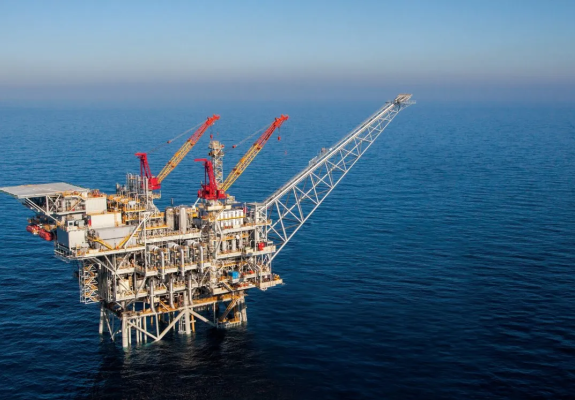
The “Cronos” field in Block 6 of Cyprus’ Exclusive Economic Zone has entered its most critical stage: commercialization. The Ministry of Energy considers it the most advanced project, expected to inaugurate Cyprus’ long-awaited natural gas exports — still a distant dream for many. Although the decision to export via Egypt creates a complex equation—balancing projected revenues with high investment risk and significant geopolitical weight—optimism remains alive.
As Brief reports, the timeframe is the decisive factor for success. The Final Investment Decision, expected by the Eni/TotalEnergies consortium at the end of 2025 or early 2026, will be critical for securing the hundreds of millions of dollars in capital expenditures (CAPEX) currently under the scrutiny of energy giants.
According to consortium sources, any delay—regardless of cause—would increase financing costs and result in lost opportunities in a rapidly evolving European market, especially as Europe urgently seeks new and more secure energy sources.
The first gas flow from the field to Egypt is projected for 2027 or early 2028. If the project succeeds, this will mark the beginning of revenue inflows for the Republic of Cyprus—a milestone that could provide sustained economic “injections” for the next decade.
The decision to use Egypt’s export route through Zohr is based on cost-efficiency. Instead of building a new Cypriot liquefaction terminal from scratch, “Cronos” will be connected via an undersea pipeline to Egypt’s massive Zohr field, approximately 80 kilometers away. Through this link, Cypriot gas will reach Egypt’s LNG liquefaction facilities, be converted into liquefied gas, and exported internationally—primarily to Europe.
The companies believe this route will significantly reduce CAPEX, accelerate the field’s commercial operations, and limit business risk. At the same time, it establishes a new Cyprus–Egypt energy alliance, expected to act as a geopolitical “buffer” against potential regional pressures.

Under the Production Sharing Contracts, all investment risk is borne by the two consortium members, Eni and TotalEnergies. They finance 100% of CAPEX and aim to recover their costs from future revenues. Any delay or lower-than-expected production would directly impact their shareholders.
The Republic of Cyprus, without taking on capital risk, will benefit from three stable revenue sources:
-
Royalties: A percentage of the gross production value.
-
Profit Taxation: Tax on the companies’ net profits.
-
State Share (Profit Gas): A portion of natural gas allocated to Cyprus, which increases as the investment’s profitability improves.
Beyond fiscal gains, the Ministry of Energy estimates that using Cypriot gas domestically could reduce electricity costs by 10–15%, offering relief to households and businesses—though such projections remain unverified over time.
The biggest non-technical risk remains geopolitical instability. Turkey is expected to maintain its rhetoric challenging Cyprus’ energy rights, continuously raising the risk premium and, consequently, the cost of capital for the companies involved.
Nevertheless, the strategic cooperation between Cyprus and Egypt, coupled with the involvement of two European energy giants, provides what many see as a strong geopolitical safeguard—though no one can predict with certainty Turkey’s future stance.