Cyprus Nears Agreement on ATA – Inside the Proposed Plan
Agreement includes a phased return of the Cost of Living Allowance and a 4% inflation cap.
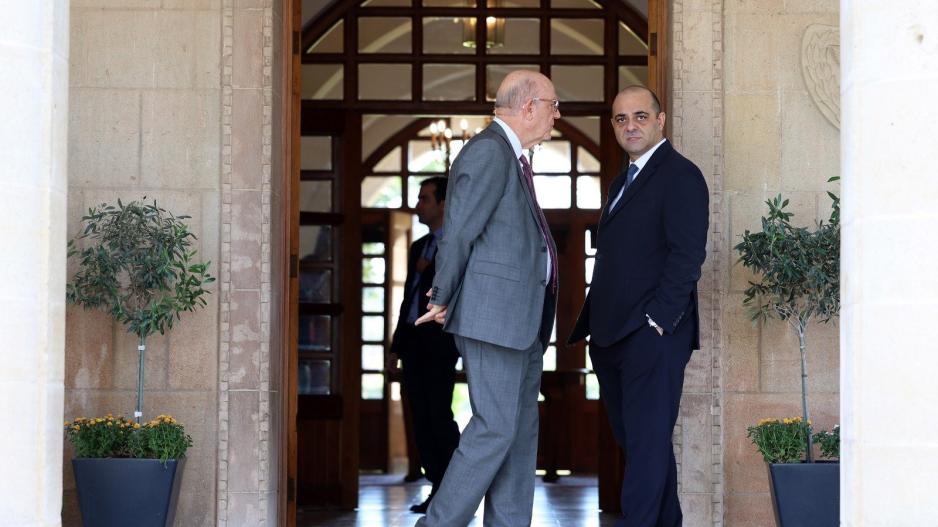
The trade union movement left the Presidential Palace last night with a strong commitment from the President and the Ministers of Finance and Labour that any future agreement on the Cost of Living Allowance (ATA) will include the incorporation of the allowance into the National Minimum Wage.
According to information obtained by Brief, the meeting between President Christodoulides and the four union leaders participating in the ongoing social dialogue on ATA — attended also by Ministers Makis Keravnos and Yiannis Panayiotou, who are leading the mediation process — lasted only 30 minutes.
The brevity of the meeting suggests that there were no significant disagreements or hesitations regarding the framework proposed for reaching a comprehensive agreement on this long-standing labour dispute, which has strained industrial relations for the past seven months.
The unions reportedly reaffirmed their positions within the ministerial framework, focusing primarily on the adjustment of the National Minimum Wage in line with the Cost of Living Allowance.
The proposed agreement framework foresees the full restoration of ATA (100%) within 18 months, implemented in three phases: from 66.7% to 80%, then 90%, and finally 100%.
A 4% ceiling (“cap”) will also be introduced. This means that if inflation rises, for example, to 5%, ATA will be applied at 4%. Conversely, once ATA is fully restored to 100%, if inflation is 2%, the allowance will be paid at 2%.
Should inflation reach exceptionally high levels — such as the 8–10% recorded in 2023 — the ATA payment will remain capped at 4%.
It is also important to note that a key condition will apply: ATA will only be granted if the previous year recorded positive economic growth.
Additionally, the new framework stipulates that ATA will be paid starting from July 1 each year, instead of January 1.

A source from the Presidency, responding to Brief’s request for comment, said that the President remains optimistic about a positive resolution to the months-long labour dispute.
The Presidency’s attention now turns to Wednesday’s joint meeting of the executive committees of the employer organisations, scheduled to take place at the Trust premises.
The employers’ side will evaluate the draft framework, with particular focus on the tax incentives offered to businesses, which are in addition to those already planned as part of the broader tax reform.
Later, once the unions have the employers’ final decision, a Pan-Union Conference will follow, during which members will be briefed on the draft agreement, hear the positions and proposals of the negotiating team representing SEK, PEO, PASYDY, and DEOK, and decide on final steps — independent of the decisions of OEB and CCCI.