Cyprus Pension Overhaul: Why It’s Time to Cut the Political Cord
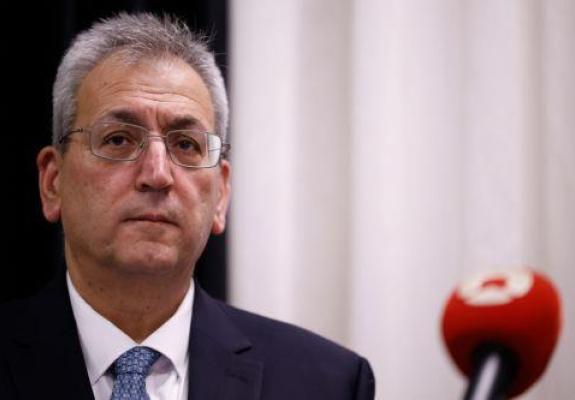
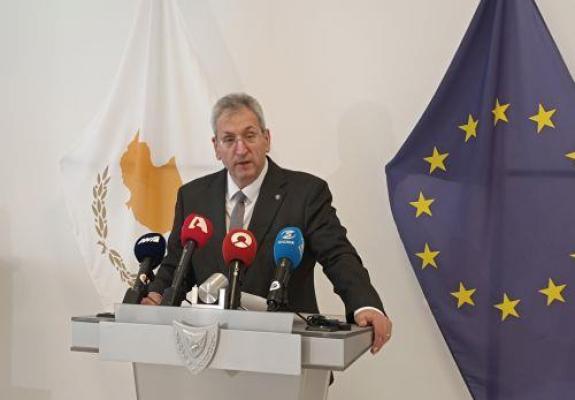
Andreas Milidonis: Abolish Absolute Political Control Over the Pension System

Independent supervision of the second and third pension pillars is essential
- The state could adopt Norway’s successful model
- A distinct boundary is required regarding who determines potential Social Insurance Fund (SIF) investments
- €4 billion sits in provident funds without independent supervision
The need for the three pillars of Cyprus's pension system to be "weaned off" political control is highlighted by Andreas Milidonis, Professor of Finance at the University of Cyprus, in an interview with Brief on the occasion of the upcoming pension reform.
Mr. Milidonis, an expert in the field who is highly knowledgeable about international best practices implemented in advanced nations regarding pension systems, specifically references the Norwegian model. He notes that this model was modernized exactly 27 years ago and, in his view, serves as a "blueprint today."
"This is a pension system," he adds, "whose model is characterized by three basic principles that must govern such Funds: transparency, accountability, and independence."
He explains that the role of the Ministry of Finance in Norway is to define the investment policy for a portion of the Fund's reserves, which is subject to oversight by the country's Parliament, while the Central Bank exercises strict supervisory control.
According to the UCY Finance Professor, the Norwegian model features an institutionalized Committee comprised of individuals specialized in investment management.
"The mandate of this Committee regarding how, where, and how much will be invested is crystal clear. The decision is never made by a single person. It is collective, and this Committee is accountable to the regulators," Mr. Milidonis notes.
He adds that additional safeguards are built into the entire process. Specifically, an analysis and performance evaluation of the investments made takes place every two years.
Responding to a relevant question, the Professor expressed the view that if the Cypriot government adopts such a pension model, it should also consider globally diversifying risk across different categories of investment products. He clarifies that a portion of the profits could be utilized by the state, as is done in Norway.
It is noted that in a related report by Chryso Antoniadou on May 15, Brief made extensive reference to Norway's pension model. Furthermore, as Brief revealed two days ago, the ILO (International Labour Organization) actuary is proposing to the Ministry of Labour the establishment of an Independent Body to manage the investment account of the Social Insurance Fund (SIF).
This Body will be based on:
- International standards and governance principles.
- An effective governance structure with a clear separation of roles, transparency, accountability, and independence in investment decision-making.
- Strengthening the financial governance of the SIF, thereby better safeguarding the pension rights of the insured.
- Enhancing intergenerational equity.
- Improving the long-term sustainability of the SIF by achieving higher returns within a defined framework of measured risk.
Regarding the independence that should govern the other two pension pillars beyond the SIF—namely occupational pension schemes and savings in market insurance plans—Mr. Milidonis points out:
"In all European countries except Cyprus and one other state, there is independent supervision for two out of the three pillars of their pension system."
"In contrast, here in Cyprus," he says, "we have fragmented supervision for these pillars. The first is under the Ministry of Labour and its political head, and the second is under the Ministry of Finance, again under its political head."
The Professor argues that the time is ripe for these pension pillars to be freed from "political control" as part of the reform.
"We are," he notes, "in the middle of reforming our pension system. And, of course, we are all waiting to see announcements turn into actions. It is a fact that a major effort is being made by the competent Ministries to create a massive fund."
The Professor believes that within the framework of social dialogue, the competent Ministries must first design the Fund in conjunction with the other two pillars of the pension system.
"We cannot talk about any design without independent supervision," he says, questioning: "Who will monitor the provident funds? Who will monitor insurance products? Who will monitor SIF investments? Will there be institutional independence?"
He applauds the fact that, following a political decision, the relationship between the state and the SIF reserve will be severed. "This development," he says, "is highly positive."
Mr. Milidonis also refers to another interesting aspect. He points out that during times when a severe external crisis might arise, the state should have the discretion to use internal borrowing from the Fund's reserves to cover urgent needs, "provided it is done in moderation."