Cyprus Pension Reform: SIF Eyes €70B Reserve
Social Insurance Fund: "Mammoth" Reserve of up to €70 Billion in 40 Years
- What the investment governance framework predicts – Establishment of an Independent Body
- The Social Insurance Fund (SIF) reserve will increase by approximately €1 billion annually
- Why the pension rights of future generations will be better secured
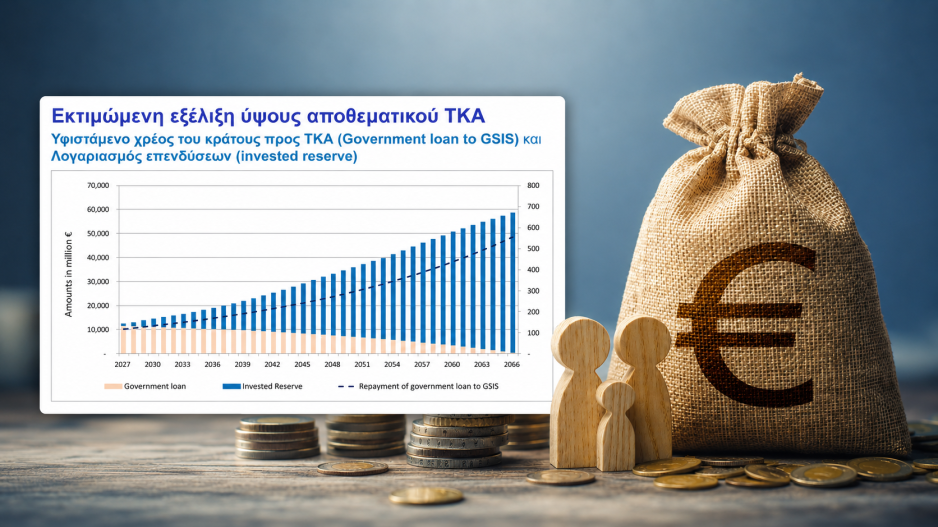
A significant, potentially even zero-level reduction is expected to be recorded over a 40-year horizon regarding the state's debt to the Social Insurance Fund (SIF). According to the outline of the study by the International Labour Organization (ILO), the debt will decrease gradually and is estimated, based on the study, to drop to €50 billion.
Brief has in its possession the outline of the ILO Actuarial Study, which was presented in broad strokes during the meeting of the Labour Advisory Body on May 14.
In the chart embedded in the outline, attached further below in the report, the projected €50 billion will accumulate by 2066 from the Fund's own accumulated reserves. According to the ILO Actuary, the size of this reserve, namely the €50 billion, will be the most essential part of this ambitious endeavor.
The chart clearly indicates that after approximately 40 years, the reserve could even touch €70 billion. This scenario will be feasible provided that no unforeseen negative impacts occur on public finances, in which case, as Brief recently reported, the state will be able to suspend its installment to the SIF "for emergencies or to address risks to the economy."
According to the Actuary’s outline and based on the chart, the SIF reserve will see an annual increase of around €1 billion.
The Ministers of Finance and Labour have stated, citing the ILO Actuary, that at the end of 2026, the state debt to the SIF will amount to €12 billion. However, according to information obtained by Brief, it is estimated that the state's debt to the Fund will "close" at €13 billion.
Given that no unforeseen negative developments occur in the economy to adversely affect public finances, the government's debt by 2066 should be negligible. This is also evident in the chart.
Furthermore, according to the calculations of the Actuary and the government, when the SIF reserve reaches close to €50 billion, the state will not owe a single cent to the Fund. It is estimated that a robust Fund will be created, operating specifically toward more efficient investment returns.
Regarding the development of the investment governance framework, the creation of an Independent Body is planned to manage the SIF’s investment account, which will be supported by:
- International standards and governance principles.
- An effective governance structure with a clear separation of roles, transparency, accountability, and independence in investment decision-making.
- The reinforcement of the SIF's financial governance, and consequently.
- Better safeguarding of the pension rights of the insured.
- Enhancing intergenerational fairness.
- Improving the long-term sustainability of the SIF by achieving higher returns within a defined framework of measured risk.
It is the general consensus among experts that the proposed reform of the investment policy and governance framework of the SIF will be monumental because:
- It will provide for future generations, better securing their pension rights.
- It will lay the foundations for higher returns with controlled risk.
A significant development, championed by all social partners, will be the termination of state borrowing from the SIF, alongside the repayment of the state's existing debt to the Fund in tandem with the development of an effective investment governance framework.
It is noted that all future surpluses of the SIF will be transferred to a separate investment account. They will not be added to the existing state debt to the SIF, which currently stands at approximately 30% of GDP.
According to Marinos Mousiouttas, the annual repayment installments by the state will amount to 0.3% of the previous year's GDP. These repayment installments will be funneled directly into the investment account.