Cyprus Sports Organisation (KOA): Rife with Weaknesses, Lacks Financial Controls and Good Governance
-
Audit Office (AO): The state must have a say and control over sports matters
-
Inconsistency observed on behalf of the CSO regarding the handling of individual Federations
-
Substantiated criteria for effective financial control are absent
-
The Organisation's structural setup is inadequate, affecting its smooth operation
-
The Director General position has been vacant since 2018, and the CSO remains un-reorganized, causing an over-concentration of powers
-
Limited implementation of the code of good governance
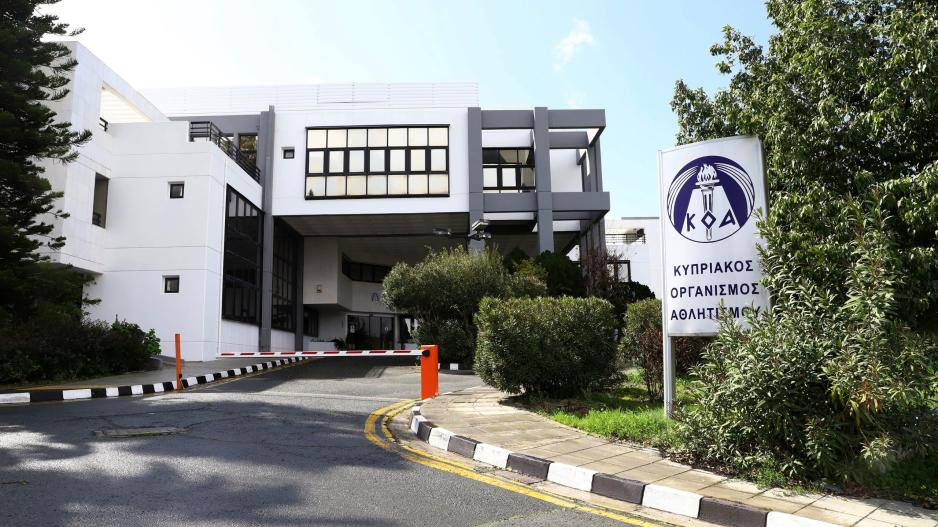
Serious omissions, administrative gaps, insufficient audits of federations, and inconsistency in handling issues related to sports federations are identified in the performance audit conducted on the CSO by the Audit Office.
The audit focused on the organizational structure of the CSO, the controls it performs regarding grants to Federations, and the supervision of the legal operation of Private Gymnasiums. Within this framework, essential weaknesses were highlighted that impact the effectiveness of supervision.
The current framework does not provide the CSO with substantial tools for intervention beyond cutting off grants. This limits control primarily to Federations that are financially dependent on the state, leaving supervisory gaps in other cases where no grant is paid to federations.
Effective supervision is also undermined in specific cases by the independent status of certain federations, e.g., the Cyprus Football Association (CFA), which is applied in a manner that gives the impression of a "closed system."
In our view, elementary supervision by the CSO is imperative, given that all recognized federations and registered clubs are obliged to serve national principles for the healthy promotion and development of sports. We believe this is feasible without infringing upon the independence of the federations.
Inconsistency was found in the handling of similar cases, with Federations being treated differently despite the existence of comparable findings. The absence of substantiated criteria and a comprehensive audit registry hinders effective control.
Athletic/competitive control is not sufficiently documented, while delays and deficiencies are observed in financial and management audits. Specifically, the implementation of management audits by external firms falls significantly short of established targets, limiting effective supervision.
The limited implementation of the Code of Good Governance and the model statute, combined with the absence of substantive sanctions, increases the risk of mismanagement phenomena. Furthermore, delays in submitting financial statements and the unsubstantiated allocation of grants raise issues regarding the proper management of public resources.
The prolonged vacancy in the position of Director General may have caused gaps in the Organisation's administration, affecting its smooth operation.
The failure to utilize previous reorganization studies and the retention of the existing structure causes an over-concentration of responsibilities. Concurrently, a significant number of vacant positions and the extensive use of indefinite-term contract staff limit the Organisation's flexibility and efficiency.
The findings demonstrate the need to strengthen the CSO's supervisory role through clear procedures and effective control tools.
A major weakness governing the CSO's supervisory role is that it does not provide for the possibility of substantive intervention in the way Federations operate, nor the adoption of measures in case of non-compliance.
In practice, the primary measure the CSO can apply is the cutting off of part or all of the grant that the respective federation may receive. Consequently, the ability to exercise effective control and enforce requirements or good practices, as outlined in the Code of Good Governance, is limited mainly to Federations that depend financially on state grants.
The aforementioned framework, as also stems from the CSO's positions, limits the ability to exercise supervision over Federations that do not receive direct state funding, except for specific actions financed by the state. The AO considers that this framework cannot be characterized as healthy.
The need for control is incorrectly restricted, according to the AO, to federations and their member clubs that receive direct grants, since the matter of the proper and healthy operation of state-approved sports clubs has broader socioeconomic aspects.
Particularly regarding the CFA, the phenomenon of a lack of sufficient accountability is pronounced. According to the AO, this is highlighted particularly and has been a subject of public concern regarding the extent of the CSO's jurisdiction in supervising it.
The AO believes that, taking into account the broader role of the CFA as the body governing the country's most popular sport and the socioeconomic impacts that the sport brings, a balanced supervisory framework should exist.
The relationship between the state and the CFA and primarily football clubs is characterized as multi-level. The state supports football clubs through, among other things, club funding, funding from betting revenues, funding of state sports facilities, provision of sports facilities, and special grants for refugee clubs.
In addition to the financial aspect, the state systematically provides services concerning the clubs, e.g., policing football matches, which implies a public financial burden as well as the commitment of significant human resources that could be utilized for the state's multiple other needs.
Furthermore, the long-term accumulation of tax and other liabilities of football clubs and companies toward the state, as well as the repeated implementation of repayment plans or other concessions, demonstrate the existence of issues that transcend the narrow boundaries of sports governance and directly affect public finances.
On the other hand, of course, the state derives financial benefits due to football from tax revenues, betting revenues, tourism and country promotion, and the development of sports through academies. Given this multi-level relationship, a question arises in our view regarding the adequacy of the existing control and accountability framework.
As the AO, we recognize that the Cyprus Football Association operates within the framework of autonomy due to obligations toward FIFA and UEFA, and this framework must be maintained. However, we generally believe there is a misunderstood interpretation of the terms "independence" and "control/accountability," which leads to the false impression that the two (independence and control) cannot coexist to some extent.
The lack of transparency and accountability shapes intense suspicion in the public sphere, which does not serve the public image of the state, the CSO, or this specific federation in particular.
According to the AO, the state bears great responsibility for the current situation prevailing in some federations and/or clubs, having comfortably settled over time into a relative inaction by invoking the need to maintain the independence of the federations.
In the case of the CFA, we also recall the close relationship that has historically existed between political figures and football clubs. Indeed, in Cyprus, this relationship was even more intense in the past due to the high degree of politicization of football. This fact intensifies the need to adopt enhanced safeguards.
Responsibility for insufficient controls certainly lies with specific federations which, invoking independence issues, have historically operated in a spirit of introversion (as a type of closed system), ignoring the need to implement good governance practices.
Recognizing society's new demands for transparency, accountability, and good governance, the state and all involved stakeholders are required to re-examine the implementation of a new, modernized framework of good governance. On one hand, this must ensure the independence of federations (when required by international federations), and on the other, it must respect and align with national priorities and strategies for the development and promotion of sports, while simultaneously strengthening public trust.
Weaknesses were identified both in the audits carried out by the CSO on Audited Entities (AEs) and in the subsequent actions taken based on the results of these audits, which are not documented as being governed by a single and consistent approach.
Case by case, the CSO decides on the actions to be taken. It does not emerge from the data presented to us that the CSO's decisions were based on predetermined and documented criteria ensuring consistent treatment of similar cases.
Additionally, it was found that a comprehensive audit registry is not kept, in which findings and relevant decisions would be systematically recorded and codified, a fact that limits the possibility of a comprehensive evaluation of consistency in managing similar matters.
For evaluation purposes, cases of Federations with similar characteristics regarding the nature and severity of the findings (potential irregularities, complaints, and/or involvement of the Ethics and Protection of Sports Committee) were examined to assess whether indications of differentiated treatment arise.