Demetra: From a Lifetime of Savings to the Dividend "Gold" of 2026
How the Cash of 2000 Was Transformed Into a Corporate Treasury.
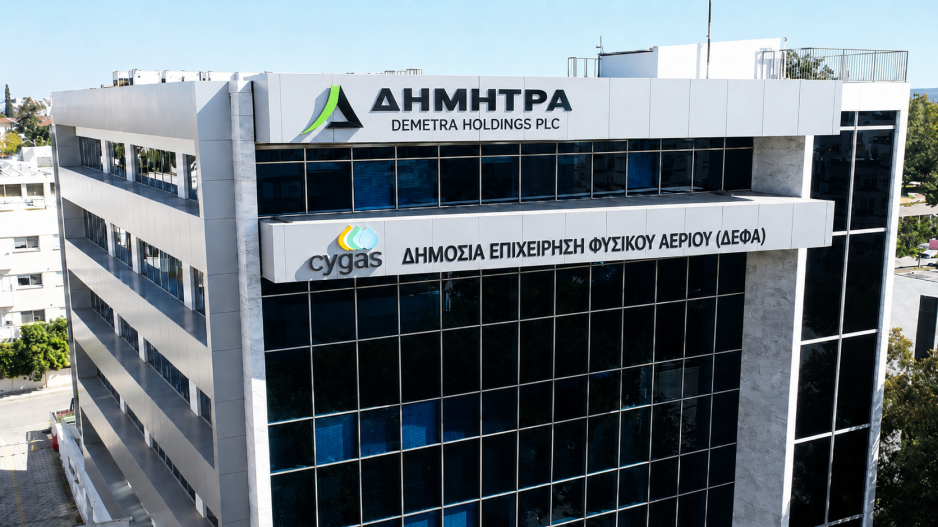
With cash reserves exceeding €400 million, a dividend distribution of €20 million to shareholders, and a significant increase in recurring income from interest and real estate, yesterday's Annual General Meeting of Demetra Holdings Plc seals a business journey that began 26 years ago, during the period of the greatest stock market euphoria Cyprus has ever experienced.
The company's journey began in 2000, when the then Demetra Investment, with historical roots in the cooperative movement and the Cooperative Societies Investment Group "Lefkonoiko", proceeded with a public share offering. The issuance saw exceptionally high demand and was oversubscribed, attracting capital from thousands of citizens. Many investors participated using personal savings, while in several cases, the purchase of shares was financed through loans granted by cooperative credit institutions.
The initial public offering (IPO) resulted in significant funds flowing into the company's coffers, creating strong liquidity at a time when the Cypriot stock market was at its peak.
A few months later, the stock market collapsed.
The value of shares plummeted dramatically, and thousands of retail investors suffered significant financial losses, while several continued for years to service loans taken out to participate in the IPO.
Despite the stock market collapse, the company did not face a corresponding loss of the capital it had already raised. The money from the IPO remained in its coffers, forming its core capital reserve and the foundation upon which its investment strategy was shaped in the following years.
The Liquidity Reserve
This strong liquidity reserve proved decisive during the banking crisis that followed more than a decade later.
At a time when the Cypriot banking system was urgently seeking new capital and valuations had fallen significantly, Demetra leveraged its financial position to acquire a major stake in "Hellenic Bank," investing at particularly low valuations.
This development coincided with the overall restructuring of the Cypriot banking system. The Co-op was led to a termination of its operations, and its business was transferred to "Hellenic Bank," in which Demetra had already evolved into one of the largest shareholders.
This participation became one of the company's most important assets and further enhanced the overall value of its portfolio.
The next decisive turning point came with the entry of the Logicom group and Varnavas Irinarchos into the company's share capital.
The new management proceeded to restructure the investment strategy, considering that "Demetra" was a company with significantly undervalued worth relative to its available cash and assets. The high liquidity, the stake in "Hellenic Bank," and the investment portfolio created the conditions for further growth.
The Control of Hellenic
This strategy culminated when Eurobank proceeded to acquire full control of Hellenic Bank. "Demetra" liquidated its participation, recording significant capital gains and further boosting its cash reserves.
Following the completion of the transaction, the company entered a new phase of growth, with exceptionally strong liquidity and limited borrowing.
Today, more than €400 million is available for new investments, while simultaneously generating significant returns from interest, capitalising on the high-interest-rate environment.
At the same time, the company continues to expand its real estate portfolio, acquiring high-quality properties with long-term leases, such as the building housing PwC, a fact that steadily reinforces recurring rental income.
The financial results reflect the transformation of capital gathered during the 2000 IPO into one of the strongest corporate balance sheets in the Cypriot market.
The current picture of Demetra Holdings is the result of a journey that included the stock market boom of 2000, the market collapse, the banking crisis, the restructuring of the financial system, the strategic investment in "Hellenic Bank," its acquisition by Eurobank, and the subsequent exploitation of increased liquidity into investments and income-generating assets.
At the same time, the stock market crisis of 2000 continues to be recorded as one of the most significant financial events in modern Cypriot history, as it negatively impacted thousands of retail investors and radically changed the landscape of the Cypriot capital market.