G. Papanastasiou "cleared the air" for Damianos and EAC
The Former Energy Min. Took to the Podium During EAC's Review and Answered Ink's Questions With Arguments.
-
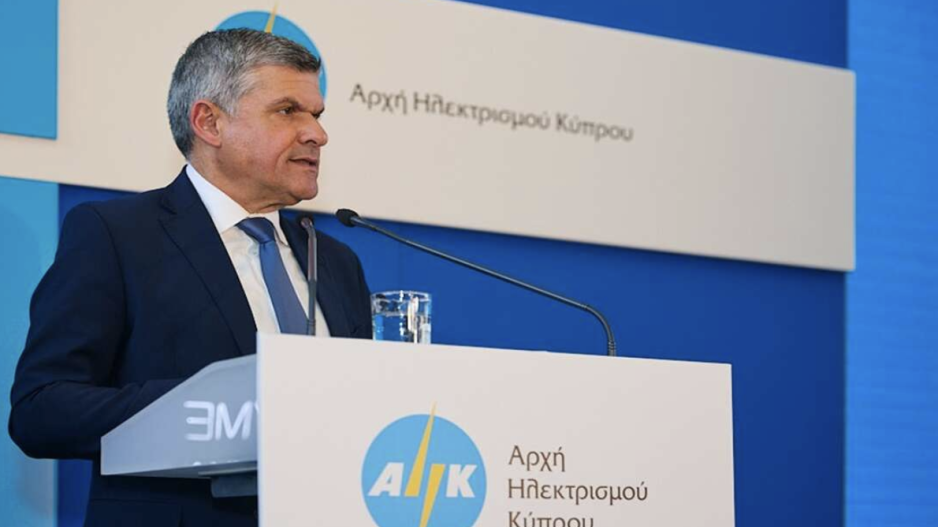
The former Minister of Energy, George Papanastasiou, unexpectedly intervened during an EAC presentation to answer criticisms from a journalist.
-
The journalist questioned the reliability of the power supply, the sustainability of the organization, and the high cost of electricity for consumers.
-
Mr. Papanastasiou defended EAC, attributing power inadequacy to the underutilization of RES and network weaknesses.
-
The former minister assigned blame to long-standing political omissions, emphasizing delays in installing storage systems and flexible units.
-
Despite criticism over the lack of modern solutions, he highlighted that EAC is now advancing energy storage projects to correct past errors.
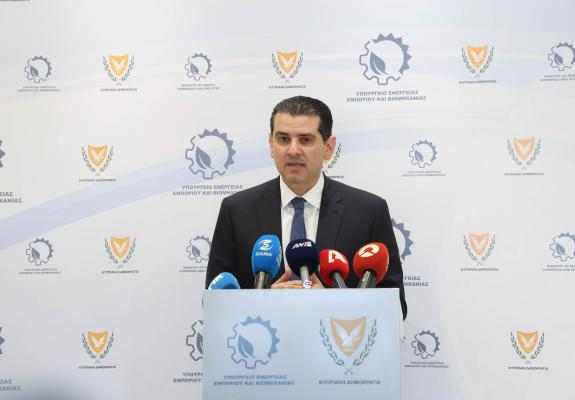
George Papanastasiou, former Minister of Energy, surprised attendees in various ways yesterday when, during the presentation of the EAC Board of Directors' review, he requested and took the floor to answer questions from INK.
It is certainly not customary for former or even outgoing Ministers to intervene in press conferences or presentations of semi-governmental organizations that fall under the umbrella of the Ministry whose portfolio they held as political heads.
Mr. Papanastasiou was, evidently, not convinced by the answers given by George Petrou, President of EAC, to the INK journalist and felt the need to give the answers himself, moreover in the presence of the current Energy Minister, Mich. Damianos.
Taking the podium, he made sure, out of elementary courtesy toward Mr. Damianos, to state that he had obtained his consent to comment on the questions.
He forcefully defended the efforts and actions of the Electricity Authority to create, as he said, conditions of electrical adequacy.
In an elegant manner and addressing the INK journalist, he argued that the references "do an injustice to EAC."
INK commented, with questions, on the statement by G. Petrou, who a few minutes earlier had said in his presentation that "EAC operates with the goal of reliable power supply, long-term financial viability, and holding down burdens for the benefit of the consumer."
INK observed:
1st To this day, EAC or those responsible for energy have not convinced that there is a reliable power supply. It is rather unreliable. Proof of this is the electrical inadequacy that exists after so many years.
2nd The long-term viability of the Electricity Authority is not certain, based on the emerging data.
3rd The reference to supposedly holding down burdens for the benefit of the consumer is rather a "joke." Cypriot consumers pay for the most expensive electricity in Europe.
The former Minister of Energy, commenting on the above observations, stated first of all that we should not be unfair toward EAC.
He noted, however, that "you (INK) have very correctly pointed out that we have reached a point of electrical inadequacy."
Mr. Papanastasiou referred to three reasons which, as he emphasized, act negatively on the uninterrupted supply of electricity.
"The first reason," he said, "is because we failed to utilize the green energy produced by photovoltaic and wind parks."
As a second reason, he cited the fact that there are no flexible, conventional units which, he noted, "would be able to operate in a short period of time."
As a third reason, he cited the inability, as he characterized it, of the grid to satisfy all production coming from RES and conventional energy methods.
He expressed the view that if the above could be combined in a context of aligning RES and conventional energy, and given that there would be "a nice system within the grid, the operator could handle it better and we wouldn't end up with cutbacks."
"As the system is today," he noted, "it has severe weaknesses."
"I personally will not accept, as a former Energy Minister and as an expert on the matter, that EAC is the organization responsible for the outages," argued Mr. Papanastasiou.
"Who is responsible then, Mr. Papanastasiou?" asked INK.
"Well, I told you earlier who is responsible. I told you the reasons," said the former Minister and asked the journalist to tell him who is responsible.
The INK journalist questioned: "Is there an executive power in this country? Yes or no? Are there historical and current responsibilities? Are there decision-making bodies to take the right decisions in a timely manner?"
At this point, Mr. Papanastasiou made sure to refer to historical political responsibilities in order to give an "alibi to EAC and, by extension, to the current administration regarding the management of the problems," and questioned:
"Why didn't we give storage to the Authority's RES from the outset? Why didn't we change EAC's engines from the start? Why don't we have flexible units at EAC? Can you tell me which executive power bears the responsibility?"
"The rhetorical question is not convincing, Mr. Papanastasiou," the journalist observed.
"The essence, without overlooking it," he added, "is not just the responsibilities of any predecessors. The essence is that those currently managing the problems have not yet provided effective solutions. It is not possible for an EU member state to torment its consumers for a series of years with power outages."
Defending the Electricity Authority once again, Mr. Papanastasiou cited a series of actions being promoted by the Organization to correct, as he noted, past mistakes. He said:
"EAC is moving forward with installing storage at the generation units in Dhekelia and Vasilikos, and at one more point. We are not talking about conscious mistakes. A new technology, RES, is now entering. We are putting photovoltaics on homes, we are putting commercial photovoltaics. We are learning through the journey. And if you ask me again why we reached points of inadequacy, I refer you to the aged and strain-worn units of the power stations."