GHS (GeSY): The Cyta Model as an “Antidote” to Contractor Hostage-Taking
- May will be the month of truth for the system’s digital readiness”
- The architecture of the software system is changing radically
The recent crisis that paralyzed the GeSY software was not a technical failure, but the exposure of the structural weaknesses of a model that appears to have run its course. Behind the scenes of intense discussions in Parliament, the next day is taking shape: a “digital revolution” modeled on Cyta, aiming to break the relationship of dependence on a single contractor.
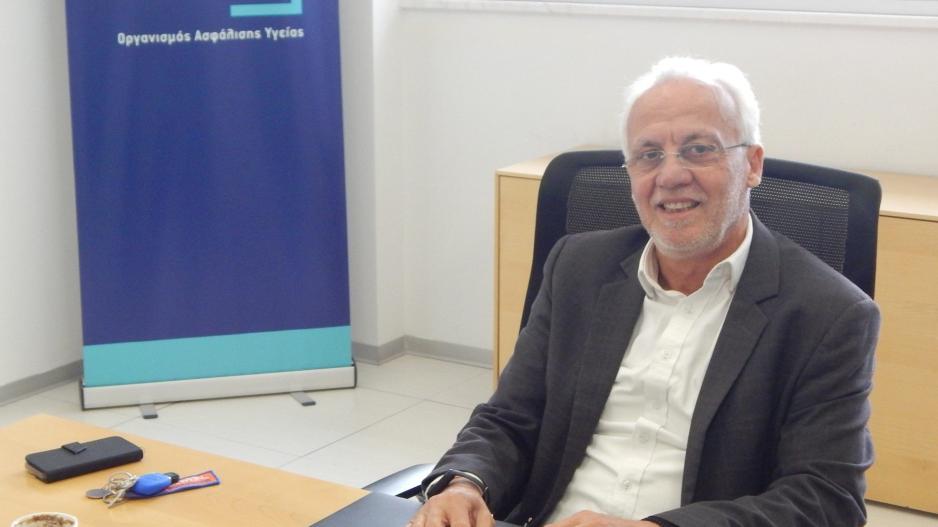
The President of the Health Insurance Organization (HIO), Stavros Michael, a career technocrat, in statements to Brief, outlines the direction of the next day, stressing that “the period of tolerance is over.” As he notes, “the software problems over the past ten days acted as a catalyst for developments. The decision to gain autonomy from the contractor and shift to a model of central coordination is the only path to ensure that GeSY will not again become a ‘hostage’ to third-party business decisions. We know the risk is enormous, but the reward, an independent, stable, and flexible digital health system, is the only option. May will be the month of truth for the system’s digital readiness.”
Until today, the GeSY IT system operated under the logic of a “Turn-key Solution.” The organization purchased a ready-made service, and the contractor had overall control of everything. The failure of this model became evident in October 2024, when the contractor’s decision to change subcontractor and bring the project in-house led to a domino of problems that continue to trouble patients and doctors to this day.
The strategic response being put forward is the adoption of the Cyta model. In practice, this means the organization transforms from a “client” into an “Orchestrator” (Master Integrator).
In the new environment planned to come into effect after the contract expires in May, the system’s architecture changes radically:
Ownership of the core: The organization takes back the “keys” to the software. The code and the database belong to the state, not a private company.
Service segmentation (multi-sourcing): The project will not be assigned to a single giant, but will be broken into specialized contracts. One company will manage the cloud, another cybersecurity, and another user support.
Flexibility and competition: If a subcontractor proves inadequate, the organization will be able to replace it without the entire system going down, a capability that does not exist today, as the organization is trapped by the choices of a single contractor.
Adopting the Cyta model is the strategic solution, but the transition process until May is described as walking a “tightrope.”
The outgoing contractor holds years of experience and the “hidden” details of the code. Transferring this knowledge to the organization must be done with “surgical” precision. If the contractor does not cooperate in delivering documentation, the organization will inherit a “black box.”
The system must remain live 24 hours a day. The change in the governance model in May must take place without losing a single prescription, something that requires exhaustive technical testing (Quality Assurance) over the next four months.
As experts note, “for the organization to function as a Cyta-style ‘orchestrator,’ it must have its own IT specialists. Without a strong internal control team, the model risks turning into a bureaucratic and chaotic management of many small contractors.”