Government Faces Uphill Battle Over Scandal-Ridden LNG Terminal
Energy Minister concedes no timeline for natural gas imports as Technip evaluates design flaws and EPPO investigates corruption claims.
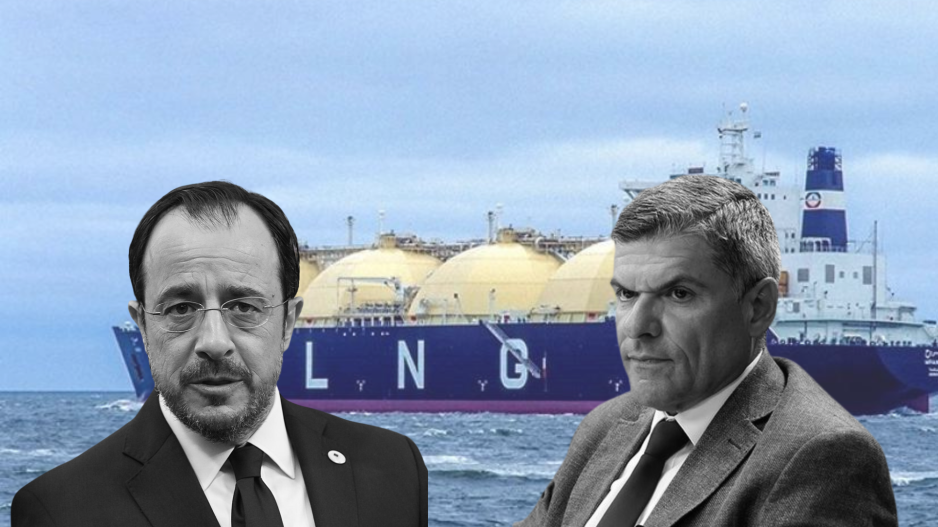
Cyprus’s long-delayed LNG import project at Vasilikos has entered a decisive phase after a stormy session of the House Energy Committee, where the government admitted it cannot yet confirm whether the half-built terminal can be safely completed. Energy Minister George Papanastasiou told MPs that a technical review by France’s Technip—recently hired by state-owned ETYFA as project manager—will determine if existing works meet safety standards and how the project should move forward. Until that report is delivered, there is no credible timeline for when natural gas might finally reach Cyprus.
At the heart of the uncertainty are mounting concerns over the design integrity and materials used by the original contractor, the Chinese-led CPP-METRON consortium. The contract was terminated in 2024 after repeated delays and disputes. According to briefings to MPs, Technip’s preliminary assessment is that the original front-end engineering design (FEED) is incomplete and technically inadequate, likely requiring revision before construction can resume.
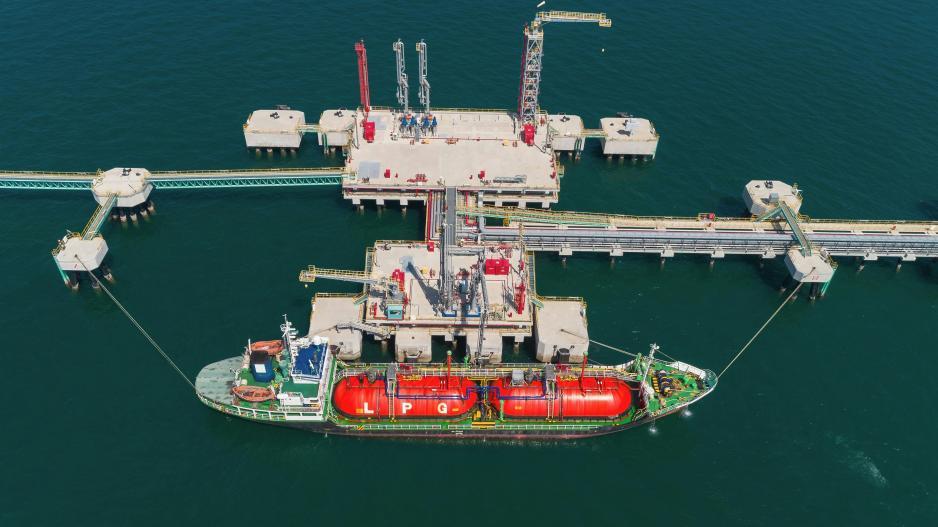
ETYFA and the ministry are preparing a new roadmap that is expected to prioritize the redesign of the jetty, onshore facilities and pipelines, followed by an international tender to appoint new contractors. Separate tenders are planned for the jetty’s upper and lower sections and for the onshore scope.
The reckoning is not only technical but also legal. According to Politis, the European Public Prosecutor’s Office (EPPO) has opened bank accounts of current and former officials and public servants under court orders as part of a criminal probe into suspected fraud, misuse of EU funds and corruption linked to the 2018–2019 tender and subsequent management of the LNG project.
The terminal was awarded €101 million in EU co-financing. Investigators have gathered extensive files from ministries, ETYFA (a subsidiary of DEFA and the Electricity Authority of Cyprus, EAC) and other bodies. Testimonies have been collected, with politically exposed persons expected to be questioned last.
EPPO’s ex officio action was triggered by the Audit Office’s January 19, 2024 report highlighting procurement irregularities, inadequate competition—only one valid bidder advanced—lenient handling of contractor delays, and questionable approvals, including a €25 million steel price increase the Audit Office said was not allowed by contract. The contractor abandoned the project in May 2024, leaving the site incomplete.
The financial toll has surged. The original contract was valued at €499,999,997, later rising by around €50 million. Spending attributable to the project now exceeds €600 million, with final costs expected to climb further. Meanwhile, CPP has filed a €200 million claim against the Republic of Cyprus in London arbitration.
Inside Parliament, the Auditor General cautioned against rushing a new tender in ways that might risk legal challenges, while the minister pressed for accelerated procedures to reduce further delays.
Another dimension of the crisis is the role of Cyprus’s Law Office. While EPPO’s mandate is narrowly defined—limited to investigating suspected misuse of EU funds and related fraud—the wider issues of political responsibility fall outside its jurisdiction. These could only be examined through a domestic investigation by the Legal Service or by an independent investigative committee appointed by the President. To date, neither avenue has been activated, leaving significant aspects of the scandal unexamined and fueling criticism of institutional inaction.
In response to criticism, Attorney General George Savvides issued a statement clarifying that since EPPO formally launched a criminal investigation on March 28, 2024, into offences related to the LNG terminal tender and contract execution, national authorities cannot initiate their own parallel criminal inquiry. He stressed that under EU rules, once EPPO assumes a case, domestic prosecutors are barred from intervening unless EPPO itself decides the matter falls outside its competence.
While legally correct, this position addresses only part of the issue. EPPO’s jurisdiction extends exclusively to crimes involving EU funds, meaning other aspects of the LNG affair—such as alleged mismanagement of national resources, procurement irregularities not tied to EU financing, or broader political responsibility—remain outside its remit. These matters could still be scrutinized by Cyprus’s Legal Service, but no such process has been initiated.
MPs across the political spectrum have criticized the government’s handling of the LNG project. Energy Committee chair Kyriakos Hadjiyiannis (DISY) declared there is “no horizon” for completion and denounced the lack of accountability.
AKEL’s secretary-general Stefanos Stefanou accused the current administration of repeatedly missing its own deadlines and the previous one of striking a “bad deal” now under investigation. He emphasized that Cypriots continue to face some of Europe’s highest electricity costs relative to income, with €1.3 billion spent on emissions allowances from 2018 to mid-2025.
DIKO leader Nicolas Papadopoulos questioned whether the original project concept was fundamentally flawed and called for collective responsibility. DIPA MP Michalis Giakoumi demanded a costed, time-bound roadmap and accountability for any criminal liability.
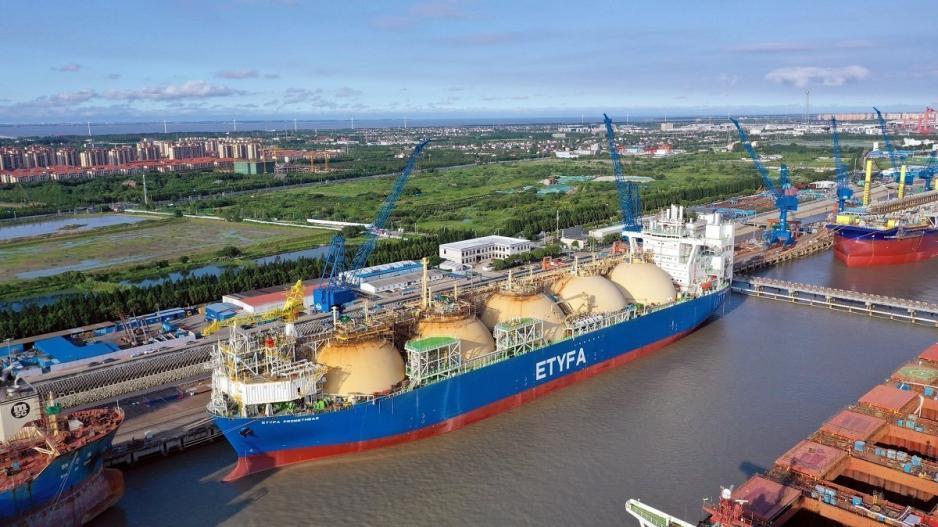
Another flashpoint is the FSRU Promitheas, the floating storage and regasification unit tied to the project. MPs questioned why the ship remains docked in Malaysia—after being hastily moved from Shanghai—arguing that the state is incurring about €500,000 per month while onshore works remain stalled.
The minister responded that the vessel is undergoing full technical inspections and certification and should be ready by October to sail if needed to another location. He stressed that safety, legality and protection of EU funding remain priorities, and that responsibilities will be assigned following audits by European bodies and EPPO.
The next milestone is Technip’s report, expected within days, which will determine whether existing works are safe and what redesigns are required. Only then can ETYFA launch a new tender under stricter specifications and guarantees.
Until then, Cyprus remains stuck in a costly holding pattern: no gas, high power prices, and a flagship energy project mired in prosecutorial scrutiny.