Great Sea Interconnector: Cyprus, ADMIE Feud Escalates — What to Know
Following media reports describing the move as a “war declaration” over the cable project, ADMIE issued a statement categorically denying such claims.
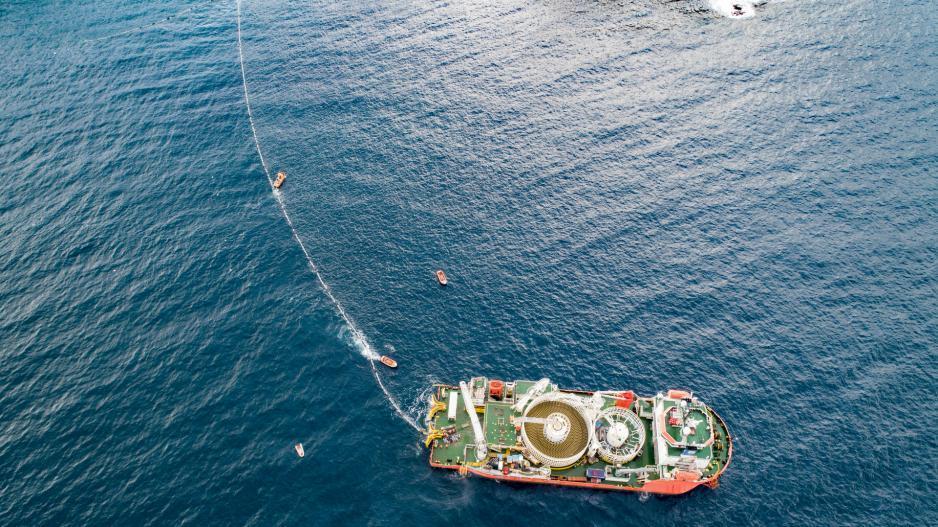
A new rift has opened between Cyprus and Greece’s Independent Power Transmission Operator (ADMIE) over the €1.9 billion Great Sea Interconnector, with Cypriot President Nikos Christodoulides issuing an unusually sharp response after ADMIE submitted fresh demands to the Cyprus Energy Regulatory Authority (CERA).
The dispute centers on ADMIE’s request for the recognition of €251 million in expenses already incurred on the undersea electricity cable project, linking Cyprus, Crete, and Israel. This demand appears to challenge both the July 2024 regulatory framework and the bilateral agreement between Nicosia and Athens that governs the financial structure of the project.
According to a report by Phileleftheros, ADMIE filed a formal objection against a CERA decision from July 31, 2024, which approved €82 million in recoverable costs but allowed the operator to collect only €25 million for 2025. The operator is now asking for recognition of the full €251 million as legitimate expenditures, arguing that the regulator undervalued the verified investment costs, which ADMIE says amount to around €302 million to date.
Following Cypriot media reports describing the move as a “war declaration” over the cable project, ADMIE issued a statement categorically denying such claims. It stressed that it is not seeking immediate payment of €82 million but merely the recognition of actual costs incurred. “We recognize and claim only the first agreed installment of €25 million,” ADMIE said, while explaining that the objection to CERA seeks acknowledgment of all expenses made so far — even if cost recovery occurs after the project becomes operational.
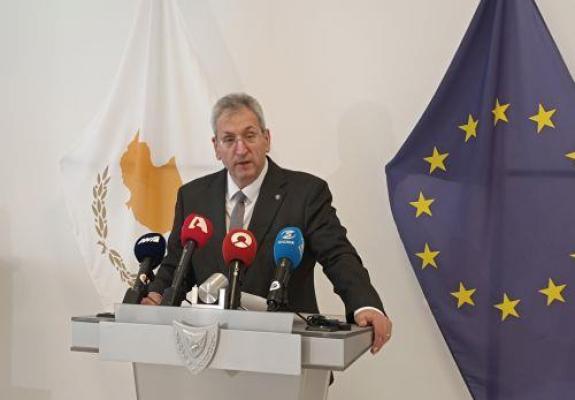
President Christodoulides, asked to comment on the controversy, reacted strongly: “If the head of ADMIE believes that with such letters or paid placements he can blackmail the Cypriot Government, he clearly doesn’t know who he’s dealing with. The Government of Cyprus cannot be blackmailed by anyone.”
He emphasized that there is a framework agreement between the Cypriot and Greek governments defining each side’s obligations. “Recently in New York, the Greek Prime Minister and I agreed on the exact way forward, and a joint statement was issued,” he added, stressing that ADMIE’s actions are not directed by the Greek government.
Under the 2024 intergovernmental framework, Cyprus committed to contribute €25 million per year between 2025 and 2029 — a total of €125 million — while Greece covers the remaining construction costs until completion. Cyprus’ consumers would then gradually repay their share (63%) through regulated tariffs after the interconnector’s operation begins.
For now, President Christodoulides insists that cooperation between the two governments remains intact, despite the “unacceptable” behavior of the Greek operator.