GSI: Calm Words, Unsettled Waters
Cyprus-Greece Reassure Unity Amid Regulatory Hurdles and ADMIE Dispute
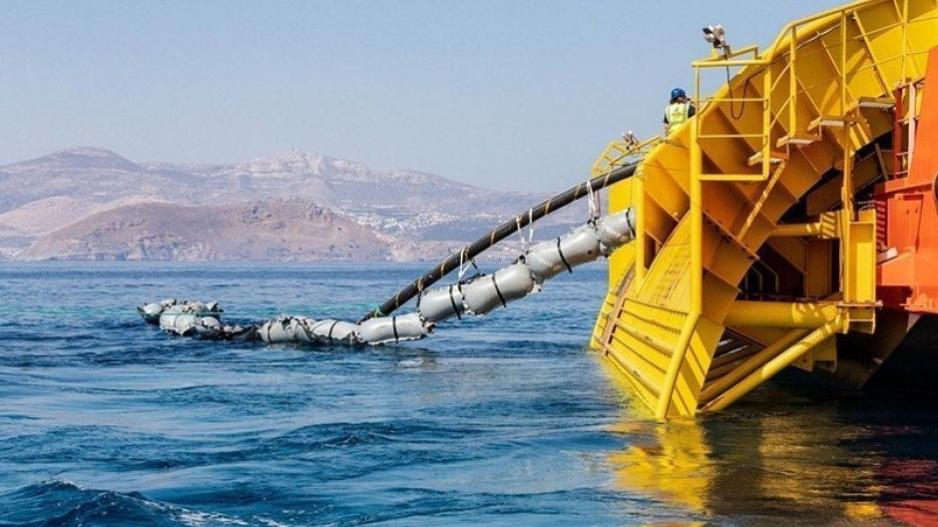
Cyprus and Greece moved on Monday to dispel the diplomatic rift over the Great Sea Interconnector (GSI), the ambitious EU-backed project meant to link the electricity grids of Cyprus, Greece, and Israel via a 900-kilometre undersea cable.
>>Dora Bakoyannis on the GSI: “Huge Interests Are Pressuring Christodoulides<<
Speaking to HuffPost Greece, Cypriot President Nikos Christodoulides insisted there is “no crisis” between Nicosia and Athens, only “some technocratic differences” over the handling of the project. He described the interconnector as “a project of strategic importance” that Cyprus “fully supports and wants to see implemented,” emphasizing that his relations with Greek Prime Minister Kyriakos Mitsotakis are “the strongest they have ever been.”
Christodoulides confirmed that both governments have agreed to release an additional €25 million — bringing the total to €50 million in advance funding — to enable Greece’s Independent Power Transmission Operator (ADMIE) to meet its commitments and unblock the stalled construction process. He also rejected “unreasonable challenges from Turkey that go beyond international law,” reaffirming the project’s geopolitical significance for the region.

From Athens, Greek Foreign Minister Giorgos Gerapetritis echoed the same tone, calling the interconnector “crucial for ending Cyprus’s energy isolation” and “of enormous geopolitical value for Hellenism as a whole.” While acknowledging that the project offers Greece limited direct energy benefit, he said its broader strategic role makes it worth pursuing.
Gerapetritis and Greek government spokesman Pavlos Marinakis both emphasized that “no single project can cause a rupture between Greece and Cyprus.” Marinakis noted that the project’s progress depends on resolving “outstanding economic and technical issues” and ensuring that its financial viability is not in doubt.
Behind the political reassurances, however, lie complex regulatory and financial obstacles. Cyprus’s Energy Regulatory Authority (CERA) confirmed it has received a formal objection from ADMIE challenging its July decision on the project’s investment recovery framework. The objection concerns Decision 280/2025, related to the Kofinou–Korakia interconnection segment, which ADMIE claims makes the project “non-viable” by altering the approved revenue methodology.
CERA officials said they are reviewing the objection, but as of now, two key licences — Ownership and Operator — have yet to be officially granted. Without them, neither construction work nor the disbursement of EU funds under the Connecting Europe Facility can begin.
In Greece, the Regulatory Authority for Waste, Energy and Water (RAAEY) and the Environment and Energy Ministry have also not completed the transfer of the ownership licence from the project’s initial developer, EuroAsia Interconnector Ltd, to ADMIE’s subsidiary, Great Sea Interconnector Ltd. This legal gap prevents ADMIE from formally assuming ownership and operational responsibility.
Greek Energy Minister Theodoros Papastavrou recently acknowledged that the licence transfer remains incomplete, warning that the delay has created a “regulatory and technical vacuum.” The project is further held up by pending environmental studies and approvals related to the undersea cables, landfall points, and substations in Cyprus and Crete.
Despite these hurdles, both governments insist the project remains on track.