Keravnos Rejects ‘Hidden Studies’ Claims on Great Sea Interconnector
The Finance Minister clarifies that all stakeholders have access to GSI studies, warning against misinformation.
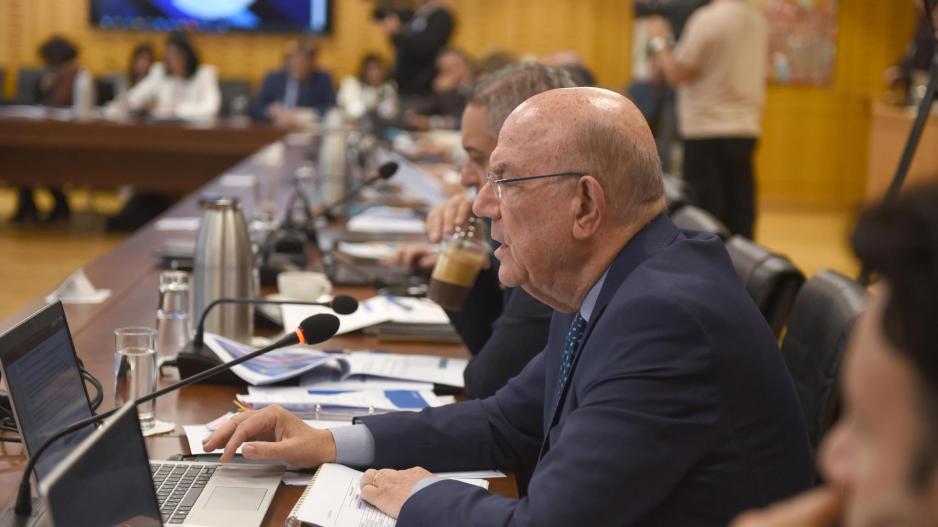
Cyprus Finance Minister Makis Keravnos firmly denied allegations that his ministry is withholding key feasibility studies on the Great Sea Interconnector (GSI) — the flagship energy project linking Cyprus, Greece, and eventually Israel — emphasizing that no “secret documents” exist and that all relevant parties already possess the same information.
>>GSI: Keravnos Says EIB Rejected Funding, Bank Says No Request Ever Filed<<
The clarification came during the presentation of the 2026 state budget before the House Finance Committee, following recent comments by Greece’s Minister of Environment and Energy suggesting that the Cypriot side was keeping studies undisclosed.
Responding to these claims, Keravnos stated that the feasibility studies were commissioned by the Ministry of Energy, received by his ministry, and duly shared with both Cypriot and Greek authorities, including Greece’s former Energy Minister.
“Everyone knows the studies and their findings,” he said, stressing that “false reports” from another government’s minister were creating unnecessary tension.
Keravnos reiterated that he has no intention of causing friction between Nicosia and Athens, underlining: “I am the last person who would seek a rift between the Greek and Cypriot governments.”
He added that while the GSI project could bring strategic benefits to the Cypriot economy, as Finance Minister he must objectively assess all economic risks and viability factors before any financial commitment is made.
During his budget address, Keravnos identified both the Great Sea Interconnector and the Vasilikos LNG terminal as “fiscal risks” for 2026, pending clarification of several unresolved issues. He also confirmed that the European Commission’s General Prosecutor’s Office is currently conducting investigations into both projects, with results expected in due course.
Keravnos reminded MPs that the European Investment Bank declined to finance the interconnector due to concerns about its economic sustainability, suggesting that energy storage investments might offer a more viable path forward.
The controversy erupted after statements from Greece implying that Cyprus’ Finance Ministry was withholding GSI-related documentation. However, Keravnos clarified that two independent feasibility studies, commissioned by the Cypriot Energy Ministry in coordination with the EIB and a major US consultancy, were completed in 2024 and shared transparently with all stakeholders, including Energy Minister George Papanastasiou and his Greek counterpart.
He also responded to DIKO leader Nicolas Papadopoulos, who urged acceleration of the interconnection project to counter potential Turkish plans to link the occupied areas to the mainland grid. Keravnos noted that while such geopolitical concerns are understood, “if Turkey wants to proceed with its own connection, we cannot prevent it.”
Reiterating his stance, Keravnos said that all that needed to be said about the issue has already been stated by the President of Cyprus and the Prime Minister of Greece.
He reaffirmed that the government remains committed to projects serving Cyprus’ long-term energy security, provided that financial and technical viability is confirmed through transparent procedures.