Major Upheavals From Today in the Country's Political Life
- ELAM stabilizes as the third force and establishes itself as a dynamic player
- DISY and AKEL held their ground but were also challenged
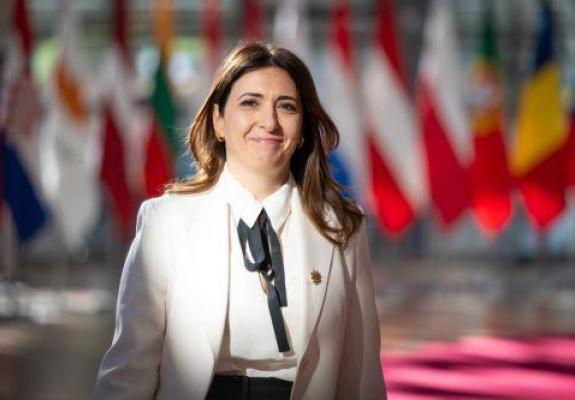
- Annita Demetriou saved face for her party
- Stefanos Stefanou achieved the impossible in a challenged environment
- The new Parliament transforms into a minefield for Nikos Christodoulides
- Behind-the-scenes maneuvering for the Presidency of the Parliament begins tomorrow
- Alliances, pressures, and political bargaining behind closed doors
Cyprus enters a new political reality as of today, one that no political force can fully control. Yesterday's elections did not bring solely shifts in percentages, but they mark the end of an entire political era.
The traditional party structure, as it was shaped after 1976, has dealt a severe blow. With their votes, citizens overturned balances, shattered certainties, and sent a clear message in all directions that no one is politically invulnerable.
The biggest upheaval of the elections is not DISY’s absolute first-place finish, but the deconstruction of the old model of power.
DIKO, for the first time in the modern political history of the Republic of Cyprus, loses its position as the third political force. The party that for decades functioned as the absolute "kingmaker" of developments, the chief negotiator of government coalitions, and the permanent "player" of power, sees its political stature shrinking.
Conversely, with a percentage reaching nearly 11% and an enhanced parliamentary presence, ELAM ceases to be viewed as a temporary protest vote. It is consolidating itself as a formidable pole on the right of the political spectrum, drastically changing the balance of power. This rise is already causing nervousness within DISY and the Presidential Palace. For the first time, the right acquires two powerful centers of influence, and the battle for dominance in this space has just begun.
The Democratic Rally (DISY) may have held onto first place with a percentage around 27.1%, but this victory feels more like a political "breather" than a triumph. Annita Demetriou managed, with her dynamic interventions in recent days, to hold the party's forces together, avoiding the shock of a historic challenge, though the leaks to the right are substantial.
In AKEL, the situation is taking a different shape. Despite the climate of social concern, the leftist party seems to face challenges in establishing itself in the minds of citizens as the main alternative proposal for governance. The "Social Alliance" initiative has not yielded the expected momentum so far, leaving the party still searching for the right mechanisms to expand the limits of its electoral influence.
Against this backdrop, the biggest political problem is now starting for Nikos Christodoulides. The government coalition emerges from the ballot boxes heavily wounded. DIKO, DIPA, and EDEK are paying the price of governance, high prices, the housing deadlock, and social fatigue. The picture is crystal clear. The President no longer possesses a secure and compact parliamentary base.
From today, every bill will be subject to negotiation, every reform will require compromises, and every budget vote will turn into hard political bargaining. The Presidential Palace will be forced to hunt for votes one by one.
At the same time, the parliamentary scene is becoming even more complicated with the entry of new formations, such as ALMA and Amesi Dimokratia (Direct Democracy). This new mosaic is likely to create a Parliament without stable majorities and without easy consensus.
The first sample of this new era will be given in the battle for the Presidency of the Parliament. This clash will constitute the first major struggle for power and, potentially, the prologue to the 2028 presidential elections.
Behind the scenes, phone calls and exploratory contacts will begin as of today. DISY seeks to maintain institutional control by capitalizing on its first-place finish; the Presidential Palace knows that if it loses this arena too, governing will become even more difficult; DIKO is fighting for its political survival; and the smaller parties realize that their kingmaking role is disproportionately large compared to their electoral size.
Cyprus is entering a period of political fluidity. The eras of easy agreements have passed irrevocably. The new Parliament will operate with fragile balances and tough trade-offs. The big question is not who won the impressions at the ballot box, but who will manage to govern effectively in this new, fragmented political environment.