From Real Estate to Digital Platforms: The Great Shift in Cypriots' Investment DNA
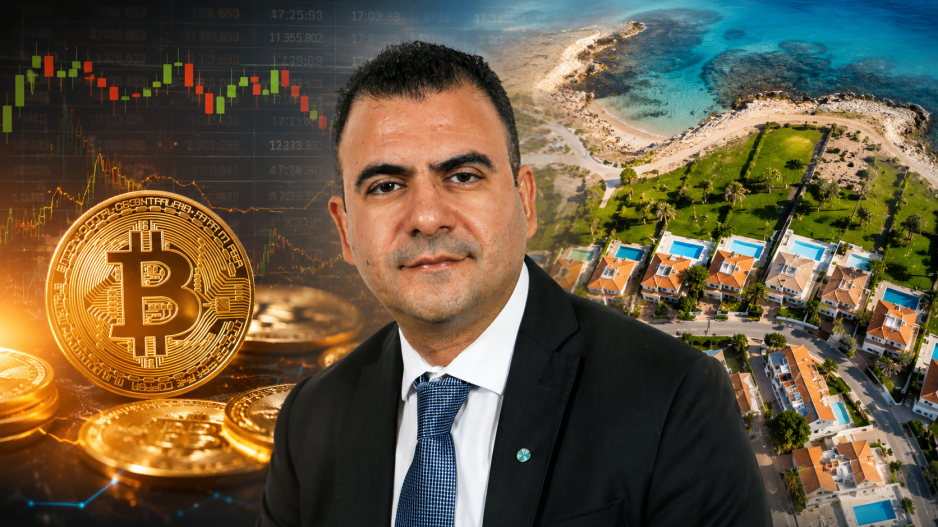
The President of CFA Society Cyprus, Konstantinos Kourougiannis, Maps Out for Ink the New Era for the Country's Savings, the Pitfalls of Quick Profits, and the Need for a Structured Investment Policy.
-
The investment profile of Cypriots is changing, with the younger generation turning to digital platforms, stocks, and cryptocurrencies, demonstrating a higher tolerance for risk.
-
Real estate remains a primary option, but younger investors are now seeking alternative solutions and diversification, such as real estate mutual funds.
-
Easy access to markets poses risks, as many individuals invest without a strategy, influenced by finfluencers instead of consulting certified professionals.
-
Financial literacy is deemed essential, because the true diversification of a portfolio requires a deep understanding of investment behavior and risk management.
-
Structuring a healthy investment plan presupposes clearly defining goals, evaluating suitability, and the disciplined implementation of a long-term strategy.
The investment DNA of Cypriots is changing rapidly, leaving behind the one-dimensional culture of past decades. The new generation of investors seeks diversification through digital platforms and ETFs, while real estate remains the subconscious safe haven. In a market where easier access does not always mean a deeper understanding of risk, the President of CFA Society Cyprus, Konstantinos Kourougiannis, CFA, analyzes for INK the new trends, the most common mistakes of individuals, and the importance of a structured investment policy.
The Anatomy of the Cypriot Investor
When asked how he would describe the average investment profile of the Cypriot today compared to a decade ago, Mr. Kourougiannis points out that a significant evolution has been observed over the last ten years. As he explains, ten years ago, the average investor preferred specific investment categories, such as deposits and real estate, showing a significant aversion to risk, influenced by the financial crisis Cyprus experienced in 2013.
Today, according to him, there is a greater tolerance for risk, especially among younger ages, as well as an increasing interest in stocks, ETFs, and alternative investments, alongside complex, high-risk financial products such as cryptocurrencies and CFDs (contracts for differences). However, he stresses that easier access to investments does not always translate to a better understanding of the risks.
Access to digital platforms that allow investing with relatively small capital has brought new participants to the market who did not participate before. This is generally a positive development, but, as he emphasizes, caution is needed, as investors are often exposed to complex financial products without fully understanding the risks. In this context, the President of CFA Society Cyprus mentions that the organization, through its specialized Technical Committee on Financial Literacy, participates in various initiatives in cooperation with other economic bodies to boost financial literacy in Cyprus, ensuring that growing market participation is accompanied by correct information and sound investment decision-making.
The "Obsession" with Land
Asked to comment on whether there is a real shift away from the classic "obsession" with plots of land, or if real estate still serves as a subconscious "safe haven" for Cypriots, Mr. Kourougiannis answers that real estate remains the most prevalent option for long-term investments for Cypriots, for which they are willing to utilize almost their entire investment capital.

Nevertheless, he notes that a gradual change in investment mentality is being observed, especially among younger and more informed investors who seek greater diversification, which is difficult to achieve through a small number of properties that potentially absorb their entire investment capital. Today, as he explains, the goal is not to choose between real estate and financial investments, but to find the right balance between the two.
Additionally, he mentions that other factors contributing to this change in mentality include the difficulty of accessing the property market due to high prices, which pushes young people toward alternative options. Meanwhile, past experiences in the property market, where significant price corrections occurred at certain times, and the inability to liquidate properties during crises have influenced many investors' perceptions.
Mr. Kourougiannis clarifies that real estate is an important investment asset class that can offer stable income through rents, capital appreciation prospects, and protection against inflation, contributing to the long-term diversification of an investment portfolio. However, it is an investment with relatively limited liquidity, and when the largest part of the investment capital is concentrated in one or a few properties, a significant lack of dispersion is created, increasing concentration risk.
As an alternative option, he suggests REITs (Real Estate Investment Trusts), which are collective investment schemes that invest in diversified property portfolios. REITs, as he states, offer investors the opportunity to gain exposure to the real estate market with smaller initial capital, greater dispersion, and significantly higher liquidity compared to the direct property market.
Digital Platforms and Cryptocurrencies
Assessing the entry of digital platforms and cryptocurrencies, Mr. Kourougiannis states that the answer depends more on the investor and how they utilize these significant changes in the investment sector. He emphasizes that it is important to distinguish digital platforms from cryptocurrencies, as they represent two different developments.

Undoubtedly, digital platforms have created new access opportunities for retail investors who were traditionally excluded from the markets, allowing them to invest in diversified portfolios with small capital through ETFs that replicate the performance of various stock indices. Conversely, he observes that many Cypriot investors are attracted to cryptocurrencies, influenced by narratives of quick wealth, without employing a strategic investment approach.
In this context, he mentions that through the initiatives of CFA Society Cyprus, investors are informed about the risks of these types of investments when there is no specific investment strategy. One of these initiatives is the podcast with the Vice-President of the Cyprus Securities and Exchange Commission on investor protection, which is available on the YouTube and Spotify channels of CFA Society Cyprus.
Understanding Risk and Diversification
Regarding how much the capacity of Cypriots to understand risk and portfolio diversification has changed, the President of CFA Society Cyprus estimates that the improvement is visible and substantial in a large part of the population, particularly among those with a significant academic and professional background in finance, such as university graduates with finance degrees and holders of professional titles like the CFA (Chartered Financial Analyst) charter. These individuals, as he notes, understand the concept of diversification and the relationship between risk and return in depth.
However, for the average investor, these concepts are not always clear, resulting in the belief that they can achieve high returns without taking on analogous risk. Furthermore, he mentions that many investors believe they have diversified their portfolio simply because they hold several investments, whereas, in reality, meaningful diversification depends on how differently those investments behave in relation to one another. Proper risk management, as he clarifies, does not aim to eliminate risk, but to take on the appropriate risk to achieve investment goals.
Self-Directed Investors and Finfluencers
As a professional in the field, Mr. Kourougiannis identifies that the biggest, yet most common, mistake is making investments without an accompanying investment policy statement that defines the purpose, time horizon, and risk tolerance of each investor. The absence of an investment policy, as he explains, leads to emotional reactions without a medium- or long-term strategy, resulting in purchases being made when prices exceed their fair valuations, or panic-selling during market corrections.

Moreover, he criticizes the fact that many Cypriot investors, instead of turning to professional financial analysts to build an investment policy based on their financial profile, are influenced by individuals who lack the necessary background but distribute unregulated investment advice online, the so-called finfluencers, rather than relying on documented and personalized investment guidance.
The Day After
Regarding whether the new generation of investors in Cyprus will integrate into European wealth management standards or maintain the peculiarities of the local market, Mr. Kourougiannis predicts that the answer lies somewhere in between.
On the one hand, young Cypriot investors studying and working in European cities are becoming familiar with European wealth management standards and are adopting a more European investment culture. The same is happening with the digital generation, which gets informed on investment matters through international platforms, podcasts, and YouTube.
Despite this, he estimates that certain peculiarities of the Cypriot market, such as the preference for real estate for long-term investments, are expected to persist due to the conservative character of society and the influence of older generations, who continue to prefer this type of investment. Consequently, he concludes that the next generation will retain some characteristics of the Cypriot market but will invest with an increasingly European mindset.
How "Investment DNA" is Built
Finally, offering advice on how a new investor starting today with a capital sum should structure their "investment DNA," Mr. Kourougiannis stresses that the first step is a meaningful discussion to clearly define the purpose of the investment portfolio, such as retirement, buying a home, or funding children's education. This, as he mentions, helps determine the time horizon and select the appropriate financial instruments.
He also considers the collection of information regarding the client's investment profile, assets, liabilities, return expectations, and risk tolerance to be highly important. He explains that often this information is gathered by presenting specific scenarios, such as how the client would react if the value of their portfolio dropped by 30% in a few months. This process, called a "suitability assessment," is an indispensable tool for every professional portfolio manager or investment advisor. Once completed, all the necessary information is available to shape the client's investment DNA, which includes financial instruments they understand, a level of investment risk they can manage, and a time horizon that aligns with their goals and liabilities.
Mr. Kourougiannis concludes by emphasizing that "investment DNA" is not shaped by picking the next "good" investment, but by a well-designed strategy implemented with discipline, education, and patience.